Skip to content

OneDotDot Chinese

Learn a little Chinese every day

Menu
  • Pronunciation
  • Vocabulary
    • HSK 3.0 Voc
    • Topic Center
    • Professional Field
    • Food Words
    • Synonyms
    • Chinese Slang
  • Grammar
    • Foundation
    • A1 Grammar (HSK 1)
    • A2 Grammar (HSK 2)
    • B1 Grammar (HSK 3)
    • B1 Grammar (HSK 4)
    • B2 Grammar (HSK 5)
    • B2 Grammar (HSK 6)
    • C1-C2 Grammar (HSK 7-9)
  • Resources
    • Characters
    • Chinese Name
    • Conversation
    • Cooking Chinese Food
    • Story
    • Songs
    • Download
    • Chinese Festivals
  • Practice
    • Grammar
    • Reading
    • Listening
  • Shop
Menu

Tag: edited

hekuang grammar let alone

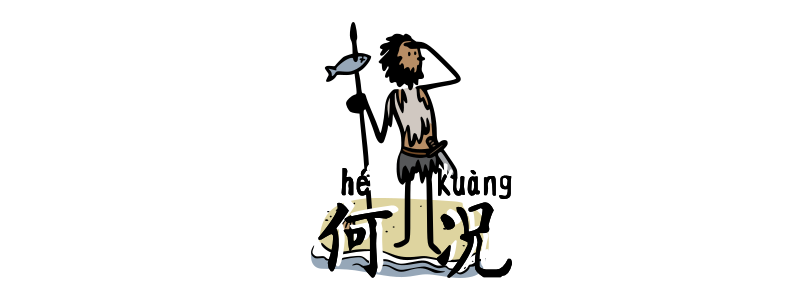
‘Let alone’ in Chinese – hékuàng

Posted on December 26, 2022November 17, 2024 by tiffany

Grammar Point:The Chinese word 何況况 hékuàng is a conjunction used to introduce a stronger reason or example after making a general statement. It’s similar to “let alone,” “not to mention,” or “much less” in English and is often used for emphasis. Structure General statement + (更 gèng) + 何況况 hékuàng + specific example This expression is common…
Read more
hebi heku grammar

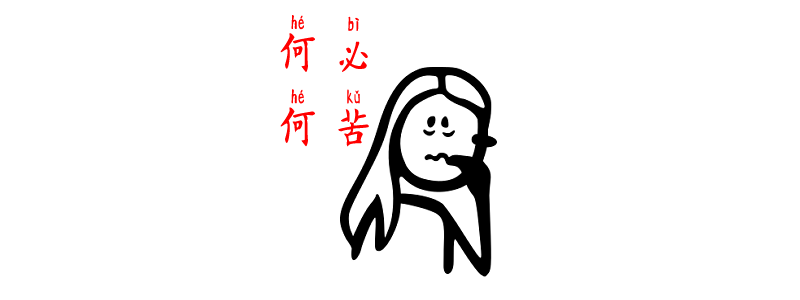
Expressing ‘why bother’ with hébì and hékǔ

Posted on December 23, 2022November 18, 2024 by tiffany

Grammar Point:In Chinese, 何必 hébì and 何苦 hékǔ are rhetorical expressions often used to question unnecessary actions or efforts. While both ask “why bother,” they focus on different aspects. Structure S + 何必 + Rhetorical Question It is used to suggest that something is unnecessary or redundant. It often implies a rhetorical question, indicating that there’s no need for…

Read more
to show perspective in Chinese

Showing Perspective in Chinese 2

Posted on December 20, 2022November 18, 2024 by tiffany

Grammar Point:In Chinese, the structures 在 zài··· 看来 kànlái and 从 cóng··· 来看 láikàn  are commonly used to express a viewpoint. They can be translated as “in someone’s opinion” or “judging from a certain perspective.” Structure 在 + Somebody + 看來来 + Commentary This structure translates to “in someone’s opinion” or “from someone’s perspective.” It highlights a subjective…

Read more
even if in Chinese 即使 jíshǐ

Even If in Chinese 3

Posted on December 10, 2022November 14, 2024 by tiffany

Grammar Point:To express even if in Chinese, we need to use 即使 jíshǐ or 哪怕 nǎpà and usually followed by the second clause 也 yě. In this pattern, the first clause is a supposition, which is then struck down as impossible by the statement’s second clause. Structure 即使 + ···,也 + ··· Subject 1 can…

Read more
degree complement in Chinese

Degree complements 3

Posted on December 1, 2022May 31, 2023 by tiffany

Degree complements, known as 程度補語补语 chéngdù bǔyǔ, are used to intensify or modify the degree of an action, the nature of a thing, or the degree of a state that has been reached. State complements, referred to as 狀態補語状态补语 zhuàngtài bǔyǔ, describe the state that an action has reached. The usage and structures of both…

Read more
數量補語/数量补语 shùliàng bǔyǔ (Quantitative Complement)

Quantity Complements 2

Posted on November 30, 2022May 26, 2023 by tiffany

Grammar Point:數量補語数量补语 shùliàng bǔyǔ (Quantitative Complement) is also called the complement of quantity, which indicates the quantity, frequency, or duration of an action or state. In this article, we are going to talk about the frequency or quantity of an action or state. Chinese Duration Complement Chinese Quantitative Complement Duration Complements Here, it’s important to…

Read more
degree complement in Chinese

Degree complements 1

Posted on November 24, 2022June 10, 2023 by tiffany

Grammar Point:A 程度補語补语 chéngdù bǔyǔ or “degree complement” is used to intensify or modify the degree of an action, the nature of a thing, or the degree reached in a state. Why do we need it Structure V + 得 de + Degree Complement 得 de serves as a particle that indicates the degree or…

Read more
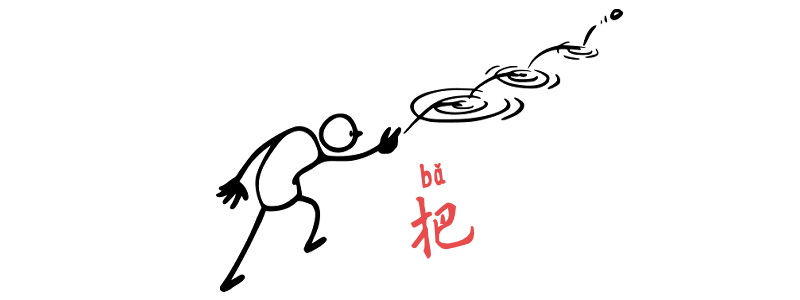
The function of 把 ba in Chinese

Grammar of 把 bǎ 1

Posted on October 24, 2022July 11, 2025 by tiffany

Grammar Point:There are 3 functions of 把 bǎ in Chinese. Determination, command, and doing a movement on something that makes a change to it. And since 把 bǎ cannot be translated into English, many English speakers feel awkward using it. But it is a piece of grammar that Chinese native speakers use a lot in…

Read more

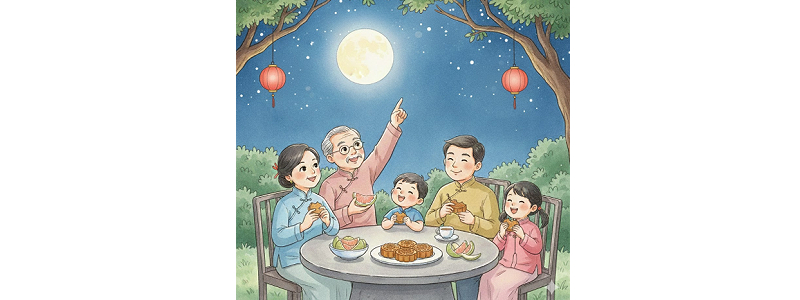
Moon Festival

Posted on September 28, 2022December 30, 2025 by tiffany

The Mid-Autumn Festival, also known as the Moon Festival, is one of the three most important Chinese festivals. It is a traditional holiday to worship the moon, as on that day, the moon turns into a beautiful circle (圓圆 yuán). The full moon symbolizes perfection and satisfaction (圓滿圆满 yuánmǎn) for the harvest and family reunion…

Read more

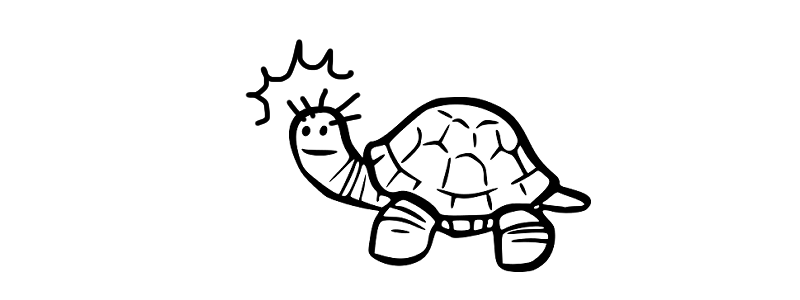
龜毛 Guīmáo

Posted on September 1, 2022April 26, 2023 by tiffany

龜毛/龟毛 Guīmáo (Taiwan slang) ADJ. (Literal meaning turtle hair) It is a slang term in Taiwan that describes someone who is overly meticulous, nitpicky, or finicky about small details or trivial matters. It can be used to describe someone who is overly demanding, fussy, or particular about things, to the point that it becomes a…

Read more

Posts pagination

  • Previous
  • 1
  • 2
  • 3
  • Next

📗 Contemporary Chinese
➤ Book 1
➤ Book 2
➤ Book 3
➤ Book 4

  • LinkedIn
  • Instagram
線上課程
One-on-one online teaching platform
線上課程

OneDotDot Chinese

Whenever I ask foreigners, "Do you speak Chinese?" they often reply, "a little bit" (yì diǎn diǎn). That inspired me to create this website and translate "yì diǎn diǎn" into the quirky and fun "One Dot Dot."

It’s also a reminder that learning Chinese is a journey, and progress happens one step at a time. By learning just a little bit every day, you’ll go far!

  About me
  Special Thanks
  News
  My Students Only
  Privacy Policy

© 2026 OneDotDot Chinese | Powered by Superbs Personal Blog theme