Grammar Point:In Chinese, the word 才 cái can be used to indicate that something is less than expected or insufficient. It is often used to express the speaker’s surprise or dissatisfaction that the quantity or degree is smaller than anticipated. Structure S + 才 cái + V + O 你nǐ去qù超市chāoshì去qù了le2 個ge小時xiǎoshí, 你nǐ才cái買mǎi了le一yì瓶píng水shuǐ嗎ma? 你nǐ去qù超市chāoshì去qù了le2 个ge小时xiǎoshí, 你nǐ才cái买mǎi了le一yì瓶píng水shuǐ吗ma?…

Category: HSK 3
Just 才 cái Grammar
Grammar Point:In Chinese grammar, 才 cái is used to express that an action has “just” happened. It is commonly used with other words that indicate “just,” such as 剛刚剛刚 gānggāng or 剛刚 gāng. Structure S + 才 cái + V 你nǐ怎麼zěnme才cái來lái就jiù要yào走zǒu? 你nǐ怎么zěnme才cái来lái就jiù要yào走zǒu? He just woke up, let’s wait for a moment. 他tā剛剛gānggāng才cái起床qǐcháig, 讓ràng我們wǒmen等一下děngyìxià他tā刚刚gānggāng才cái起床qǐcháig, 让ràng我们wǒmen等一下儿děngyìxiàrHe just…
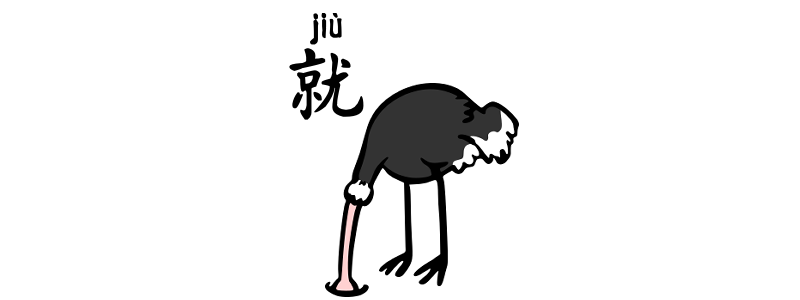
Only 就 jiù Grammar
Grammar Point:In Chinese grammar, 就 jiù can be used as an adverb to indicate “only” or “just” in a sentence. This usage of 就 jiù can be called “small quantity” because it is used to emphasize a small quantity or a small degree of something. Structure S + 就 jiù + V + O 我wǒ就jiù喝hē了le一yì杯bēi水shuǐ我wǒ就jiù喝hē了le一yì杯bēi水shuǐI…
Condition only if 才 cái Grammar
Grammar Point:In Chinese, 才 cái can express the meaning of “only if” or “only when.” When it is used with 如果 rúguǒ, it shows that a certain condition must be met before the result in the main clause can happen. However, even if the condition is met, the result is not automatically guaranteed. It simply becomes possible. Structure…
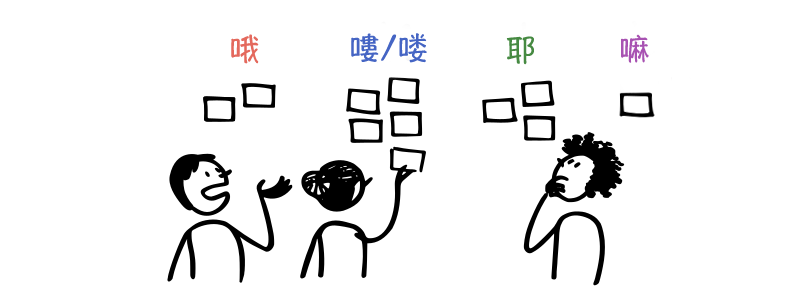
喔 o 嘍/喽 lou 耶 ye 嘛 ma Practice
TouchHover over the space to see the answers. Linking sounds practice – 喔 / 嘍喽 / 耶 / 嘛 Situation You and your friend are going to attend a friend’s party. You are running out of time, but your friend is still making coffee… 👩🏻 : 快kuài點diǎn( D ) ! 快kuài点diǎn( D ) ! Hurry…
Wugang fagui 2
“Wugang fagui” is a story for HSK2+ learners. Stories I shared some are Chinese folk tales, and some are my creations. This story is one of the most famous stories associated with the Moon Festival. However, there are three different versions of it, each with slight variations. So, if you hear a different story, don’t…
Wugang fagui
“Wugang fagui” is a story for HSK2+ learners. Stories I shared some are Chinese folk tales, and some are my creations. This story is one of the most famous stories associated with the Moon Festival. However, there are three different versions of it, each with slight variations. So, if you hear a different story, don’t…
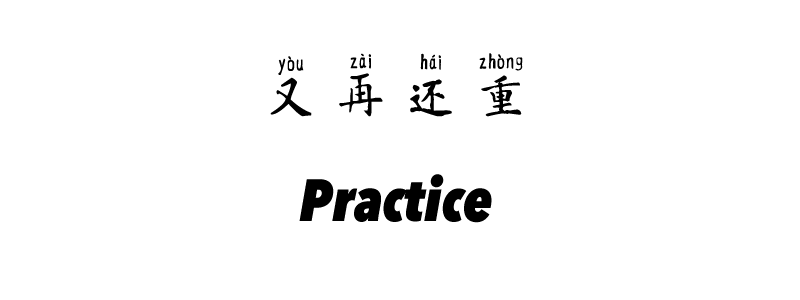
Synonyms of “Again” in Chinese – Practice
TouchHover over the space to see the answers. Fill in the correct word – 又/再/還还/重 這zhè麵miàn太tài好hǎo吃chī了le, 我wǒ吃chī完wán一碗yìwǎn了le, 但是dànshì( 還hái) 想xiǎng( 再zài) 吃chī一碗yìwǎn这zhè面miàn太tài好hǎo吃chī了le, 我wǒ吃chī完wán一碗yìwǎn了le, 但是dànshì( 还hái) 想xiǎng( 再zài) 吃chī一碗yìwǎnThese noodles are so good. I ate one bowl, but still want to eat another one. 自從zìcóng在zài台灣táiwān吃chī過guò一次yícì牛肉麵niúròumiàn後hòu, 我wǒ就jiù一直yìzhí想xiǎng( 再zài) 吃chī一次yícì自从zìcóng在zài台湾táiwān吃chī过guò一次yícì牛肉面niúròumiàn后hòu, 我wǒ就jiù一直yìzhí想xiǎng( 再zài) 吃chī一次yícìEver since I ate beef noodles…
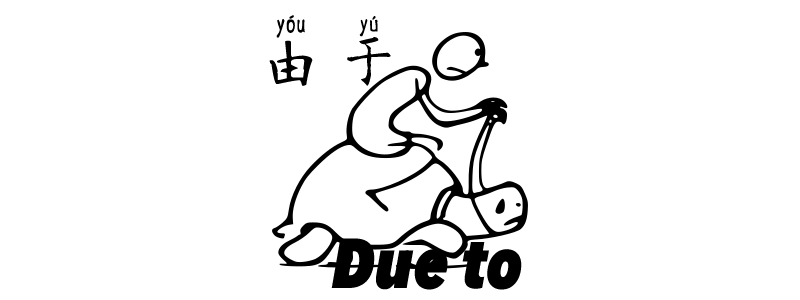
Due to – 由於/由于 yóuyú
Grammar Point:You can simply translate “由於于 yóuyú” into “due to” in English. It is often used at the beginning of a sentence to introduce the cause or reason for something that has happened. Structure 由於于 yóuyú + cause,effect Unlike the 因為为 yīnwèi, which indicates a direct cause-and-effect relationship between two things, the 由於于 yóuyú structure…
Synonyms of “Always” in Chinese
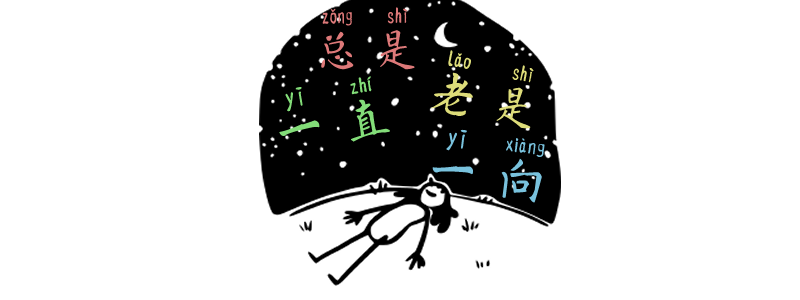
There are four ways to say “always” in Chinese, and these are the words 總是总是 zǒngshì, 老是 lǎoshì, 一向 yíxiàng and 一直 yìzhí. However, there are subtle differences in the nuances of these words that are worth noting: 總总是 zǒngshì 總是总是 zǒngshì is used to emphasize a high probability or frequency. 他tā上午shàngwǔ八點bādiǎn總是zǒngshì在zài圖書館túshūguǎn看書kànshū他tā上午shàngwǔ八点bādiǎn总是zǒngshì在zài图书馆túshūguǎn看书kànshūHe is always in…