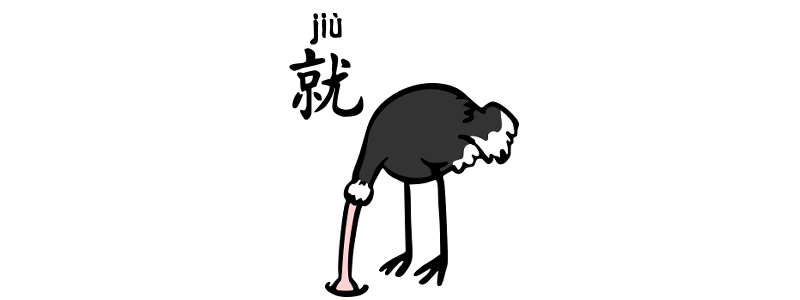
This “small quantity” 就就 jiù simply presents a small number. It’s casual and very common in everyday speech, often with 而已而已 éryǐ (“that’s all”) at the end.
1Structure
S + 就就 jiù + V + O
就就 jiù goes after the subject and before the verb.
我就喝了一杯水
我就喝了一杯水
I only drank a glass of water.
I didn’t drink anything else.
她就買了一本書
她就买了一本书
She only bought one book.
She didn’t buy anything else.
我們就聊了幾分鐘
我们就聊了几分钟
We only chatted for a few minutes.
We didn’t talk for long.
我們公司就有三個員工
我们公司就有三个员工
Our company only has three employees.
弟弟說他很累,可是他就看了10分鐘的書
弟弟说他很累,可是他就看了10分钟的书
My younger brother said he was tired, but he only read for 10 minutes.
我就去過台灣一次
我就去过台湾一次
I’ve only been to Taiwan once.
我的中文還說得不好,就會一點皮毛
我的中文还说得不好,就会一点儿皮毛
My spoken Chinese isn’t good yet. I only know the basics.
💬 Idiom: 皮毛皮毛
就會一點皮毛就会一点儿皮毛 jiù huì yìdiǎn pímáo literally means “only know a bit of fur.” It means having only a superficial, basic knowledge of something. It’s also a humble way to talk about your own skills: “Oh, I only know the basics.”
就就 jiù + Number + Measure Word + N
就就 jiù can also go straight before a number, without a verb.
這學期就5個人報名上課
这学期就5个人报名上课
Only five people signed up for class this semester.
我們學校就2位老師而已
我们学校就2位老师而已
Our school only has two teachers, that’s all.
台灣人的月薪就美金1000塊,不多
台湾人的月薪就美金1000块,不多
A Taiwanese person’s monthly salary is only about 1,000 US dollars. That’s not much.
這件衣服就一百塊,很便宜
这件衣服就一百块,很便宜
This shirt is only a hundred dollars. It’s really cheap.
📌 就就 jiù vs. 才才 cái
就就 jiù simply presents a small number, with no surprise. If you want to show surprise or dissatisfaction that the number is smaller than expected, use 才才 cái instead.
我們班就八個學生我们班就八个学生
There are only eight students in our class. (just a fact)
什麼?你們班才八個學生?什么?你们班才八个学生?
What? Your class has only eight students? (surprised)
2就就 jiù vs. 只只 zhǐ
Both can mean “only,” but the feeling is a little different.
我就去過台灣一次
我就去过台湾一次
I’ve only been to Taiwan once.
就就 jiù: the speaker feels it’s a small number, maybe implying they’d like to go again.
我只去過台灣一次
我只去过台湾一次
I’ve only been to Taiwan once.
只只 zhǐ: a plain statement of the fact, with no particular attitude.
A
她買了什麼?她买了什么?
What did she buy?
B
她就買了一本書她就买了一本书
She just bought a book.
就就 jiù sounds casual: that’s all she bought, maybe less than expected.
A
她買了幾本書?她买了几本书?
How many books did she buy?
B
她只買了一本書她只买了一本书
She bought only one book.
只只 zhǐ is more precise: it focuses on the number of books. She might still have bought pens or paper.
| 就就 jiù | 只只 zhǐ |
|---|
| Feel | Casual, spoken; the speaker feels it’s little | Neutral, more precise |
| Focus | “That’s all, nothing else” | Limits the specific number or thing |
3Common Mistakes
❌
我們就公司有三個員工
我们就公司有三个员工
✅
我們公司就有三個員工
我们公司就有三个员工
就就 jiù is an adverb: it goes after the whole subject, right before the verb.
❌
我喝了就一杯水
我喝了就一杯水
✅
我就喝了一杯水
我就喝了一杯水
When there’s a verb, 就就 jiù goes before the verb, not between the verb and the number.
4Practice
Translate each sentence into Chinese, then tap the card to check your answer.
01I only gave him a little money.
我就給了他一點錢
我就给了他一点儿钱。
👆 Tap to reveal
02I can only say one sentence in Japanese.
我就會說一句日文
我就会说一句日语。
👆 Tap to reveal
03Your place has no kitchen and no living room, just one room?
你家沒有廚房也沒有客廳,就一個房間
你家没有厨房也没有客厅,就一个房间?
👆 Tap to reveal
04I only slept for four hours last night.
我昨天晚上就睡了四個小時
我昨天晚上就睡了四个小时。
👆 Tap to reveal
05He only ate a tiny bit.
他就吃了一點點
他就吃了一点点。
👆 Tap to reveal
06There’s only one convenience store near my home.
我家附近就一家便利商店
我家附近就一家便利店。
👆 Tap to reveal
07I only know his name. Nothing else.
我就知道他的名字而已
我就知道他的名字而已。
👆 Tap to reveal
08This trip only takes three days.
這次旅行就三天
这次旅行就三天。
👆 Tap to reveal
