Skip to content

OneDotDot Chinese

Learn a little Chinese every day

Menu
  • Pronunciation
  • Vocabulary
    • HSK 3.0 Voc
    • Topic Center
    • Professional Field
    • Food Words
    • Synonyms
    • Chinese Slang
  • Grammar
    • Foundation
    • A1 Grammar (HSK 1)
    • A2 Grammar (HSK 2)
    • B1 Grammar (HSK 3)
    • B1 Grammar (HSK 4)
    • B2 Grammar (HSK 5)
    • B2 Grammar (HSK 6)
    • C1-C2 Grammar (HSK 7-9)
  • Resources
    • Characters
    • Chinese Name
    • Conversation
    • Cooking Chinese Food
    • Story
    • Songs
    • Download
    • Chinese Festivals
  • Practice
    • Grammar
    • Reading
    • Listening
  • Shop
Menu

Category: HSK 3

Qu Yuan

Qu Yuan Story 2

Posted on June 26, 2023May 15, 2024 by tiffany

“Qu Yuan” is a story for HSK3+ learners. Stories I shared some are Chinese folk tales, and some are my creations.  This story is one of the most famous stories associated with the Dragon Boat Festival. However, there are three different versions of it, each with slight variations. So, if you hear a different story,…

Read more
Qu Yuan

Qu Yuan Story

Posted on June 25, 2023May 15, 2024 by tiffany

“Qu Yuan” is a story for HSK3+ learners. Stories I shared some are Chinese folk tales, and some are my creations.  This story is one of the most famous stories associated with the Dragon Boat Festival. However, there are three different versions of it, each with slight variations. So, if you hear a different story,…
Read more

Dragon Boat Festival

Posted on June 24, 2023December 18, 2023 by tiffany

The Dragon Boat Festival, also known as Duanwu Festival, is a wonderful traditional Chinese celebration that happens on the fifth day of the fifth month according to the lunar calendar. It’s a time of joy and excitement, and people eagerly celebrate it in various parts of East Asia, including China, Hong Kong, Macau, Taiwan, and…

Read more
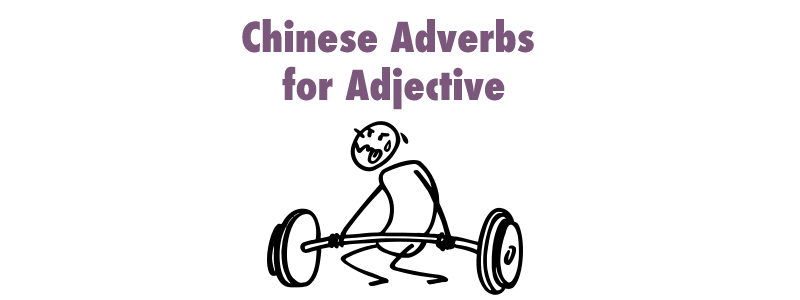
Adverbs for Adjective 很 hěn 特別 tèbié

Adverbs for Adjective 3

Posted on June 20, 2023June 17, 2023 by tiffany

Grammar Point:In most situations, Chinese adjectives typically require an adverb. Here are the adverbs we are going to look at in this article: Examples 他的tāde想法xiǎngfǎ比較bǐjiào傳統cháitǒng他的tāde想法xiǎngfǎ比较bǐjiào传统cháitǒngHis thoughts are relatively traditional (conservative). 日本rìběn料理liàolǐ在zài台灣Táiwān比較bǐjiào貴guì日本rìběn料理liàolǐ在zài台湾Táiwān比较bǐjiào贵guìJapanese cuisine is relatively expensive in Taiwan. 你的nǐde說法shuōfǎ讓ràng我wǒ更加gèngjiā糊塗hútú了le你的nǐde说法shuōfǎ让ràng我wǒ更加gèngjiā糊涂hútu了leYour statement has confused me even more. 抱歉bàoqiàn我wǒ放屁fàngpì了le, 你nǐ不要búyào說話shuōhuà, 不然bùrán我wǒ會huì更加gèngjiā尷尬gāngà抱歉bàoqiàn我wǒ放屁fàngpì了le, 你nǐ不要búyào说话shuōhuà, 不然bùrán我wǒ会huì更加gèngjiā尴尬gāngàSorry, I fart. Please don’t say anything,…

Read more
Chinese Separable Verbs VO structure

Chinese Separable Verbs

Posted on June 11, 2023July 15, 2023 by tiffany

Why Are Chinese Separable Verbs Important? One of the key reasons is that among the 1,000 commonly used verbs in Modern Chinese, a whopping 685 of them are separable verbs. You’ll frequently come across them, especially in basic words like 睡覺觉 (to sleep), 吃飯饭 (to eat), and 看書书 (to read), when learning Chinese. Knowing which…

Read more
为 and 为了 practice

Wèi and wèile Practice

Posted on May 26, 2023May 24, 2023 by tiffany

TouchHover over the space to see the answers. Fill in the correct word – 為/为 or 為了/为了 我wǒ( 為了wèile) 見jiàn你nǐ坐zuò了le一yì小時xiǎoshí的de車chē我wǒ( 为了wèile) 见jiàn你nǐ坐zuò了le一yì小时xiǎoshí的de车chēI took a one-hour car ride to see you. 我wǒ(  為  wèi ) 你nǐ買mǎi了le一yì台tái車chē我wǒ(  为  wèi ) 你nǐ买mǎi了le一yì台tái车chēI bought a car for you. 我wǒ每天měitiān努力nǔlì是shì( 為了wèile) 學xué好hǎo中文zhōngwén我wǒ每天měitiān努力nǔlì是shì( 为了wèile) 学xué好hǎo中文zhōngwénI work hard every day to study…

Read more
For in Chinese 為 为 wèi

“For” in Chinese 2 – 為/为 wèi

Posted on May 25, 2023May 24, 2023 by tiffany

Grammar Point:為为 wèi has many functions in Mandarin Chinese. In this article, we are going to discuss how to use 為为 wèi to express the meaning of “for”. Structure 為/为 + Sth or Sb + Verb The word 為为 wèi can once again be translated as “for” in English. However, this time it is used…

Read more
The function of 把 ba in Chinese

Use 把 bǎ or not Practice

Posted on May 13, 2023July 11, 2025 by tiffany

TouchHover over the end of the sentences to see the answers. Think about whether the following sentences need to use the word ‘把’ Rob, Sam, and Jonathan are all good friends of Tiffany. Today, Tiffany invited them to her house to experience making dumplings together. Rob said, “I brought some fruits!” 我wǒ帶dài了le一些yìxiē水果shuǐguǒ! 我wǒ带dài了le一些yìxiē水果shuǐguǒ! O我wǒ把bǎ一些yìxiē水果shuǐguǒ帶了dàile! 我wǒ把bǎ一些yìxiē水果shuǐguǒ带了dàile!…

Read more
Chinese Result complement 結果補語

Result Complement 2 Practice

Posted on May 3, 2023May 2, 2023 by tiffany

TouchHover over the space to see the answers. Fill in the correct result complements and verbs 因為yīnwèi公司gōngsī加班jiābān, 我wǒ沒méi( 吃到chīdào) 聖誕shèngdàn大餐dàcān因为yīnwèi公司gōngsī加班jiābān, 我wǒ没méi( 吃到chīdào) 圣诞shèngdàn大餐dàcānI didn’t get to eat the Christmas dinner because of overtime at work. 從cóng我家wǒjiā往wǎng外wài看kàn可以kěyǐ( 看見kànjiàn) 台灣Táiwān最zuì高gāo的de大樓dàlóu101 从cóng我家wǒjiā往wǎng外wài看kàn可以kěyǐ( 看见kànjiàn) 台湾Táiwān最zuì高gāo的de大楼dàlóu101 From my house, you can see Taiwan’s tallest building, the Taipei 101. 我wǒ( 找到zhǎodào)…

Read more
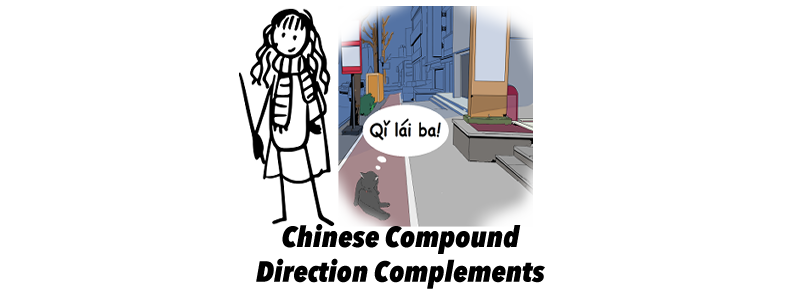
Chinese Compound Direction Complements

Compound Direction Complements Practice

Posted on May 1, 2023April 27, 2023 by tiffany

TouchHover over the space to see the answers. 1. 我wǒ把bǎ這zhè枝zhī筆bǐ向xiàng你nǐ丟diūOO , 你nǐ能néng接jiē住zhù嗎ma? 我wǒ把bǎ这zhè枝zhī笔bǐ向xiàng你nǐ丢diūOO , 你nǐ能néng接jiē住zhù吗ma? Ans: A – I am going to throw this pen at you, can you catch it? A. 過去guòqù过去guòqù B. 過來guòlái过来guòlái C. 起來qǐlái起来qǐlái D. 下來xiàlái下来xiàlái 2. 他tā把bǎ最後zuìhòu一yì杯bēi酒jiǔ喝hē了leOO 他tā把bǎ最后zuìhòu一yì杯bēi酒jiǔ喝hē了leOO Ans: C – He drank his last glass of wine. A. 起來qǐlái起来qǐlái B….

Read more

Posts pagination

  • Previous
  • 1
  • …
  • 5
  • 6
  • 7
  • 8
  • 9
  • 10
  • 11
  • …
  • 17
  • Next

📗 Contemporary Chinese
➤ Book 1
➤ Book 2
➤ Book 3
➤ Book 4

  • LinkedIn
  • Instagram
線上課程
One-on-one online teaching platform
線上課程

OneDotDot Chinese

Whenever I ask foreigners, "Do you speak Chinese?" they often reply, "a little bit" (yì diǎn diǎn). That inspired me to create this website and translate "yì diǎn diǎn" into the quirky and fun "One Dot Dot."

It’s also a reminder that learning Chinese is a journey, and progress happens one step at a time. By learning just a little bit every day, you’ll go far!

  About me
  Special Thanks
  News
  My Students Only
  Privacy Policy

© 2026 OneDotDot Chinese | Powered by Superbs Personal Blog theme