
Chinese Festivals · 中国节日
Dragon Boat Festival
端午节 duānwǔjié
端午节 duānwǔjié falls on the fifth day of the fifth lunar month — a festival of dragon boat races, sticky rice dumplings, and a whole calendar’s worth of folk remedies against summer’s bad luck.
What is 端午节?
Celebrated across mainland China, Hong Kong, Macau, Taiwan, and Chinese communities worldwide, 端午节 is one of the three biggest festivals on the Chinese calendar, alongside 过年 and the Mid-Autumn Festival. In English it’s usually called the Dragon Boat Festival, after its signature event, though you’ll also see it romanized as Duanwu or, in Cantonese, Tuen Ng.
In 2009, 端午节 became the first Chinese holiday added to UNESCO’s Representative List of the Intangible Cultural Heritage of Humanity — official global recognition for a tradition that’s well over a thousand years old.
Interestingly, it’s not unique to China: South Korea’s Gangneung Danoje Festival, held around the same date, was inscribed by UNESCO a few years earlier — leading to some good-natured (and some not-so-good-natured) cross-strait and cross-border debate about whose version came first.
Why so many “protective” customs?
Almost every custom below exists for the same underlying reason: in the old lunar calendar, the fifth month was traditionally known as 恶月 èyuè, the “poison month.” Summer heat was setting in, disease spread faster, and snakes, scorpions, and insects were all coming out of hiding — collectively known as the 五毒 wǔdú, the “Five Poisons” (centipede, snake, scorpion, toad, and gecko).
So rather than a festival of pure celebration, 端午节 grew into something closer to an ancient public health day — a cluster of folk remedies for staying safe through the most dangerous stretch of the year. Once you know that, the sachets, the mugwort, and the wine below all make a lot more sense.
Five things everyone does
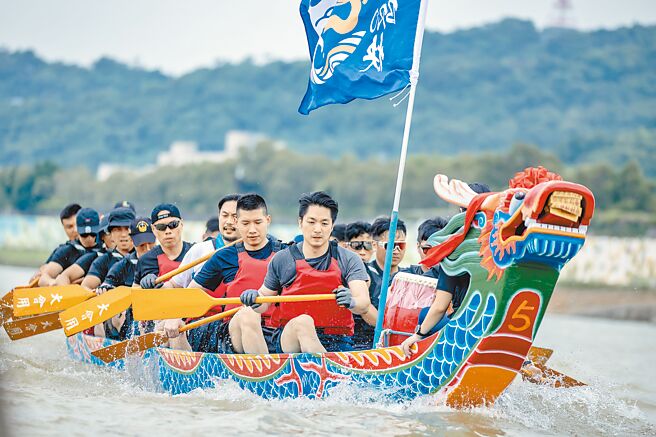
Dragon boat racing 🐲 划龙舟 huá lóngzhōu
Long, narrow boats carved and painted like dragons, a drummer keeping the rhythm, a steerer at the back, and teams of rowers pulling in perfect sync — held on rivers and lakes in front of huge, cheering crowds.
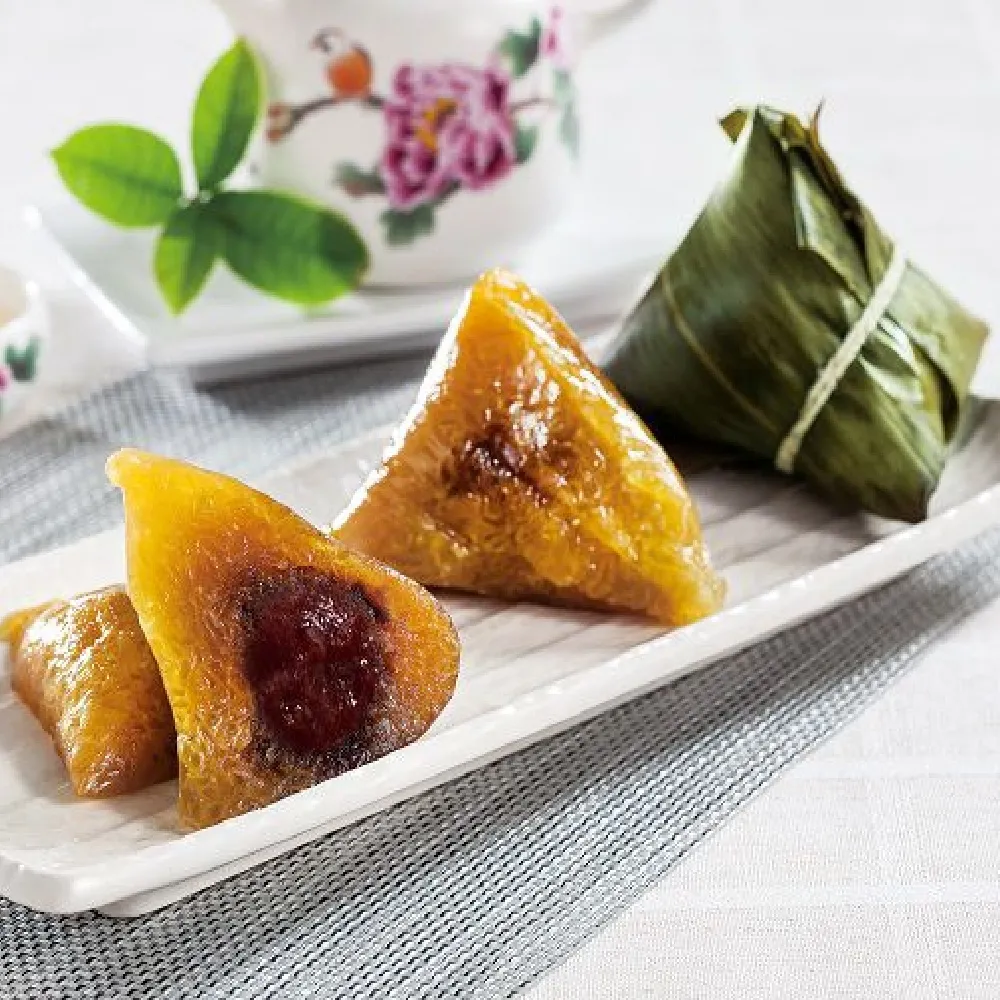
Zongzi 🎋 粽子 zòngzi
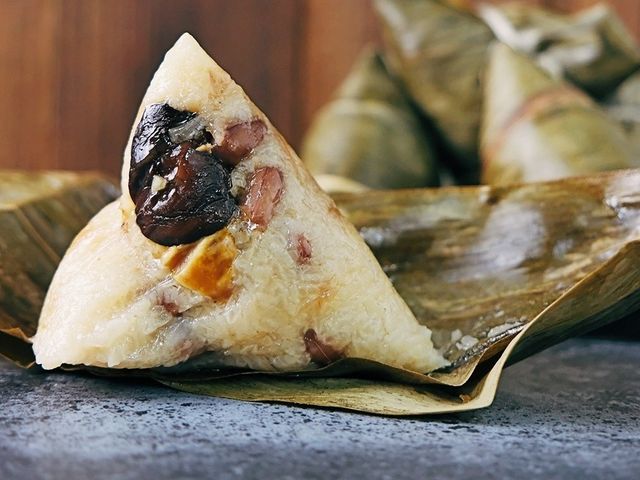
Sticky rice dumplings wrapped in bamboo leaves, folded into little pyramids, and steamed or boiled — savory or sweet, depending on the region and the household.
Balancing eggs 🥚 立蛋 lìdàn
A simple, at-home game: try to stand a raw egg upright, unassisted, at noon. Folk belief holds that midday on 端午 is when yang energy peaks for the whole year — succeed, and you’re set for good luck.
Scented sachets 🌱 香包 xiāngbāo
Small cloth pouches filled with ground herbs like realgar, mugwort, and calamus, worn around the neck — a fragrant, centuries-old stand-in for insect repellent.
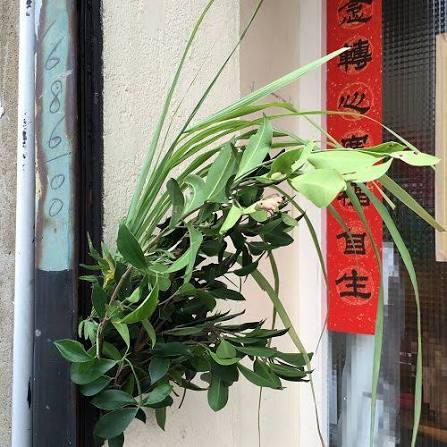
Mugwort & orchid baths 挂艾草 & 沐兰汤
Bundles of mugwort and sweet flag hung by the front door, and children bathed in water steeped with orchid grass — both meant to clear the air of the “Five Poisons.”
粽子 & 雄黄酒
Fillings range from black-eyed peas and Chinese sausage to salted duck egg, peanuts, chestnuts, and dried shrimp. A serving runs 400–600 kcal, or roughly 2–3 hours of jogging to burn off. Modern versions get creative too — taro milk, matcha red bean, even bubble-tea mochi zongzi.
北部粽 — northern-style
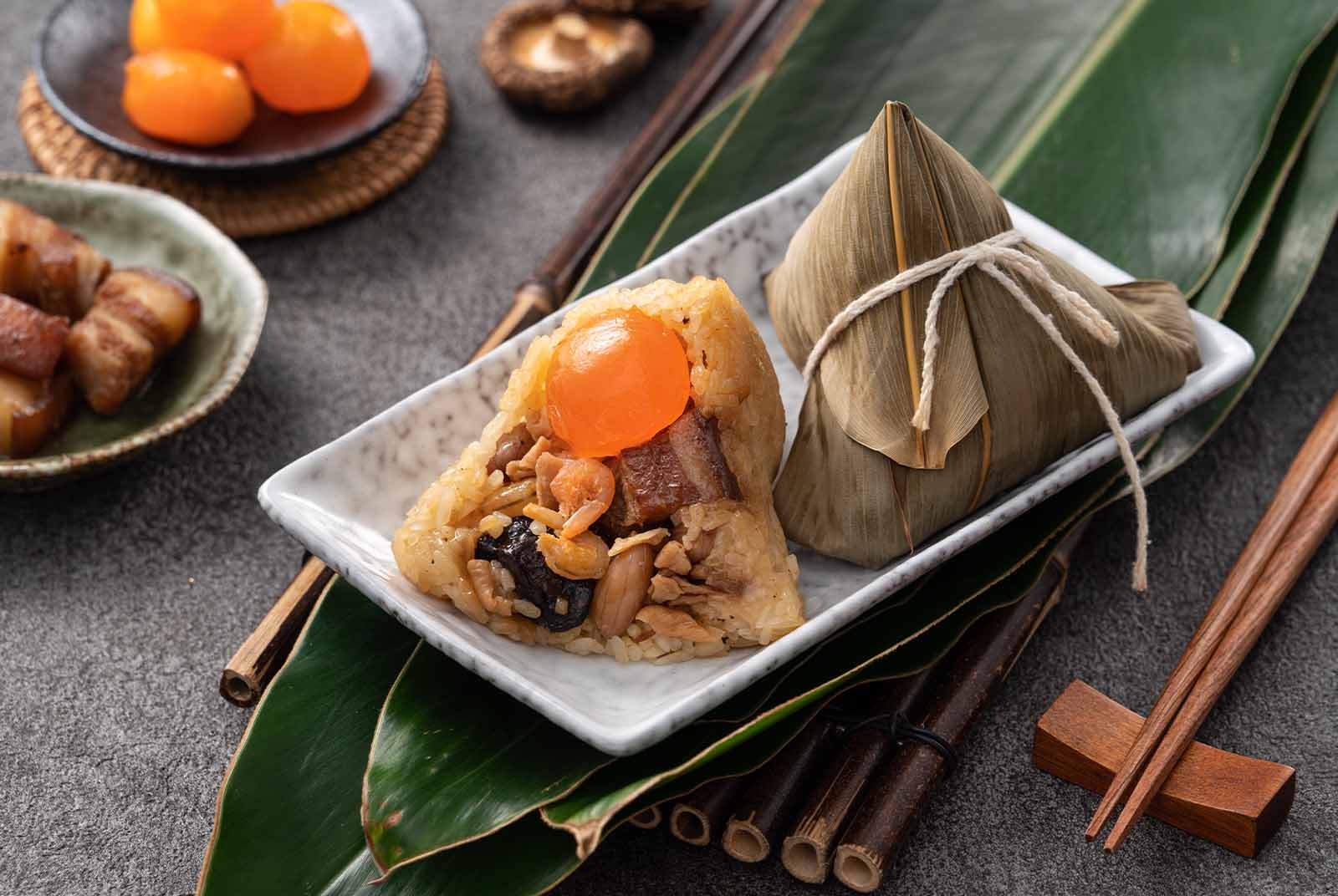
南部粽 — southern-style
A traditional Chinese medicinal wine made by steeping realgar, a mineral, in alcohol. In the old days, people drank it because it turned their skin red — and they took that as a sign of good, unblocked circulation and health. Modern medicine tells a different story, though: realgar is toxic, and that “healthy glow” was actually a symptom of mild poisoning 😅. Nobody drinks it today — but it hasn’t disappeared. Families still use it in temple offerings, and campers sprinkle it around their tents, since it’s believed to keep mosquitoes and snakes away.

南北粽大戰 — the great North-South zongzi war. Taiwan has two competing styles, and every year around 端午节, people argue over which is better. 北部粽 běibù zòng (“northern-style”) stir-fries the rice with seasonings first, then wraps and steams it — closer in texture to a fragrant rice pilaf. 南部粽 nánbù zòng (“southern-style”) wraps the raw, soaked rice straight into the leaf and boils it directly, giving it a stickier, more porridge-like bite. There’s no official winner — just very strong opinions at every dinner table.
A tip for first-timers: some foreign visitors trying zongzi for the first time don’t realize the bamboo leaf needs to be unwrapped before eating — the leaf itself isn’t food. Its job is to hold the shape, add fragrance to the rice as it cooks, and protect the rice inside — but it stays on the plate, not in your mouth.
Stories related to 端午节
A patriotic poet-statesman who drowned himself in protest when his warnings about his kingdom’s fate went ignored. Locals raced out in boats to search for him and beat drums to scare fish away, while others threw rice into the river so the fish would eat that instead of his body — the roots of both dragon boat racing and zongzi, in one story.
A white snake spirit falls in love with a human man — and it’s on 端午, after being tricked into drinking realgar wine, that she’s forced to reveal her true form. One of China’s most famous folk romances, and part of why realgar wine carries such a strong “revealing evil” association.
端午安康, not 端午快乐?
You may notice people wishing each other 端午安康 duānwǔ ānkāng (“peace and health”) rather than the more common 端午快乐 (“happy Duanwu”) — the reasoning usually given is that this is a solemn day tied to Qu Yuan’s death, so “happy” feels out of place.
It’s a nice piece of trivia — but worth knowing it’s actually a fairly recent internet-era custom, traced by researchers to social media posts from around 2015, rather than an ancient rule. Chinese folklorists have since pushed back, pointing out that classical poetry describes 端午 being celebrated joyfully for centuries. Either greeting is fine — but now you know the story behind why some people insist on the other one.

