OneDotDot Chinese Grammar · HSK 6 Grammar Point · HSK 6 把 bǎ把 bǎ — Other 把 Sentence Two more 把 bǎ把 bǎ patterns that don’t fit neatly into the earlier structures:an exclamatory 看 kàn看 kàn/瞧 qiáo瞧 qiáo+把 bǎ把 bǎ pattern for vivid reactions, and 把 bǎ把 bǎ+O1+V+成 chéng成 chéng+O2 for describing something turning into…
Tag: ba
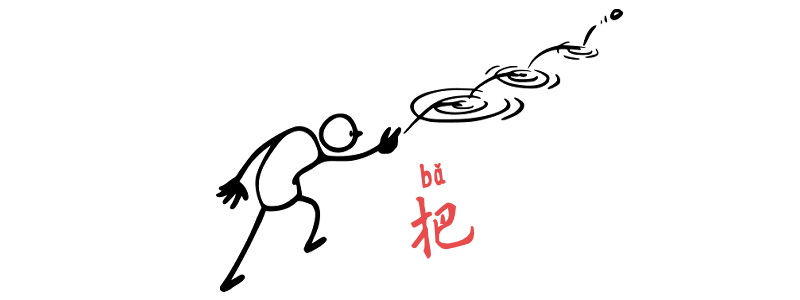
Unintentional – 把 bǎ
Grammar Point:把 bǎ is not always about intention. It can highlight that something was affected and a result happened, even if it was accidental. Structure S + 把 bǎ + O + V + Result (usually 了 le) 我wǒ把bǎ咖啡kāfēi打翻dǎfān了le我wǒ把bǎ咖啡kāfēi打翻dǎfān了leI spilled the coffee. 他tā把bǎ手機shǒujī摔shuāi壞huài了le他tā把bǎ手机shǒujī摔shuāi坏huài了leHe dropped his phone and broke it. 我wǒ喝hē水shuǐ的時候deshíhòu,不小心bùxiǎoxīn把bǎ衣服yīfú弄nòng得de濕shī濕shī的de我wǒ喝hē水shuǐ的时候deshíhou,不小心bùxiǎoxīn把bǎ衣服yīfu弄nòng得de湿shī湿shī的deI got my clothes wet accidentally while…
Use 把 bǎ or not Practice
Grammar Practice · Sentence Structure 把把 bǎ or Not Practice The 把 bǎ construction moves the object in front of the verb: 把 + object + verb (+ result). It’s used when a sentence describes what happens to a specific, already-known thing — moving it, placing it, finishing it off, breaking it. A general or…
嗎/吗 ma 吧 ba 呢 ne Practice
Grammar Practice · Final Particles 嗎吗, 吧, 呢 Practice Three little words that change the shape of a sentence. 嗎吗 ma turns a statement into a yes/no question. 呢 ne asks a quick follow-up (“and you?”) or wonders where someone/something went. 吧 ba softens a suggestion, a guess, or a command — less like an…
The functions of 把 bǎ 5 (Advanced)
Grammar Point:There are 3 functions of 把 bǎ in Chinese. Determination, command, and doing a movement on something that makes a change to it. If you’re not familiar with the basic foundation of 把 structure, I suggest reading the following articles first. Structure (S) + 把 + O + Verb + 了 This structure may…
The functions of 把 bǎ 3
OneDotDot Chinese Grammar · HSK 5 Grammar Point · HSK 5 把 bǎ把 bǎ — 把 Sentence 3 Two structures that bend the usual 把 bǎ把 bǎ rules a little:one borrowed from “as soon as,” and one where the verb takes two objects at once. Both are common in everyday speech, even though they look…
The functions of 把 bǎ 4
OneDotDot Chinese Grammar · HSK 6 Grammar Point · HSK 6 把 bǎ把 bǎ — 把 Sentence 4 Two more advanced shapes:one where the subject isn’t even a person — a sound, a smell, a pair of shoes — and one where the “other elements” get much richer, describing degree or reframing what something’s seen…
Grammar of 把 bǎ 2
OneDotDot Chinese Grammar · HSK 4 Grammar Point · HSK 4 把 bǎ把 bǎ — 把 Sentence 2 Four more shapes for the “something” that follows the verb in a 把 bǎ把 bǎ sentence:doing it briefly, doing it a set number of times, marking it as done, and shifting where an adverb sits. These patterns…
Grammar of 把 bǎ 1
OneDotDot Chinese Grammar · HSK 3 Grammar Point · HSK 3 把 bǎ把 bǎ — 把 Sentence 1 把 bǎ把 bǎ moves the object to the front of the sentence to put the spotlight on it — what happened to it, and how it ended up. This article covers the first three shapes a 把…
Chinese Final Particles 1 – 吗 吧 呢
OneDotDot Chinese Grammar · HSK 1 Grammar Point · HSK 1 嗎吗 ma·吧 ba·呢 ne — Final Particles 1 Final particles (語氣詞语气词 yǔqìcí) sit at the very end of a sentence and don’t change its basic meaning — but they completely change its tone. In this first article, we’ll cover the three most common ones:…