In this article, we will discuss the features of Chinese verbs. Verbs in Chinese, like in English, can be divided into three major categories: the verb 是 shì meaning “to be,” the verb 有 yǒu meaning “to have,” and a broad set of verbs that can be loosely referred to as action verbs. * Some…

Category: HSK 3
Expressing the Order in Chinese
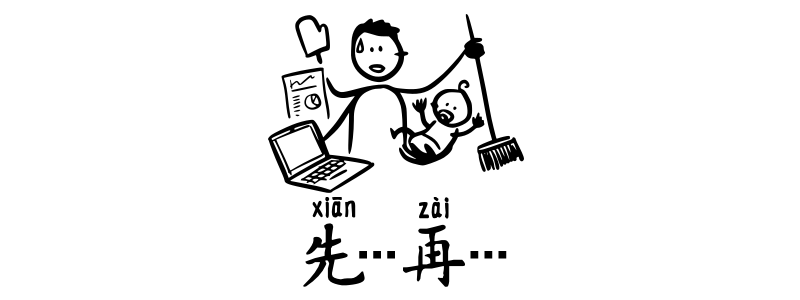
Grammar Point:To express the order of several actions can involve many different options in Chinese, but the basic structure is 先 xiān… 再 zài…, which can translate into first… and then… in English. Basic Structure S1 + 先… + S2 + 再… When both subjects are the same, it is ok to drop the S2….
Quantity Complements 2
Grammar Point:數量補語数量补语 shùliàng bǔyǔ (Quantitative Complement) is also called the complement of quantity, which indicates the quantity, frequency, or duration of an action or state. In this article, we are going to talk about the frequency or quantity of an action or state. Chinese Duration Complement Chinese Quantitative Complement Duration Complements Here, it’s important to…
Degree complements 1
Grammar Point:A 程度補語补语 chéngdù bǔyǔ or “degree complement” is used to intensify or modify the degree of an action, the nature of a thing, or the degree reached in a state. Why do we need it Structure V + 得 de + Degree Complement 得 de serves as a particle that indicates the degree or…
Comparisons 2
Grammar Point:The way to express comparisons in Chinese is by using 比 bǐ. In this article, we will discuss how to use a verb with 比 bǐ to make comparisons. Structure A + 比 bǐ + B + V 得 + Adj. Remember, when there is a verb and an adjective together, you always need…
Synonym of Afraid in Chinese
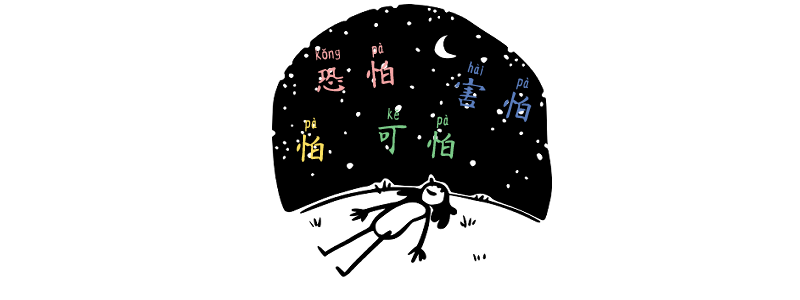
Grammar Point:怕 pà, 害怕 hàipà, 可怕 kěpà, and 恐怕 kǒngpà are all related to the concept of fear, but they have different nuances in meaning and usage in Chinese. Before we start, let’s have a small quiz. Do you know which one is correct? 我wǒ可怕kěpà我wǒ的de中文zhōngwén老師lǎoshī我wǒ可怕kěpà我wǒ的de中文zhōngwén老师lǎoshī 我wǒ害怕hàipà說shuō中文zhōngwén我wǒ害怕hàipà说shuō中文zhōngwén 我wǒ恐怕kǒngpà天氣tiānqì會huì下雨xiàyǔ我wǒ恐怕kǒngpà天气tiānqì会huì下雨xiàyǔ 我wǒ的de中文zhōngwén老師lǎoshī很hěn怕pà我wǒ的de中文zhōngwén老师lǎoshī很hěn怕pà 害怕 hàipà S + 害怕 hàipà +…
Potential Complements 1
Grammar Point:Potential Complements indicate whether or not an action is possible, which means whether it is able to be done or not. It’s not that complicated, is it? The structure is also simple – just add 得 de or 不 bu between the result complement and the verb. Result complement VS Potential complement: The Result…
Abstract Words
Before we look up abstract words in Chinese, I want to tell you a secret. In China, any kind of accident or disease has an official death toll. I don’t know about the disease, but for any accident, the death toll cannot be over 35; otherwise, the officials will have to step down and take…
Result Complement 2
Grammar Point:The result complement is called 結果補語结果补语 jiéguǒ bǔyǔ in Chinese. It is just like its name, used to describe the result of a verb. If you are not familiar with the result complement, I suggest you read the following article first. RC in this article we are going to learn: Verb (action) + Result…
The Passive Sentence 1 – 被
Grammar Point:The passive sentence in Chinese is called 被字句 bèizìjù. It is used to construct passive structures and can introduce either the doer of the action or the action itself. In spoken Chinese, the verbs 叫 jiào and 讓让 ràng can be used as substitutes for 被 bèi. All of these sentences are considered passive sentences….