Skip to content

OneDotDot Chinese

Learn a little Chinese every day

Menu
  • Vocabulary
  • Grammar
  • Resources
  • Practice
  • Shop
Menu

Author: tiffany

comparisons in Chinese

Advanced Comparisons 2

Posted on January 24, 2023November 17, 2024 by tiffany

Grammar Point:As you may already know, comparisons in Chinese are typically expressed using 比 bǐ. However, in this article, we’ll explore how to express preferences in Chinese—similar to saying “would rather… than…” in English. Additionally, we’ll introduce three more formal ways to construct comparison sentences in Chinese. Structure – Showing Preference 與与其 + Option A,(S) +…

Read more
even if in Chinese 就算 jiùsuàn

“Even If” in Chinese 4 – 就算 jiùsuàn

Posted on January 23, 2023November 20, 2024 by tiffany

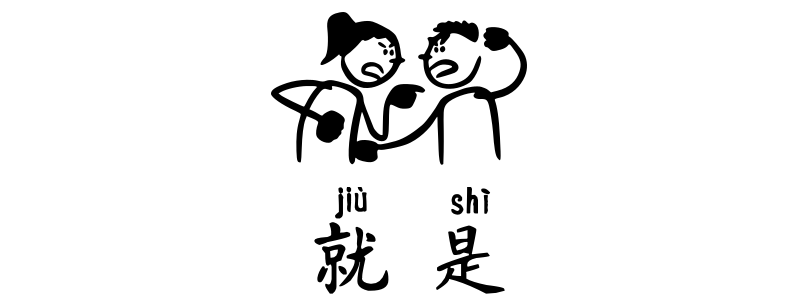
Grammar Point:To express “even if” in Chinese, we need to use 就算 jiùsuàn or 就是 jiùshì and usually followed by the second clause 也 yě. In this pattern, the first clause is a supposition, which is then struck down as impossible by the statement’s second clause. Structure 就算 + ···,也 + ··· It is an…

Read more
Existence in a place with 在 zài

Existence in a place in Chinese

Posted on January 22, 2023May 20, 2023 by tiffany

Grammar Point:Chinese indicates the existence of something in a particular place by adding the verb 在 zài. In this function, 在 zài can be translated as ‘be in’ or ‘be at’ in English. Structure S + 在 zài + location 我wǒ在zài家jiā我wǒ在zài家jiāI am at home. 老師lǎoshī在zài美國měiguó老师lǎoshī在zài美国měiguóThe teacher is in the U.S. 圖書館túshūguǎn在zài學校xuéxiào的de3 樓lóu图书馆túshūguǎn在zài学校xuéxiào的de3 楼lóuThe library is…

Read more
Making Conclusion in Chinese

Making Conclusion in Chinese

Posted on January 21, 2023January 21, 2023 by tiffany

In this article, we are going to talk about some phases to make a good conclusion in Chinese. A clear conclusion can change a reader’s or listener’s mind when they reach the end of your speech. Especially in Chinese, we tend to save the most important information in our last sentence. Now let’s learn some…

Read more
東/东 V 西 V Grammar

東/东 V 西 V Grammar

Posted on January 20, 2023January 21, 2023 by tiffany

The grammar of 東/东 V 西 V has 3 different meanings, depending on whether the order and two verbs you use are the same or not. And notice that all the verbs must be one-syllable verbs. Structure 東/东 + V + 西 + V This structure can be used if want to say you are…

Read more
Chinese grammar 憑/凭 píng

Using píng to express on the basis

Posted on January 19, 2023November 18, 2024 by tiffany

Grammar Point:The word 憑凭 píng in Chinese is a preposition or verb used to indicate “relying on,” “based on,” or “depending on.” It can also express “by means of” or “according to.” It’s versatile and commonly used in formal or semi-formal contexts. Structure 憑凭 píng + N / Noun Phrase + V It indicates using something as…

Read more
More and More in chinese 越 yuè

More and More 2

Posted on January 17, 2023May 21, 2023 by tiffany

Grammar Point:In Chinese, the phrase 越 yuè…越 yuè… is commonly used to express that the degree of something increases with another situation. Structure – 越 + Adj. + 越 S + 越 yuè + Adj + 越 yuè + Adj or V It is important to note that 越 yuè…越 yuè… should not be followed…

Read more
The function of 把 ba in Chinese

The functions of 把 bǎ 5 (Advanced)

Posted on January 16, 2023July 11, 2025 by tiffany

Grammar Point:There are 3 functions of 把 bǎ in Chinese. Determination, command, and doing a movement on something that makes a change to it. If you’re not familiar with the basic foundation of 把 structure, I suggest reading the following articles first. Structure (S) + 把 + O + Verb + 了 This structure may…

Read more

Chinese Verbs

Posted on January 14, 2023August 21, 2026 by tiffany

A field guide for learners Chinese Verbs Chinese verbs, like English ones, fall into three broad categories: the verb 是是 shì (“to be”), the verb 有有 yǒu (“to have”), and the broad remaining set of action verbs. Some teachers argue for a fourth category, treating Chinese adjectives as stative verbs. The baseline The Verb Does…

Read more
Passive sentence in Chiense 被

The Passive Sentence 4 (Advanced)

Posted on January 11, 2023May 21, 2023 by tiffany

If you are not familiar with how to use passive sentences in Chinese, I suggest you read the following articles first. This will help you understand the usage of advanced passive sentences. Structure S + 被 + O + 所 + V Phrase This is a highly formal expression of the passive voice, typically used…

Read more

Posts pagination

  • Previous
  • 1
  • …
  • 61
  • 62
  • 63
  • 64
  • 65
  • 66
  • 67
  • …
  • 83
  • Next
當代中文当代中文 · Series

Contemporary Chinese

Volume Book 1 Volume Book 2 Coming Soon Book 3 Coming Soon Book 4
中文聽說讀寫中文听说读写 · Series

INTEGRATED CHINESE

Coming Soon Book 1 Coming Soon Book 2 Coming Soon Book 3 Coming Soon Book 4

OneDotDot Chinese

When a foreign friend says their Chinese is "yì diǎn diǎn" (just a little), this site exists to make that little bit grow, one day at a time.

  ABOUT

  About Me
  Special Thanks
  News
  My Students Only

  CONTACT

  LinkedIn
  Instagram
  Privacy Policy

© 2026 OneDotDot Chinese | Powered by Superbs Personal Blog theme