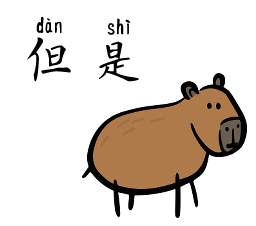
但是 dànshì is a versatile, neutral word for expressing contrast — safe to use in almost any context. It’s often paired with 雖然 suīrán (“although”) in the first clause, and can shorten to 但 dàn in slightly formal writing.
1 Structure
Clause 1 + 但是 dànshì + Clause 2
Say what’s true first, then use 但是 dànshì to introduce something that contrasts with it.
我很喜歡狗,但是不太喜歡小孩我很喜欢狗,但是不太喜欢小孩
I really like dogs, but I’m not fond of children.
這個菜很辣,但是很好吃这个菜很辣,但是很好吃
This dish is very spicy, but it’s delicious.
你是好人,但我們只能是朋友你是好人,但我们只能是朋友
You’re a good person, but we can only be friends. (但 dàn, the shortened form.)
Good to Know
好人卡 hǎorén kǎ (literally, a “good person card”) is internet slang that’s been around since the 1990s. It’s what people jokingly say happens after a romantic rejection — the other person calls them a “good person” as a polite way of saying no thanks. It’s the Chinese-language cousin of the Western “nice guy” trope.
這個地方風景很美,但交通不太方便这个地方风景很美,但交通不太方便
The scenery in this place is beautiful, but the transportation isn’t very convenient.
我想吃蛋糕,但是我在減肥我想吃蛋糕,但是我在减肥
I want to eat cake, but I’m on a diet.
他很帥,但是他已經有女朋友了他很帅,但是他已经有女朋友了
He’s handsome, but he already has a girlfriend.
今天是我的生日,但是沒有人記得今天是我的生日,但是没有人记得
Today is my birthday, but nobody remembered.
2 Practice
Translate each sentence into Chinese, then tap the card to check your answer.
01I like cats, but I don’t like dogs.
我喜歡貓,但是不喜歡狗我喜欢猫,但是不喜欢狗
👆 Tap to reveal
02This dress is pretty, but it’s too expensive.
這件洋裝很漂亮,但是太貴了这件洋装很漂亮,但是太贵了
👆 Tap to reveal
03He is smart, but he is very lazy.
他很聰明,但是很懶他很聪明,但是很懒
👆 Tap to reveal
04I want to go, but I don’t have time.
我想去,但是沒有時間我想去,但是没有时间
👆 Tap to reveal
05The weather is cold today, but I still want to go out.
今天天氣很冷,但是我還是想出去今天天气很冷,但是我还是想出去
👆 Tap to reveal
06She sings beautifully, but she is very shy.
她唱歌很好聽,但是很害羞她唱歌很好听,但是很害羞
👆 Tap to reveal
07This coffee is expensive, but it’s really good.
這杯咖啡很貴,但是真的很好喝这杯咖啡很贵,但是真的很好喝
👆 Tap to reveal
08I want to sleep, but I still have to work.
我想睡覺,但是還要工作我想睡觉,但是还要工作
👆 Tap to reveal
