Skip to content

OneDotDot Chinese

Learn a little Chinese every day

Menu
  • Vocabulary
  • Grammar
  • Resources
  • Practice
  • Shop
Menu

Author: tiffany

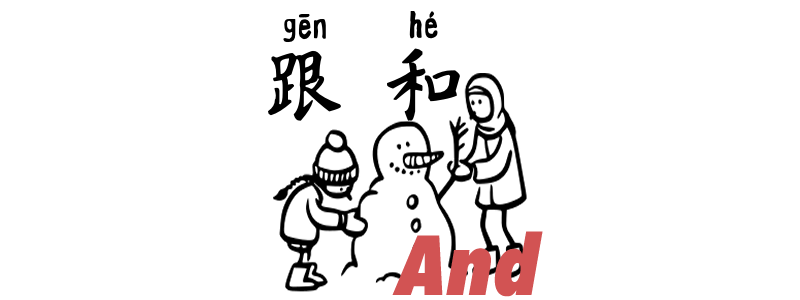
and in chinese 跟 gen 和 he

Expressing “And” with 和 hé 跟 gēn

Posted on May 7, 2023May 5, 2023 by tiffany

Grammar Point:和 hànhé and 跟 gēn are two conjunctions used to connect two nouns or noun phrases, indicating that they are both included in a list or group. It is similar to the English “and” and is often used to connect two people, two things, or two action activities. Structure Noun + 和/跟 + Noun…

Read more

Get A Chinese Name

Posted on May 7, 2023July 26, 2026 by tiffany

取名字 Make Your Chinese Name | OneDotDot Chinese 一 OneDotDot Chinese More resources → 姓名xìngmíng · your name in Chinese Get your ownChinese name, stamped. Enter your birthday and we’ll press together a family name and a given name the way generations of Chinese parents have — one character for the month, one for the…

Read more
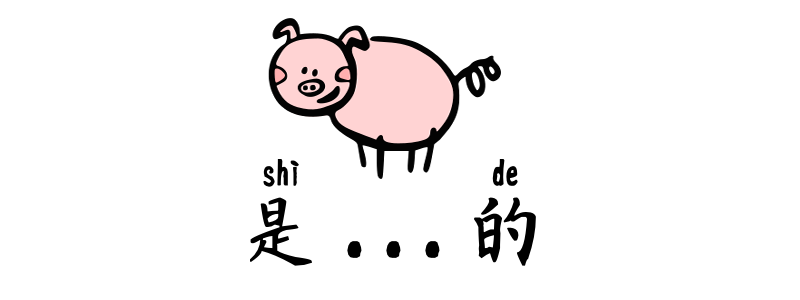
是 shì… 的 de Chinese structure

是 shì … 的 de Structure 2

Posted on May 6, 2023May 4, 2023 by tiffany

Grammar Point: The 是 shì … 的 de structure in Chinese is used to provide strong affirmation. It is often used to clarify or emphasize a point or to make a statement more assertive. It is similar to the way English speakers might stress the word “is” in a sentence. When to use it? What…

Read more
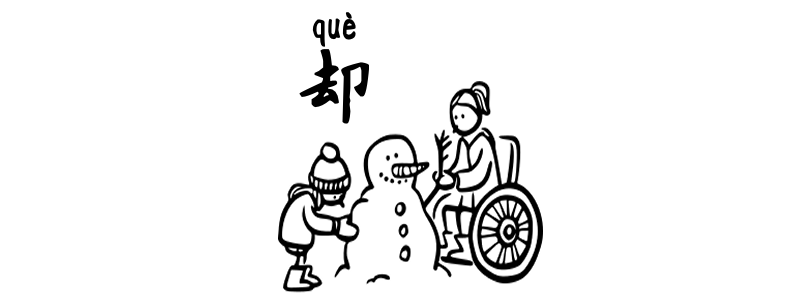
卻 què Grammar

却/卻 què Grammar

Posted on May 5, 2023May 4, 2023 by tiffany

Grammar Point:卻却 què is an adverb in Chinese that is commonly used to indicate a contrast between two statements. Although it is similar in meaning to the English conjunction “but” or “however”, it is not usually used to link two sentences. Structure Sentence ,(但是 +) S2 + 卻/却 When using 卻却 què, the first clause…

Read more

腦袋有洞 nǎodài yǒudòng

Posted on May 4, 2023August 9, 2026 by tiffany

Naodai Youdong 腦袋有洞脑袋有洞 · Nǎodài yǒudòng In one line Literally “having a hole in one’s head” — a humorous or critical way to describe someone who is acting foolish, brainless, or absent-minded. Definition 動詞短語动词短语 VERB PHRASE Literally meaning “having a hole in the head,” this popular slang expression (especially common in Taiwan) suggests that a…

Read more

Result Complement 2 Practice

Posted on May 3, 2023September 10, 2026 by tiffany

Grammar Practice · Verb Outcomes Result Complement 2 Practice More verb + result combos, this time built around perception and possession: 見见 jiàn “perceive” turns 看 “look” and 聽听 tīng “listen” into “see” and “hear,” 到 dào marks something achieved, and 走 zǒu marks something carried off. Each question needs the whole verb + result…

Read more
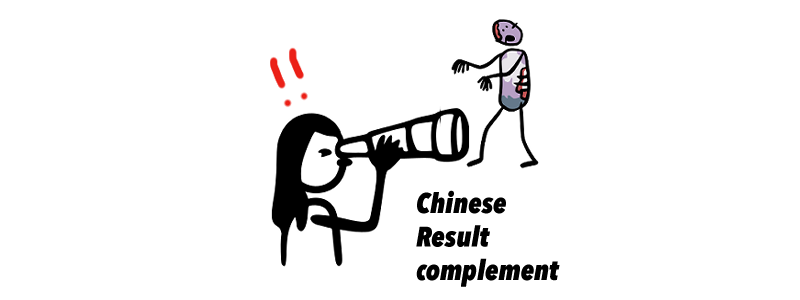
Chinese Result complement 結果補語

Result Complement 1 Practice

Posted on May 2, 2023September 8, 2026 by tiffany

Grammar Practice · Verb Outcomes Result Complement 1 Practice A result complement is a second element right after the verb that states the outcome of the action — not just that you did something, but what happened as a result. 看看 kàn “look” plus 懂懂 dǒng “understand” gives 看懂看懂 kàndǒng — “looked at it and…

Read more

Compound Direction Complements Practice

Posted on May 1, 2023September 5, 2026 by tiffany

Grammar Practice · Direction & Viewpoint Compound Direction Complements Practice A compound direction complement pairs a base direction — 上 shàng (up), 下 xià (down), 進/进 jìn (in), 出 chū (out), 回 huí (back), 過/过 guò (across), 起 qǐ (rise) — with 來/来 lái or 去 qù to say whether the motion is toward the…

Read more

Direction Complements – Extension Practice

Posted on April 30, 2023September 6, 2026 by tiffany

Grammar Practice · Idiomatic Extensions Direction Complements — Extension Practice Direction complements don’t always describe literal movement. 起來起来 qǐlái can mark the start of an action, “gather up,” or mean “seems” once you’ve looked/listened/thought about it. 上 shàng can mean “include,” “put on,” “add,” or “achieve/succeed at” a goal. 下 xià can mean “take off,”…

Read more

吃土 chītǔ

Posted on April 29, 2023August 9, 2026 by tiffany

Chitu 吃土吃土 · Chītǔ In one line Literally “eating dirt” — a humorous way to describe being completely broke or living on an extremely tight budget. Definition 動詞短語动词短语 VERB PHRASE Literally meaning “to eat dirt,” this popular internet slang is used when someone is so financially broke that they can’t even afford food and supposedly…

Read more

Posts pagination

  • Previous
  • 1
  • …
  • 59
  • 60
  • 61
  • 62
  • 63
  • 64
  • 65
  • …
  • 89
  • Next
當代中文当代中文 · Series

Contemporary Chinese

Volume Book 1 Volume Book 2 Coming Soon Book 3 Coming Soon Book 4
中文聽說讀寫中文听说读写 · Series

INTEGRATED CHINESE

Coming Soon Book 1 Coming Soon Book 2 Coming Soon Book 3 Coming Soon Book 4

OneDotDot Chinese

When a foreign friend says their Chinese is "yì diǎn diǎn" (just a little), this site exists to make that little bit grow, one day at a time.

  ABOUT

  About Me
  Special Thanks
  News
  My Students Only

  CONTACT

  LinkedIn
  Instagram
  Privacy Policy

© 2026 OneDotDot Chinese | Powered by Superbs Personal Blog theme