OneDotDot Chinese Grammar · HSK 5 Grammar Point · HSK 5 反而反而 fǎn’ér — “On the Contrary” 反而反而 fǎn’ér is an adverb that introduces an action or situation that goes against the speaker’s expectations. It’s often translated as “on the contrary,” “instead,” or “but rather.” Since 反而反而 fǎn’ér is an adverb, not a conjunction, it…
Author: tiffany
Wugang fagui 2
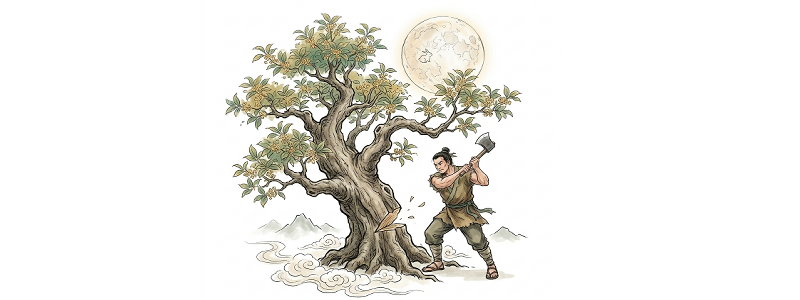
Story · HSK 2+ · Moon Festival 吳 Wugang Fagui — Part 2 吳剛伐桂(下)吴刚伐桂(下) Posted April 7, 2023 Author Tiffany Reading time 8 mins This story is one of the most famous stories associated with the Moon Festival. However, there are three different versions of it, each with slight variations — so if you hear…
Wugang Fagui 1
Story · HSK 2+ · Moon Festival 吳 Wugang Fagui 吳剛伐桂(上)吴刚伐桂(上) Posted April 6, 2023 Author Tiffany Reading time 7 mins This story is one of the most famous stories associated with the Moon Festival. However, there are three different versions of it, each with slight variations — so if you hear a different telling,…
Synonyms of “Again” in Chinese – Practice
Grammar Practice · Synonyms of “Again” 又, 再, 還还, 重 Practice Chinese has four different ways to say “again,” and they aren’t interchangeable. 又 yòu marks a repeat that already happened. 再 zài marks a repeat that hasn’t happened yet. 還还 hái means “still” or “also” — an ongoing or additional action. 重 chóng means…
Medusa’s Annoyance Part 4
Story · HSK 7+ · Part 4 美 Medusa’s Annoyance — Part 4 美杜莎(四)美杜莎(四) Posted April 4, 2023 Author Tiffany Reading time 5 mins “Medusa’s annoyance” is a story for HSK7+ learners. Stories I share are some Chinese folk tales, and some are my own creations. Listen to the Complete Story Story Story Part 1…
Medusa’s Annoyance Part 3
Story · HSK 7+ · Part 3 美 Medusa’s Annoyance — Part 3 美杜莎(三)美杜莎(三) Posted April 3, 2023 Author Tiffany Reading time 6 mins “Medusa’s annoyance” is a story for HSK7+ learners. Stories I share are some Chinese folk tales, and some are my own creations. Listen to the Complete Story Story Story Part 1…
Medusa’s Annoyance Part 2
Story · HSK 7+ · Part 2 美 Medusa’s Annoyance — Part 2 美杜莎(二)美杜莎(二) Posted April 2, 2023 Author Tiffany Reading time 7 mins “Medusa’s annoyance” is a story for HSK7+ learners. Stories I share are some Chinese folk tales, and some are my own creations. Listen to the Complete Story Story Story Part 1…
就, 才, 再 Practice
Grammar Practice · Time & Sequence Words 就 jiù, 才 cái, 再 zài Practice 就 jiù marks something happening sooner or more easily than expected, 才 cái marks something happening later or under a condition, and 再 zài marks the next action in a sequence. Work through 39 fill-in-the-blank sentences across 12 everyday scenes —…
Story – The bird that likes to travel 4
Story · HSK 4+ · Part 4 鳥鸟 The Taiwan Barbet That Likes To Travel 愛旅行的五色鳥爱旅行的五色鸟 Posted March 30, 2023 Author Tiffany Reading time 6 mins “The Taiwan barbet that likes to travel” is a story for HSK4 learners. Stories I share are some Chinese folk tales, and some are my own creations. Listen to…
Story – The bird that likes to travel 3
Story · HSK 4+ · Part 3 鳥鸟 The Taiwan Barbet That Likes To Travel 愛旅行的五色鳥爱旅行的五色鸟 Posted March 29, 2023 Author Tiffany Reading time 6 mins “The Taiwan barbet that likes to travel” is a story for HSK4 learners. Stories I share are some Chinese folk tales, and some are my own creations. Listen to…