Grammar Point Preposition 跟 gēn 跟 gēn is one of the most useful little words in Chinese. As a preposition, it can mean “with,” “and,” “from,” or “to,” depending on the verb that follows. 一 With: 跟 … 一起一块儿 A + 跟 + B + 一起一块儿 + Verb When 跟 gēn means “with” (doing something…
Author: tiffany
“According to” in Chinese 1 – 按照 ànzhào
Grammar Point “According to” in Chinese 1: 按照 ànzhào 按照 ànzhào means “according to” or “following” a method, rule, instruction, or plan. You do something the way it says. 一 按照 / 按 + Rule or Method 按照 / 按 + rule / method / instruction (+ Verb) 按照 ànzhào is followed by a rule,…
To Have Remembered – 想起來 xiǎngqǐlái
Grammar Point To Remember: 想起來想起来 xiǎngqǐlái 想起來 xiǎngqǐlái想起来 xiǎngqǐlái means “to recall”: something you’d forgotten suddenly comes back to you, often after some effort. Its negative form, 想不起來 xiǎng bù qǐlái想不起来 xiǎng bù qǐlái, means you can’t recall it, no matter how hard you try. 一 Recalling: 想起來想起来 Subject + 想起來想起来 + Object + 了…
“Until” in Chinese – 到 dào… 为止 wéizhǐ
Grammar Point:到 dào… 為为止 wéizhǐ is a common structure for expressing ‘until’ in Chinese. Unlike English, where ‘until’ is a single word, Chinese uses 到 dào as a starting marker and 為为止 wéizhǐ as an endpoint, framing the time, condition, or event. Structure 到 dào + Time/Event/Action + (為为止 wéizhǐ) 為为止 wéizhǐ is optional, but…
Chinese Adverbs for Degree 9
OneDotDot Chinese Grammar · HSK 4 Grammar Point · HSK 4 稍 shāo ・ 稍微 shāowéi稍微 shāowēi ・ 尤其 yóuqí 稍 shāo and 稍微 shāowéi稍微 shāowēi both mean “slightly,” with 稍微 shāowéi稍微 shāowēi being the everyday version and 稍 shāo the clipped, literary one. 尤其 yóuqí means “especially,” pulling out one standout example from a…
Reduplication of Verbs 2 – ABAB
OneDotDot Chinese Grammar · HSK 3 Grammar Point · HSK 3 Reduplication of Verbs 2 — ABAB Two-syllable verbs are reduplicated as ABAB. Like V一一V, it softens the action and makes it sound casual, tentative, or like “just doing it a bit.” Take a two-syllable verb AB and say it twice: 討論讨论 tǎolùn → 討論討論讨论讨论…
Reduplication of Verbs ABAB
Grammar Point Reduplication of Verbs: ABAB Saying a two-syllable verb twice (AB → ABAB) softens the action. It makes it sound casual, relaxed, or like you’re just trying it out for a bit: “discuss it a little,” “take a little rest.” You’ll hear it all the time in spoken Chinese, especially in suggestions. 一 Two-Syllable…

Chinese New Year
Chinese New Year — OneDotDot Chinese (Part 1) Chinese Festivals · 中國節日中国节日 Chinese New Year 過年过年 guònián 過年过年 guònián is the most important traditional festival in China, celebrated by Chinese communities worldwide — a season of reunion dinners, red envelopes, firecrackers, and fresh beginnings that stretches five to nine days depending on the year. People…
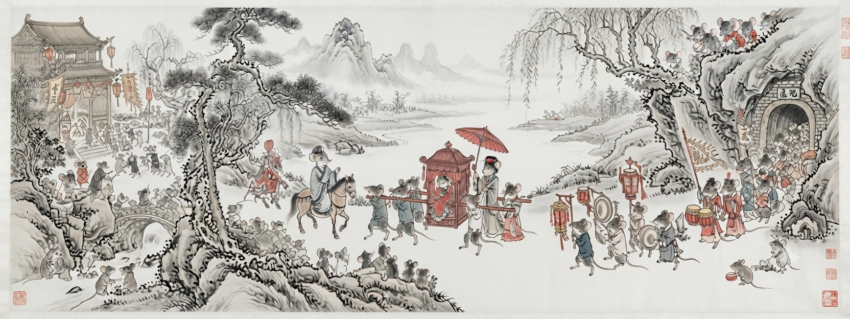
The Mouse Marries His Daughter 2
Story · HSK 3+ · Part 2 鼠 The Mouse Marries His Daughter — Part 2 老鼠嫁女兒(下) 老鼠嫁女儿(下) Posted Feb 2, 2025 Author Tiffany Reading time 8 mins “The Mouse Marries His Daughter” is a story for HSK3+ learners. Some stories I share are Chinese folk tales, and some are my own creations. According to…
The Mouse Marries His Daughter
Story · HSK 3+ 鼠 The Mouse Marries His Daughter 老鼠嫁女兒 (上)老鼠嫁女儿 (上) Posted Feb 2, 2025 Author Tiffany Reading time 8 mins “The Mouse Marries His Daughter” is a story for HSK3+ learners. Some stories I share are Chinese folk tales, and some are my own creations. According to an old Chinese legend, mice…