還 · 仍然 · 仍舊 · 依舊 · 依然 — 近義詞辨析 Similar words 5 Ways to Say “Still” in Chinese English mostly relies on one word, “still” — Mandarin has five, each with a different register. 還还 hái, 仍然 réngrán, 依然 yīrán, 仍舊仍旧 réngjiù and 依舊依旧 yījiù share a similar meaning of “still,” but there…
Author: tiffany
“Still” in Chinese 4 – 仍旧 réngjiù & 依旧 yījiù
OneDotDot Chinese Grammar · HSK 6 Grammar Point · HSK 6 仍舊仍旧 réngjiù · 依舊依旧 yījiù Both mean “still” or “as before,” and in most sentences they’re genuinely interchangeable. But 仍舊仍旧 réngjiù leans toward everyday persistence — something holding on despite the odds — while 依舊依旧 yījiù leans literary, the word you reach for when…

Subjective Evaluation with V 起來 qǐlái
Grammar Point:In the context of subjective evaluation, Verb + 起來 qǐlái is used to express how something feels, looks, tastes, or seems based on the speaker’s perception. This structure helps describe an impression or an initial judgment about something. Structure S + V 起來 + adj or descriptive phrase 這zhè蛋糕dàngāo看kàn起來qǐlái很hěn甜tián这zhè蛋糕dàngāo看kàn起来qǐlái很hěn甜tiánThis cake looks very sweet. 他tā聽tīng起來qǐlái很hěn聰明cōngmíng他tā听tīng起来qǐlái很hěn聪明cōngmingHe sounds very smart. 這zhè首shǒu歌gē聽tīng起來qǐlái很hěn輕快qīngkuài这zhè首shǒu歌gē听tīng起来qǐlái很hěn轻快qīngkuàiThis song sounds very relaxed. 這zhè衣服yìfú穿chuān起來qǐlái不bú太tài舒服shūfú这zhè衣服yìfú穿chuān起来qǐlái不bú太tài舒服shūfuThis…
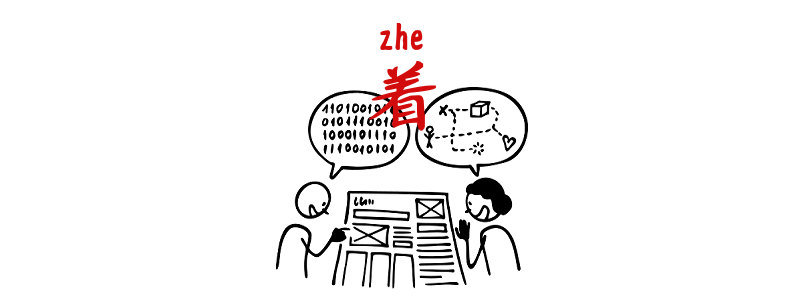
Ongoing Actions with zhe
Grammar Point:The particle 著着 zhe is used to indicate ongoing actions or a continuous state in Mandarin Chinese. While it’s common in narratives or storytelling, it’s not something you’ll hear often in everyday conversations. In daily life, people usually use 在 zài to talk about actions in progress. When do we use it? How would you describe these 2…

Two actions in the same time – 一邊 yìbiān…一邊 yìbiān…
Grammar Point:The term 一邊一边 yìbiān…一邊一边 yìbiān… is used to express the idea of doing one thing while doing another thing simultaneously, with both actions being intentional. It emphasizes that the two actions are happening at the same time and are equally important. If you want to express that something happened while another thing was happening,…

Showing Distance With 離 lí
Grammar Point:離离 lí is a Chinese preposition that can be used to indicate distance, separation, or departure. It is often translated as “away from,” “off,” or “from” in English. Structures A 離/离 lí B + 近 jìn or 遠/远 yuǎn 日本Rìběn離lí韓國Hánguó非常fēicháng近jìn日本Rìběn离lí韩国Hánguó非常fēicháng近jìnJapan is very close to Korea. 加拿大Jiānádà離lí墨西哥Mòxīgē不bú太tài遠yuǎn加拿大Jiānádà离lí墨西哥Mòxīgē不bú太tài远yuǎnCanada is not too far from Mexico. 我wǒ公司gōngsī離lí車站chēzhàn很hěn近jìn我wǒ公司gōngsī离lí车站chēzhàn很hěn近jìnMy company is very close…
“Always” in Chinese 4 – 一向 yíxiàng
OneDotDot Chinese Grammar · HSK 6 Grammar Point · HSK 6 一向一向 yíxiàng — “Always” 一向一向 yíxiàng means “always” or “consistently.” It describes habits, actions, or characteristics that have stayed the same over a long stretch of time, right up to now — like saying “it’s always been this way” in English. 一向一向 yíxiàng is…
“Again” in Chinese 2 – 再次 zàicì
OneDotDot Chinese Grammar · HSK 4 Grammar Point · HSK 4 再次 zàicì — “Again” 再次 zàicì means “again” or “once again” — it’s used for repeating an action or event, but carries a more formal, deliberate tone than other ways of saying “again” in Chinese. 再次 zàicì goes right before the verb, the same…
“Indeed” in Chinese 4 – 可 kě
OneDotDot Chinese Grammar · HSK 5 Grammar Point · HSK 5 可可 kě — “Indeed” The emphatic adverb 可可 kě is used in Chinese to add emphasis to a statement, often conveying a stronger attitude or emotion such as surprise, disagreement, or certainty. It’s a casual way to stress a point or to express “indeed.”…

Shifting Focus with 倒是 dàoshì
Grammar Point:The Chinese word 倒是 dàoshì can be used in a way that shifts focus or redirects attention in a conversation. This function is particularly useful when the speaker wants to introduce a new topic, perspective, or contrast that may not be directly related to the previous point, but still relevant. Structure Topic 1 + 倒是 dàoshì…