Spices & Herbs in Chinese — OneDotDot Chinese (Redesign) 香香草草與与香香料料 · Chinese Vocabulary Spices & Herbs in Chinese 香香草草與与香香料料 The numbing tingle of Sichuan peppercorns, the warm sweetness of star anise, the sharp bite of raw scallion — this guide covers the herbs and spices behind those flavors, with the dishes and stories that go…
Category: HSK 2
Chinese Feelings Vocabulary
Feelings in Chinese — OneDotDot Chinese (Redesign) 心心情情與与情情緒绪 · Chinese Vocabulary Feelings in Chinese 心心情情 Twenty-five words for how you might be feeling — plus a look at why, in Chinese-speaking culture, actually saying most of them out loud is rarer than you’d think. Before the list 心心情情與与情情緒绪 xīnqíng yǔ qíngxù — Mood & Emotion…
Taste and Texture in Chinese
Taste and Texture in Chinese — OneDotDot Chinese (Redesign) 味味覺觉與与口口感感 · Chinese Vocabulary Taste and Texture in Chinese 味味道道與与口口感感 Talking about flavor and texture can get dry fast — so this guide pairs the vocabulary with five real traditional Chinese snacks along the way, so you taste each word instead of just memorizing it. The…
Symptoms in Chinese
Symptoms in Chinese — OneDotDot Chinese (Redesign) 症症狀状與与中中醫医 · Chinese Vocabulary Symptoms in Chinese 症症狀状 zhèngzhuàng A plain list of symptoms is dull on its own, so this one comes with the Traditional Chinese Medicine logic behind each group — how it explains what’s going wrong, and what’s traditionally done about it. The idea behind…
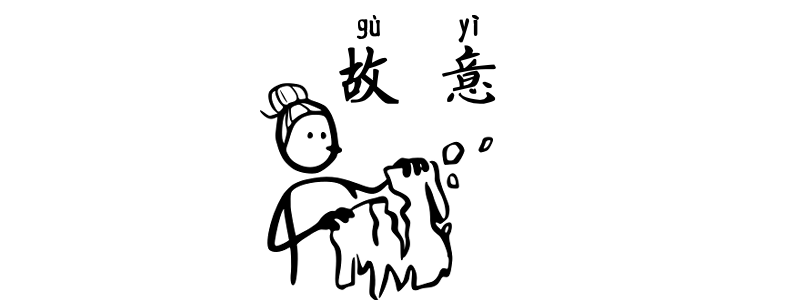
Intentionally – gùyì
Grammar Point:故意 gùyì is an adverb in Chinese that means “intentionally” or “on purpose.” In sentences, it often appears before the verb to clarify that the action was not accidental but was carried out with a specific intent. Structure S + 故意 gùyì + V 他tā故意gùyì把bǎ我的wǒde咖啡kāfēi弄nòng倒dǎo他tā故意gùyì把bǎ我的wǒde咖啡kāfēi弄nòng倒dǎoHe intentionally knocked over my coffee. 你nǐ是不是shìbúshì故意gùyì的de? 你nǐ是不是shìbúshì故意gùyì的de? Did you…
Living Room Vocabulary
Living Room Vocabulary — OneDotDot Chinese (Redesign) 客客廳厅與与風风水水 · Chinese Vocabulary Living Room Vocabulary 客客廳厅 A plain list of furniture words gets old fast — so this one comes wrapped in Fengshui, the traditional belief system Chinese households still lean on when arranging a living room. Fengshui is a personal practice more than a fixed…
The Chinese Family Tree
The Chinese Family Tree — OneDotDot Chinese (Redesign) 家家族族稱称謂谓 · Chinese Vocabulary The Chinese Family Tree 家家族族稱称謂谓 English gets by with “aunt,” “uncle,” and “cousin.” Chinese doesn’t let you off that easy — every relative’s exact position matters: which side of the family, older or younger, by blood or by marriage. It sounds intimidating, but…
Ordering Coffee
Vocabulary & Dialogue · Beginner語彙・会話・初級어휘·회화·초급 Ordering Coffee注文する주문하기 Coffee, tea, and juice vocabulary, plus a full staff–customer ordering dialogue.コーヒー、お茶、ジュースの語彙と、店員とお客様の注文会話です。커피, 차, 주스 어휘와 직원-고객 주문 대화문입니다. EN 日本語 한국어 Coffee 咖啡コーヒー 咖啡커피 咖啡 美式咖啡měishì kāfēi Americanoアメリカーノ아메리카노 拿鐵nátiě拿铁nátiě or拿堤nátí Latteラテ라떼 摩卡mókǎ Mochaモカ모카 焦糖瑪奇朵jiāotáng mǎqíduǒ焦糖玛奇朵jiāotáng mǎqíduǒ Caramel Macchiatoキャラメルマキアート카라멜 마끼아또 卡布奇諾qiǎbùqínuò卡布奇诺qiǎbùqínuò Cappuccinoカプチーノ카푸치노 Tea 茶お茶 茶차 茶 紅茶hóngchá红茶hóngchá Black tea紅茶홍차 綠茶lǜchá绿茶lǜchá…
往 wǎng, and 從/从 cóng in Chinese
OneDotDot Chinese Grammar · HSK 2 Grammar Point · HSK 2 Showing Direction 1 — 從从 cóng & 往往 wǎng 往往 wǎng shows the direction of movement or the destination (“towards,” “to”), while 從从 cóng marks the starting point in place or time (“from,” “since”). They often team up: 從从 cóng + starting point +…
Chinese Marking the Object – 给 gěi
OneDotDot Chinese Grammar · HSK 2 Grammar Point · HSK 2 給给 gěi — marking the object In Chinese, 給给 gěi also has several meanings depending on context, but as a preposition it means “to” or “for” — introducing the person an action is done for or directed at. The good news: 給给 gěi can…