Skip to content

OneDotDot Chinese

Learn a little Chinese every day

Menu
  • Vocabulary
  • Grammar
  • Resources
  • Practice
  • Shop
Menu

在 zài as location maker

Posted on January 5, 2024September 13, 2026 by tiffany

Table of Contents

Toggle
  • 一 Locative Words (方位詞方位词)
  • 二 Two Ways to Say Location
  • 三 The 裡面里面/裡邊里边 Shortcut
  • 四 Word Order Changes the Meaning
  • 五 Common Mistakes
  • 六 Practice

  • Text Display
  • ►Traditional
  • ►Simplified
  • Pinyin Display
  • ►Visible
  • ►Mouseover
  • ►Hidden
Grammar Point

在 zài

當代中文 Contemporary Chinese

在 means “at” or “in” — you’ll use it constantly to say where something is. But in Chinese, saying “on the table” or “in the box” needs one more small word after the location, called a locative word (方位詞方位词). This page covers what those words are, and the two ways to put a location sentence together.

一 Locative Words (方位詞方位词)

These are small words that describe direction or position — like “on top,” “underneath,” “inside.” You’ll almost always need one to say exactly where something is.

WordMeaning
上shàngup, top, above
下xiàdown, bottom, under
裡lǐ里lǐin
外wàiout
前qiánfront
後hòu后hòuback, behind
左zuǒleft
右yòuright
旁pángbeside
中間zhōngjiān中间zhōngjiānin between

All of these can combine with 邊biān边bian (side) or 面 (miàn, side) to make a full direction word, like “上面” (top side) or “上邊上边” (also top side). But 左, 右, and 旁 can only combine with 邊边, never 面 — and 中間中间 doesn’t combine with either.

Word+ 面 miàn+ 邊边 biān
上shàng上面shàngmiàn上面shàngmian上邊shàngbiān上边shàngbian
下xià下面xiàmiàn下面xiàmian下邊xiàbiān下边xiàbian
裡lǐ里lǐ裡面lǐmiàn里面lǐmian裡邊lǐbiān里边lǐbian
外wài外面wàimiàn外面wàimian外邊wàibiān外边wàibian
前qián前面qiánmiàn前面qiánmian前邊qiánbiān前边qiánbian
後hòu后hòu後面hòumiàn后面hòumian後邊hòubiān后边hòubian
左zuǒ❌左邊zuǒbiān左边zuǒbian
右yòu❌右邊yòubiān右边yòubian
旁páng❌旁邊pángbiān旁边pángbian
中間zhōngjiān中间zhōngjiān❌❌

二 Two Ways to Say Location

There are two ways to build a location sentence in Chinese — one more casual, one more formal. They mean the same thing.

Casual: Subject + 在 + Location + Locative Word

書shū书shū在zài桌子zhuōzi上shàng
The book is on the table.
我的wǒde手機shǒujī手机shǒujī不bù在zài包bāo裡lǐ里lǐ
My phone is not in the bag.
媽媽māma的de傘sǎn伞sǎn在zài不bù在zài門mén门mén外wài?
Is mom’s umbrella outside the door?
小貓xiǎomāo在zài我wǒ頭tóu上shàng睡覺shuìjiào睡觉shuìjiào,小狗xiǎogǒu在zài我wǒ腳jiǎo脚jiǎo旁páng睡覺shuìjiào睡觉shuìjiào,我wǒ先生xiānshēng在zài地dì上shàng睡覺shuìjiào睡觉shuìjiào
The kitten sleeps above my head, the dog sleeps beside my feet, and my husband sleeps on the floor.
When the location is a country or city name — like 台灣台湾, New York, or Shanghai — you don’t add a locative word at all. Just 我wǒ在zài台灣Táiwān台湾Táiwān (“I am in Taiwan”) — never 我wǒ在zài台灣裡Táiwān lǐ台湾里Táiwān lǐ.

Formal: Subject + 在 + Location + 的 + Locative Word + 面/邊边

書shū书shū在zài桌子zhuōzi的de上面shàngmiàn上面shàngmian
The book is on the table.
弟弟dìdi在zài你nǐ前面qiánmiàn前面qiánmian嗎ma吗ma?
Is your younger brother in front of you?
我wǒ家jiā在zài老師lǎoshī老师lǎoshī家jiā的de左邊zuǒbiān左边zuǒbian
My house is on the left side of the teacher’s house.

Notice that 的 is sometimes skipped after a pronoun like 你 — but the locative word still needs 面 or 邊边 attached in this formal version.

三 The 裡面里面/裡邊里边 Shortcut

裡面里面 and 裡邊里边 (“inside”) are special — they’re often dropped entirely when the context already makes “inside” obvious, like with a closet or a house.

你的nǐde衣服yīfú不bù在zài櫃子guìzi柜子guìzi(的de裡邊lǐbiān里边lǐbian)
Your clothes are not in the closet.
爸爸bàba在zài家jiā(裡邊lǐbiān里边lǐbian)看kàn電視diànshì电视diànshì
Dad is watching TV at home.

The faded part in parentheses is what usually gets dropped — both versions, with or without it, are correct.

四 Word Order Changes the Meaning

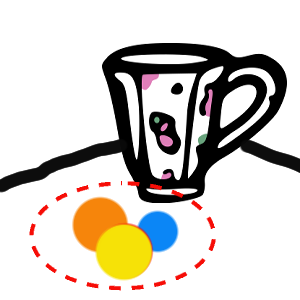
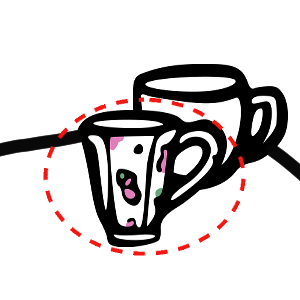
Do you know the difference between 杯子的前面杯子的前面 and 前面的杯子前面的杯子? Swapping the order turns a location into a totally different noun.

Noun + 的 + Locative Word

杯子bēizi的de前面qiánmiàn前面qiánmian
The front side OF the cup — this describes a location.
杯子的前面 — the front side of the cup

Locative Word + 的 + Noun

前面qiánmiàn前面qiánmian的de杯子bēizi
The FRONT cup — this describes which cup you mean.
前面的杯子 — the front cup

五 Common Mistakes

❌ 我wǒ在zài台灣裡Táiwān lǐ台湾里Táiwān lǐ

✅ 我wǒ在zài台灣Táiwān台湾Táiwān

Country and city names never take a locative word — just 在 + the name is enough.

❌ 我wǒ家jiā在zài老師lǎoshī老师lǎoshī家jiā的de左面zuǒmiàn左面zuǒmian

✅ 我wǒ家jiā在zài老師lǎoshī老师lǎoshī家jiā的de左邊zuǒbiān左边zuǒbian

左, 右, and 旁 only combine with 邊边 — never 面.

❌ 書shū书shū在zài桌子zhuōzi的de上shàng

✅ 書shū书shū在zài桌子zhuōzi的de上面shàngmiàn上面shàngmian

Once you add 的 before the locative word, you also need 面 or 邊边 after it — you can’t stop halfway. (Without 的, 書书在桌子上 alone is fine.)

六 Practice

Pick the correctly ordered sentence.

Question 1 of 10

“The keys are on the desk.”

The locative word 上 comes after the location 書桌书桌, not before it.

“The cat is under the chair.”

下 goes after 椅子 (the location), not before it.

“The money is in the wallet.”

裡里 goes after the location 錢包钱包, not before it.

“I am in Japan.”

日本 is a country name, so no locative word is needed at all.

“The dog is behind the house.”

的 goes right before 後面后面, not tacked on at the end of the sentence.

“Is the store in front of you?”

前 needs 面 or 邊边 attached to it — 前 alone isn’t a complete locative word here.

“My seat is beside the window.”

旁 only combines with 邊边 — 旁面 isn’t a real word.

“The park is between the school and the store.”

中間中间 never takes 面 or 邊边 — it stands on its own.

Translate: “the front side of the cup” (describing a location on the cup)

Noun + 的 + Locative Word describes a spot ON the noun — the front side of the cup.

Translate: “the cup that’s in front” (picking out which cup)

Locative Word + 的 + Noun picks out which cup you mean — the front one.

Related Grammar

→Actions in progress with 在 zàiHSK 1
→Existence in a place with 在 zàiHSK 1
Do you like it? :)
當代中文当代中文 · Series

Contemporary Chinese

Volume Book 1 Volume Book 2 Coming Soon Book 3 Coming Soon Book 4
中文聽說讀寫中文听说读写 · Series

INTEGRATED CHINESE

Coming Soon Book 1 Coming Soon Book 2 Coming Soon Book 3 Coming Soon Book 4

OneDotDot Chinese

When a foreign friend says their Chinese is "yì diǎn diǎn" (just a little), this site exists to make that little bit grow, one day at a time.

  ABOUT

  About Me
  Special Thanks
  News
  My Students Only

  CONTACT

  LinkedIn
  Instagram
  Privacy Policy

© 2026 OneDotDot Chinese | Powered by Superbs Personal Blog theme