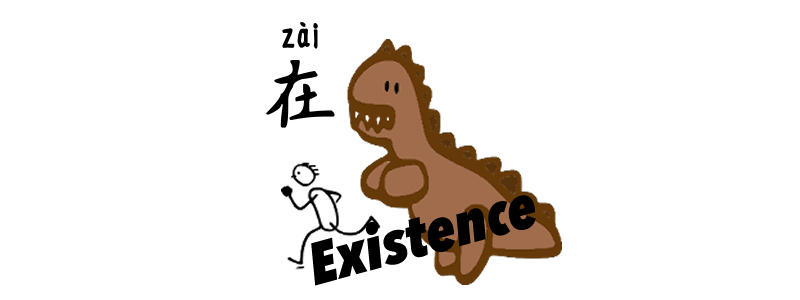
在在 zài does two jobs here. On its own it means “is at (a place),” and before another verb it tells you where an action happens. Either way, the place always comes before the action.
1Structure
S + 在在 zài + location
我在家
我在家
I am at home.
老師在美國
老师在美国
The teacher is in the U.S.
圖書館在學校的3樓
图书馆在学校的3楼
The library is on the 3rd floor of the school.
📚 Some common location words you may need
S + 在在 zài + location + action
Put 在在 zài + place in front of the verb to say where something is done.
我在家聽音樂
我在家听音乐
I listen to music at home.
老師在美國教中文
老师在美国教中文
The teacher teaches Chinese in the U.S.
我在廁所做蛋糕!
我在卫生间做蛋糕!
I’m making cakes in the restroom! (A joke. It means “I’m pooping.”)
📌 Place before action
English puts the place at the end (“I listen to music at home“), but Chinese puts 在在 zài + place before the verb:
我在家聽音樂我在家听音乐
S + 在 + place + verb
2Negation
Both 不不 bù and 沒没 méi can negate 在在 zài, but they aren’t the same:
📌 不在不在 bú zài vs. 沒在没在 méi zài
不在不在 bú zài describes the current situation or someone’s choice: “isn’t there (now).” Use it when asking or talking about where someone is right now.
沒在没在 méi zài states an objective fact, usually about the past: “wasn’t there / didn’t do it there.” In Chinese, a fact usually implies the past, since the past can’t be changed.
他不在公司
他不在公司
He is not at the office.
他去年沒在中國學中文
他去年没在中国学中文
He didn’t study Chinese in China last year.
哥哥不在電影院看電影
哥哥不在电影院看电影
My older brother isn’t watching a movie at the cinema.
哥哥沒在電影院看電影
哥哥没在电影院看电影
My older brother didn’t watch the movie at the cinema.
3Questions
There are three ways to turn it into a question.
With 嗎吗 ma
她在Apple上班嗎?
她在Apple上班吗?
Does she work at Apple?
李大明常常在學校打人嗎?
李大明常常在学校打人吗?
Does Li Daming often hit people at school?
With 哪哪 nǎ
她在哪上班?
她在哪上班?
Where does she work?
你今天在哪吃飯?
你今天在哪吃饭?
Where are you eating today?
💡 FYI
在哪在哪 zài nǎ is the short, casual form. The full form is 在哪裡 zài nǎlǐ在哪儿 zài nǎr. In Taiwan people say 哪裡 nǎlǐ哪里 nǎlǐ, while in mainland China 哪兒 nǎr哪儿 nǎr is also very common.
With 在不在在不在 zài bú zài
她在不在Apple上班?
她在不在Apple上班?
Does she work at Apple (or not)?
我先生在不在妳家?
我先生在不在你家?
Is my husband at your place?
4Common Mistakes
❌
我聽音樂在家
我听音乐在家
✅
我在家聽音樂
我在家听音乐
在在 zài + place goes before the verb, not at the end of the sentence like in English.
❌
我是在家
我是在家
✅
我在家
我在家
在在 zài is already the verb “to be at,” so don’t add 是是 shì.
5Practice
For 01–04, say where each person is and what they’re doing. For 05–08, translate into Chinese. Tap the card to check your answer.
01She…
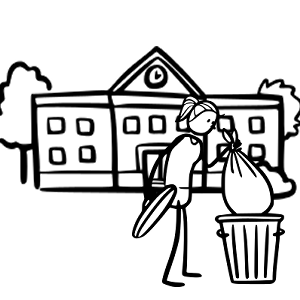
她在學校丟垃圾
她在学校丢垃圾。
👆 Tap to reveal
02He…

他在便利商店喝咖啡
他在便利店喝咖啡。
👆 Tap to reveal
03She…

她在家裡跳舞
她在家里跳舞。
👆 Tap to reveal
04She…

她在浴室吃飯
她在浴室吃饭。
👆 Tap to reveal
05My mom is not at home.
我媽媽不在家
我妈妈不在家。
👆 Tap to reveal
06Where do you work?
你在哪裡上班
你在哪儿上班?
👆 Tap to reveal
07Is your dad in Taiwan or not?
你爸爸在不在台灣
你爸爸在不在台湾?
👆 Tap to reveal
08I didn’t eat at home yesterday.
我昨天沒在家吃飯
我昨天没在家吃饭。
👆 Tap to reveal
