Taste and Texture in Chinese — OneDotDot Chinese (Redesign) 味味覺觉與与口口感感 · Chinese Vocabulary Taste and Texture in Chinese 味味道道與与口口感感 Talking about flavor and texture can get dry fast — so this guide pairs the vocabulary with five real traditional Chinese snacks along the way, so you taste each word instead of just memorizing it. The…
Author: tiffany
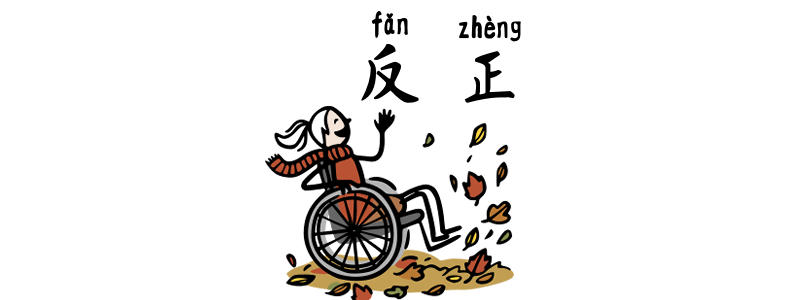
“Anyway” in Chinese – fǎnzhèng
Grammar Point:The Chinese word 反正 fǎnzhèng is an adverb that is commonly used in spoken language and informal writing. It is similar to the English word “anyway,” but not exactly the same. Structure 反正 + Reason The difference between English and Chinese is that 反正 fǎnzhèng always needs a reason with it, unlike English where…

Absolutely in Chinese – juéduì
Grammar Point:The Chinese word 絕對绝对 juéduì is commonly translated to “absolute” or “absolutely” in English. It is used to describe something that is completely certain, or without any doubt. Structure As an Adjective 這zhè場chǎng比賽bǐsài韓國hánguó有yǒu絕對juéduì的de優勢yōushì这zhè场chǎng比赛bǐsài韩国hánguó有yǒu绝对juéduì的de优势yōushìIn this game, South Korea has an absolute advantage. 太太tàitai在zài家裡jiālǐ是shì絕對juéduì的de權威quánwēi太太tàitai在zài家里jiālǐ是shì绝对juéduì的de权威quánwēiMy wife is an absolute authority at home. 狗gǒu對duì人rén有yǒu著zhe絕對juéduì的de忠誠zhōngchéng狗gǒu对duì人rén有yǒu着zhe绝对juéduì的de忠诚zhōngchéngDogs have absolute loyalty to…
Ways to Ask and Answer Questions
Question & Answer Structures Ways to Ask and Answer Questions There are two easy ways to turn a statement into a yes-or-no question in Chinese. And answering one isn’t a simple “yes” or “no” either — you repeat the verb instead. This page covers both. 一 Statement + 嗎吗 ma The simplest way to ask…
Fruits in Chinese
Fruits in Chinese — OneDotDot Chinese (Redesign) 水水果果 · Chinese Vocabulary Fruits in Chinese 水水果果 Fruit names are an easy place to start — but in Chinese, fruit also comes with an opinion about your body. Traditional Chinese medicine sorts every fruit into one of five “natures,” and which one you reach for is thought…
Chinese Adjectives and 很 hěn
Stative Verbs Adjectives + 很 hěn Chinese adjectives work a bit like verbs — you don’t need a “to be” word in front of them. But most of the time, they still need a small helper word like 很 hěn in front. This page explains why, and when you can skip it. 一 What Are…
不 bù and its tone changes
Negation 不 bù 不 goes right before the word it’s negating — an adjective, a verb, or one of two special verbs that always need it. On top of that, 不 itself sometimes changes tone, which this page covers at the end. 一 不 + Adjective Put 不 right before an adjective to say something…
Chinese Grammar – 嗎/吗 ma and 呢 ne
Question Particles 嗎吗 ma vs 呢 ne Both words go at the end of a sentence, and both show up in questions — that’s why people mix them up. 嗎吗 ma turns a sentence into a yes-or-no question. 呢 ne is never a yes-or-no question — it does other jobs, and which job depends on…

“Has no choice but to” – zhǐhǎo
Grammar Point:In Chinese, the expression 只好 zhǐhǎo is used to convey the idea that someone has no choice but to do something because it’s the only viable option or the best available solution in a given situation. Structure (S) + 只好 zhǐhǎo + V 大家dàjiā都dōu不想bùxiǎng當dāng班代bāndài, 只好zhǐhǎo抽籤chōuqiān決定juédìng大家dàjiā都dōu不想bùxiǎng当dāng班代bāndài, 只好zhǐhǎo抽签chōuqiān决定juédìngNo one wants to be the class representative, so…

Expressing “urgency” in Chinese
Grammar Point:In Chinese grammar, there are several words and phrases that can be used to express a sense of urgency or the need to do something quickly. Here are some commonly used expressions: 趕緊赶紧 gǎnjǐn, 趕赶快 gǎnkuài, 連连忙 liánmáng, and 立刻 lìkè. 趕緊/赶紧 gǎnjǐn It is often used in imperative sentences or statements to urge…