HSK 2 · Reading Practice Let’s go to the Zoo Vocabulary HSK 2 動物園dòngwùyuán动物园dòngwùyuán Tap to flip zoo 昨天zuótiān我們wǒmen去qù動物園dòngwùyuán看kàn熊貓xióngmāo昨天zuótiān我们wǒmen去qù动物园dòngwùyuán看kàn熊猫xióngmāo Yesterday we went to the zoo to see pandas. HSK 2 期qí待dài期qī待dài Tap to flip to look forward to 他tā很hěn期待qídài明天míngtiān的de生日shēngrì派對pàiduì他tā很hěn期待qīdài明天míngtiān的de生日shēngrì派对pàiduì He is looking forward to tomorrow’s birthday party. HSK 2 背bēi包bāo背bēi包bāo Tap to flip backpack 她tā每天měitiān背著bēizhe背包bēibāo去qù上學shàngxué她tā每天měitiān背着bēizhe背包bēibāo去qù上学shàngxué…
Author: tiffany
“In total” in Chinese – 共 gòng & 全 quán
OneDotDot Chinese Grammar · HSK 4 Grammar Point · HSK 4 共共 gòng & 全全 quán — “In Total” & “Entire” 共共 gòng and 全全 quán both point at “everything,” but from different angles. 共共 gòng pairs with a number to give a grand total, while 全全 quán pairs with a noun to emphasize the…
A little bit – 有一点 yǒuyìdiǎn & 一点 yìdiǎn
Grammar Point 有一點有一点 yǒuyìdiǎn & 一點一点 yìdiǎn Both phrases mean “a little” or “a bit,” but they attach to different types of words. On the mainland, 有點兒yǒudiǎnr有点儿yǒudiǎnr is actually more common than 有一點有一点. 一 Structure Phrase Pairs With 有一點有一点 yǒuyìdiǎn + Adjective 一點一点 yìdiǎn + Noun 今天jīntiān天氣tiānqì天气tiānqì有一點yǒuyìdiǎn有一点yǒuyìdiǎn熱rè热rè Today’s weather is a bit hot. 我wǒ弟弟dìdi有一點yǒuyìdiǎn有一点yǒuyìdiǎn矮ǎi My…
Can – Skills 会 huì
Grammar Point 會会 huì — Learned Skills 會会 emphasizes a skill you’ve learned or been trained to do — closer to “knowing how” than “being physically able to.” Speaking a language, playing an instrument, driving — all learned abilities that take 會会. 一 會会 huì 我wǒ會huì会huì開車kāichē开车kāichē I can drive. (I know how to drive.) 我wǒ不會búhuì不会búhuì說shuō说shuō中文Zhōngwén…
“Seems” in Chinese – 似乎 sìhū
OneDotDot Chinese Grammar · HSK 5 Grammar Point · HSK 5 似乎似乎 sìhū — “Seems” 似乎似乎 sìhū is similar to saying “seems like” or “seems” in English. It helps describe when something appears a certain way based on what you see or feel, but it’s not confirmed or certain. 似乎似乎 sìhū is actually the formal…
Movement Marker – 到 dào
Grammar Point 到 dào — Movement Marker 到 marks the completion or arrival of a movement toward a specific place — often paired with 來来 (come), 去 (go), or another verb of motion. 一 Structure Subject + 到 + Place + (Action) 我們wǒmen到dào陽明山Yángmíngshān泡pào溫泉wēnquán好嗎hǎoma?我们wǒmen到dào阳明山Yángmíngshān泡pào温泉wēnquán好吗hǎoma? Shall we go to Yangmingshan for hot springs? 你nǐ明天míngtiān可以kěyǐ到dào我們wǒmen公司gōngsī看看kànkan你nǐ明天míngtiān可以kěyǐ到dào我们wǒmen公司gōngsī看看kànkan You can come…
Movement Marker 到 dào
OneDotDot Chinese Grammar · HSK 1 Grammar Point · HSK 1 到 dào 到 dào marks arrival — the completion of a movement toward a destination. 到 dào slots in right after the subject, marking that a movement is complete or a destination has been reached. It’s often paired with 來 lái (come) or 去…

Expressing tones with hái
Grammar Point:In Mandarin Chinese, the word 還还 hái can be used to convey a surprised or sarcastic tone, and it can be employed in rhetorical questions as well. It adds emphasis or disbelief to a statement, often suggesting surprise or skepticism about something that has been said or done. Structure S + hái + Noun…
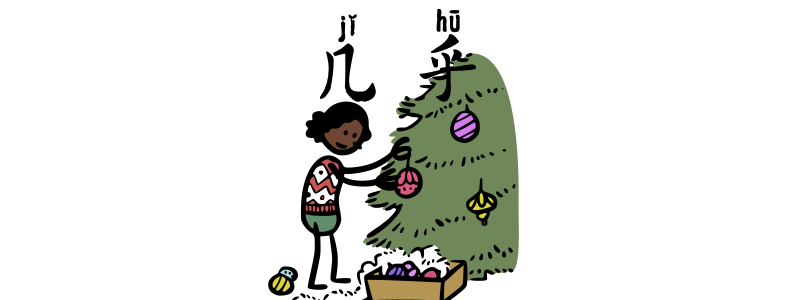
Almost in Chinese – jīhū
Grammar Point:The Chinese word 幾几乎 jīhū means “almost” or “nearly” in English. It is used to describe that something is close to completion, close to a certain state, or almost reaching a specific condition or outcome. Structure S + jīhū + V + O or Complement 幾几乎 jīhū is often used in conjunction with words…
Menus in Chinese
Menus in Chinese — OneDotDot Chinese (Redesign) 菜菜單单詞词彙汇 · Chinese Vocabulary Menus in Chinese 菜菜單单 Sit down at a restaurant in Taiwan or China and the menu works differently than you might expect — there’s no fixed “main course,” side dishes come on their own little plates, and dessert usually means fruit or a warm…