Grammar Point 得 de — Complement Marker 得 sits between a verb and a following adjective, describing how the action turned out — the result or state that came from doing it. In Mandarin, the result always comes after the action. 一 Structure Verb + 得 + Adjective 你nǐ走zǒu得de很hěn快kuài You’re walking fast. 他tā睡shuì得de非常fēicháng好hǎo He slept…
Author: tiffany
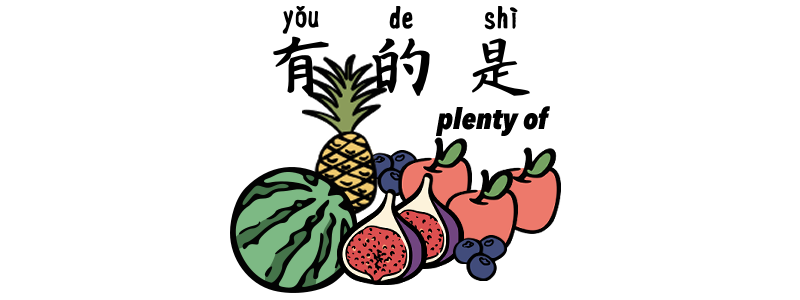
Plenty of – 有的是 yǒudeshì
Gremmar Point:The phrase 有的是 yǒudeshì in Chinese grammar is used to convey the idea of “plenty of” or “an abundance of.” It’s used to express that there is an ample amount of something, indicating an abundance or a large quantity without scarcity. Structure S + 有的是 yǒudeshì + N S + N + 有的是 yǒudeshì…
視聽華語 Book 1 Lesson 7
Measure Words – 杯 bēi, 块 kuài, 种 zhǒng and 支 zhī
Grammar Point Measure Words — 杯 bēi, 塊块 kuài, 種种 zhǒng & 枝支 zhī 一 What Is a Measure Word? Chinese needs a measure word between a number (or a word like “this/that”) and a noun — every time, even for single, countable things. There are over 200 measure words, and most nouns pair with…
Preposition “help” – bāng
Grammar Point 幫帮 bāng 幫bāng帮bāng means “to help.” You use it when one person helps another person do something — like helping with homework, or helping someone carry something heavy. The one tricky part: when you want to say “didn’t help” or “won’t help,” the “not” word goes right before 幫帮, not before the action…
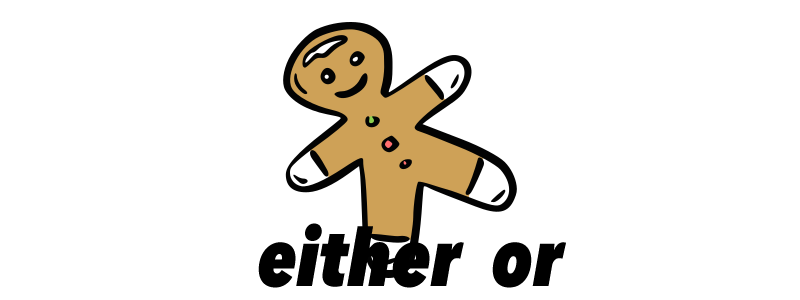
Expressing “either… or…” in Chinese
Grammar Point:The structure 不是 búshì… 就是 jiùshì… in English can be translated as “either… or…” or “if it’s not…, then it’s…” It emphasizes the limited options available, indicating that something is either one thing or another, without any other alternatives. Structure 不是 búshì + option 1 + 就是 jiùshì + option 2 我wǒ家jiā附近fùjìn的de餐廳cāntīng不是búshì中式zhōngshì, 就是jiùshì日式rìshì我wǒ家jiā附近fùjìn的de餐厅cāntīng不是búshì中式zhōngshì, 就是jiùshì日式rìshìThe…
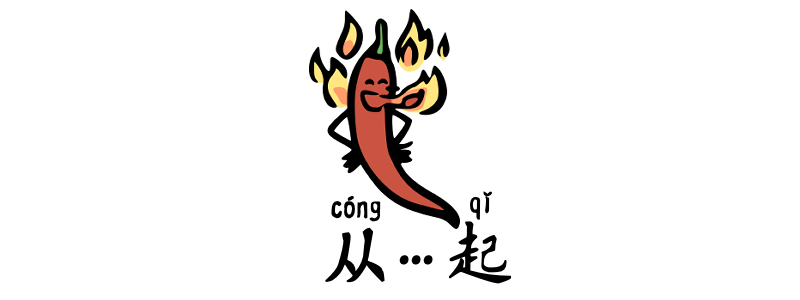
“Ever since” in Chinese
Grammar Point:從从 cóng… 起 qǐ in Chinese is used to indicate the starting point or moment of an action or situation. It’s similar in meaning to “ever since” or “starting from…” in English. Structure Cóng + Time + qǐ It is also common to use 後后 hòu to replace 起 qǐ. However, 起 qǐ implies…
Express “more than” with 多 duō
Grammar Point 多 duō 多 usually means “more” — but here it has a special job: turning a round number into “a bit more than that,” like saying “just over ten” or “over 30 dollars.” Where 多 goes in the sentence depends on one simple thing: whether the number itself is round (ends in a…
Already 3 – 都 dōu… 了 le
OneDotDot Chinese Grammar · HSK 2 Grammar Point · HSK 2 Already 3 — 都都 dōu … 了了 le 都都 dōu … 了了 le means “already,” but with feeling. It stresses that a time, an amount, or a result has already been reached, often more than the speaker expected. Compared with 已經已经 yǐjīng, 都都 dōu…
Approximate Number 3 – 大约, 大概, 左右, 前后
OneDotDot Chinese Grammar · HSK 3 Grammar Point · HSK 3 Approximate Numbers 3大概 dàgài, 大約大约 dàyuē, 左右 zuǒyòu, 前後前后 qiánhòu & Adjacent Numbers In Chinese, there are several words and phrases used to express approximate numbers or quantities. Four common ones are 大概 dàgài, 大約大约 dàyuē, 左右 zuǒyòu and 前後前后 qiánhòu — plus a…