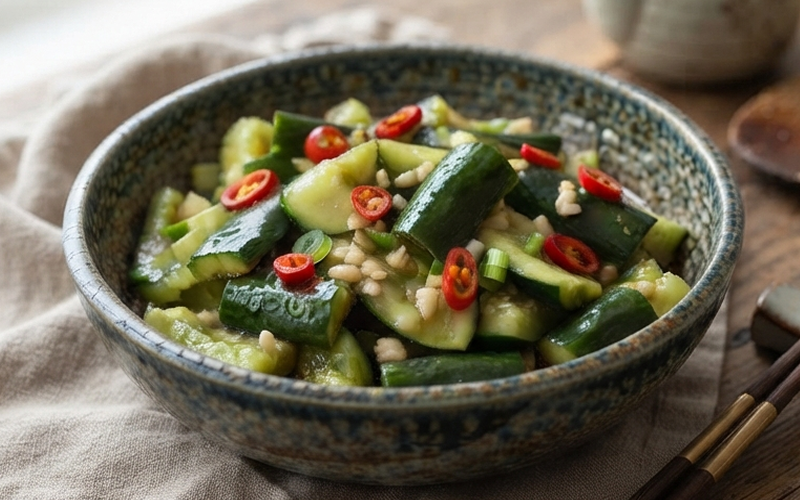
涼拌小黃瓜凉拌小黄瓜 (liángbàn xiǎohuángguā) is one of the most common cold dishes on a Taiwanese dinner table — light, crunchy, and ready in minutes. The cucumbers are lightly smashed rather than sliced, which cracks the flesh open just enough to let the marinade soak all the way through, not just coat the surface.
It shows up everywhere from home dinner tables to night market stalls, usually as a palate-cleansing side next to something heavier like braised pork rice or fried chicken. The exact ratio of sugar, salt, vinegar, and chili varies by household — this version leans balanced, with room to push it spicier or more sour to taste.
Reading the name
涼凉 liáng — cool, cold. 拌拌 bàn — to toss, to mix. Together, 涼拌凉拌 (liángbàn) is a cooking method, not just a dish — it means “cold-tossed,” and shows up across Chinese cuisine on things like 涼拌豆腐凉拌豆腐 (cold-tossed tofu) and 涼拌木耳凉拌木耳 (cold-tossed wood ear mushroom). 小黃瓜小黄瓜 (xiǎohuángguā) literally means “little yellow melon” — the Taiwanese term for cucumber; across the strait in mainland China, people usually just say 黃瓜黄瓜 (huángguā), without the “little.”
材料材料Ingredients
Units:
小黃瓜小黄瓜
Cucumber
300 g
細砂糖细砂糖
Granulated sugar
40 g
鹽盐
Salt
1.5 tsp
白醋白醋
White vinegar (or use lemon as a substitute)
40 ml
辣椒辣椒
Chili pepper
1 piece
蒜泥蒜泥
Minced garlic
1 tbsp
香油香油
Sesame oil
a few drops
💡 No fresh chili on hand? A pinch of dried chili flakes works too. Prefer it milder? Halve the chili or leave it out — the dish is just as good without the heat.
🌍 Shopping outside Asia: look for Persian or Japanese/mini cucumbers rather than the large waxed ones — they’re crunchier and have fewer seeds. White rice vinegar can sub in for Chinese white vinegar; toasted sesame oil (not the light/refined kind) is worth seeking out for the aroma.
Add the minced garlic (grinding it finely helps it infuse flavor quickly), the sliced chili pepper, and white vinegar, then mix thoroughly.
4
盛盤盛盘後后滴入滴入幾几滴滴香油香油在在小黃瓜小黄瓜上面上面,這樣这样就就完成完成了了!
Transfer to a plate and drizzle a few drops of sesame oil over the cucumbers. And it’s done!
💡 For deeper flavor, let it sit in the fridge for 15–20 minutes before serving — but it’s just as good eaten right away.
辣度辣度Spice Level Variations
Same base recipe, different heat — adjust the chili (and a couple of add-ins) to taste.
溫和温和
wēn hé
Mild — halve the chili, or leave it out entirely
經典台式经典台式
jīngdiǎn táishì
Classic Taiwanese — as written in this recipe
川味川味
chuān wèi
Sichuan-style — add chili oil and a pinch of ground Sichuan peppercorn for a numbing kick
韓式韩式
hánshì
Korean-style — swap in gochugaru and a touch more sugar
🙋 To be clear — this isn’t real Korean cucumber kimchi (oi kimchi). Honestly, the real thing is better! This is just a Taiwanese take that borrows Korean flavors for this cold cucumber salad.
That’s the salt drawing liquid out of the cucumber, which is normal — but if there’s a lot of standing liquid, drain it off before serving so the marinade doesn’t get diluted. Smashing (rather than slicing) also helps keep some crunch since the broken surface still holds structure.
Yes, but it’s best within a few hours. The cucumbers keep releasing water the longer they sit, so texture softens over time — if making ahead, drain any excess liquid right before serving.
Rice vinegar or lemon juice both work well as substitutes — the dish is meant to be tangy, not sharply acidic, so use a light hand and adjust to taste.
Yes to both, as written — just double check your sesame oil and vinegar brands if you’re being strict about cross-contamination.