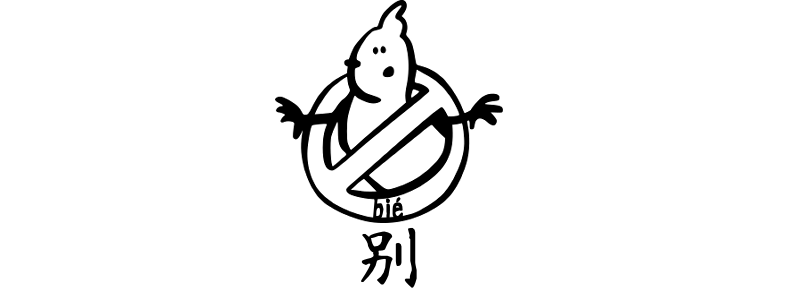
The good news: 別 bié almost always works the same way — put it right before the verb (or adjective) you want someone to avoid or stop. Add 了 at the end when the action is already happening and you want it to stop.
1 別 bié + V or SV
別 bié tells someone not to start doing something. It sits right in front of the verb or adjective — no extra grammar needed.
別跑别跑
Don’t run.
別吃太多别吃太多
Don’t eat too much.
別緊張别紧张
Don’t be nervous.
上中文課別說英文上中文课别说英文
Don’t speak English in Chinese class.
別想太多别想太多
Don’t overthink.
我知道我很美我知道我很美,但是你別愛我但是你别爱我
I know I’m beautiful, but don’t love me.
別裝蒜别装蒜!
Don’t play innocent!
💬 別裝蒜 bié zhuāngsuàn
Literally “don’t act like garlic” — used to tell someone to stop pretending they don’t know something they actually do. The phrase comes from a story about officials who tricked an emperor with narcissus flowers standing in for garlic plants he expected to see. Ever since, 裝蒜 has meant faking ignorance to get away with something.
2 別 bié + V + 了
Add 了 le at the end and 別 bié shifts meaning slightly: instead of “don’t start,” it becomes “stop” — asking someone to cut off something already in progress.
別說了别说了
Stop talking.
別哭了别哭了
Stop crying.
別吃了别吃了
Stop eating.
別吵了别吵了
Stop making noise.
別學了别学了!中文太難了中文太难了!
Stop studying! Chinese is too difficult!
⚠️ Common mistake — commands need 別, not 不
不 bù states a fact or a stance (“I don’t ___”); it doesn’t work as a command. To tell someone not to do something, you need 別 bié.
❌你不說話你不说话!
✅你別說話你别说话!
不 states a fact, not a command — for “don’t,” you need 別 bié.
3 Practice
Translate each sentence into Chinese, then tap the card to check your answer.
01Don’t touch that.
別碰那個别碰那个。
👆 Tap to reveal
02Stop yelling.
別叫了别叫了。
👆 Tap to reveal
03Don’t be afraid.
👆 Tap to reveal
04Don’t forget to bring your passport.
別忘了帶護照别忘了带护照。
👆 Tap to reveal
05Stop playing games, it’s already midnight.
別玩遊戲了别玩游戏了,已經半夜了已经半夜了。
👆 Tap to reveal
06Don’t worry about me.
別擔心我别担心我。
👆 Tap to reveal
07Stop laughing!
別笑了别笑了!
👆 Tap to reveal
08Don’t be late tomorrow.
明天別遲到明天别迟到。
👆 Tap to reveal
