Chinese Festivals · 中国节日
Taiwan National Day
双十节 shuāngshíjié
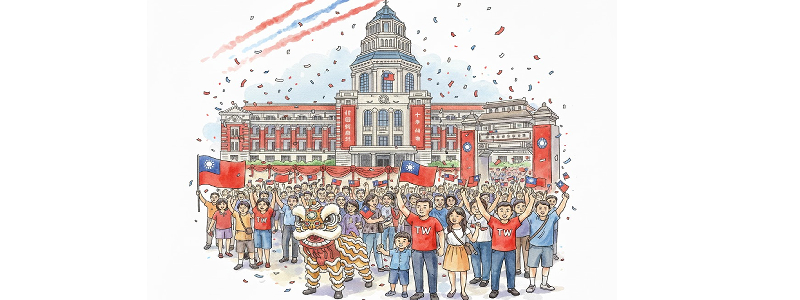
Taiwan’s National Day is also known as Double Ten Day or Double Tenth Day. It’s a nickname for the date itself — the 10th day of the 10th month.
ROC vs. PRC
Taiwan’s official name is the Republic of China (ROC). Even though “China” is in the name, Taiwan and China are not the same country. China’s official name is the People’s Republic of China (PRC). The reason the two names look so similar is a long, complicated history. It’s worth a search of its own if you’re curious, since plenty has been written about it.
When is the 双十节 shuāngshíjié?
Taiwan’s National Day commemorates the 1911 Wuchang Uprising. That uprising led to the fall of the Qing dynasty and the founding of the Republic of China. It was first celebrated in 1913. It became an official public holiday in Taiwan in 1949, when the ROC government relocated there after losing the Chinese Civil War to the Communist Party.
Unlike 国庆节 guóqìngjié, China’s National Day, Taiwan’s version is just a single day off, observed on October 10th. The date was also marked during the ROC’s rule over mainland China before 1949. The People’s Republic of China that followed still recognizes the date, as the Anniversary of the Xinhai Revolution. It’s just not a public holiday there.
青天白日满地红 qīngtiān báirì mǎndì hóng
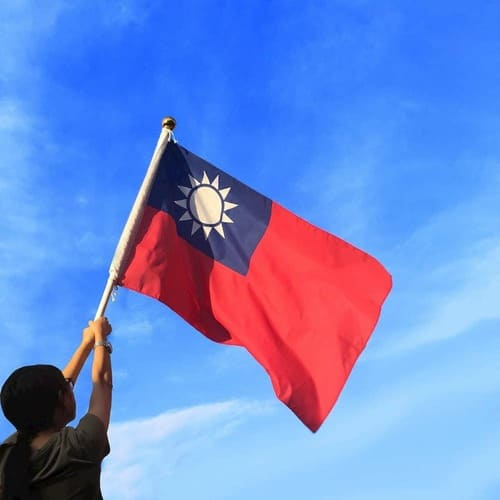
The name of Taiwan’s flag translates to “Blue Sky, White Sun, Wholly Red Earth” — a literal description of what’s on it. The blue canton represents freedom and justice. The white sun stands for equality and the twelve months of the year, via its twelve rays. The red field represents the sacrifice and blood of revolutionaries.
Five things that happen every year
Parade performance 仪队表演 yíduì biǎoyǎn
Military units open the parade. The part people actually wait for comes next: Taiwan’s top girls’ high school leads a drill team performance. Being chosen to march is considered a real honor. The routine feels closer to a cheerleading show than a military march — which is exactly why it’s the crowd favorite.
The performance itself starts around 1:58.
Flag-raising ceremony 升旗典礼 shēngqí diǎnlǐ
Held every year in front of the Presidential Building, starting at 7:30 a.m. Crowds gather to sing the national anthem as the flag is slowly raised. Once it reaches the top, the government releases a flock of doves.
Giving a speech 致辞 zhìcí
The President typically gives a speech touching on the past year’s achievements. It also covers goals for the year ahead: economic growth, foreign relations, national security, and Taiwan’s commitment to democracy. In reality, this is usually when the crowd starts quietly slipping away to go buy breakfast.
Military vehicle parade 军机表演 jūnjī biǎoyǎn
Tanks, armored personnel carriers, and other specialized vehicles roll through in the afternoon, after the morning’s ceremony and speeches. The public can attend, though everyone has to pass through security checkpoints first.
Fireworks 烟火 yānhuǒ
An hours-long fireworks show is held in a different county each year, alongside smaller displays across the island. Big, colorful, and elaborate — crowds gather to watch and take plenty of photos in a genuinely festive atmosphere.
Taiwan’s national song
Fireworks, quietly reimagined
In recent years, Taiwan has started using “silent fireworks” for parts of the National Day display. The goal is to cut down on noise and air pollution, making for a more eco-friendly show. Not everyone’s a fan, though — some feel the missing bangs make the whole thing a little less lively.

