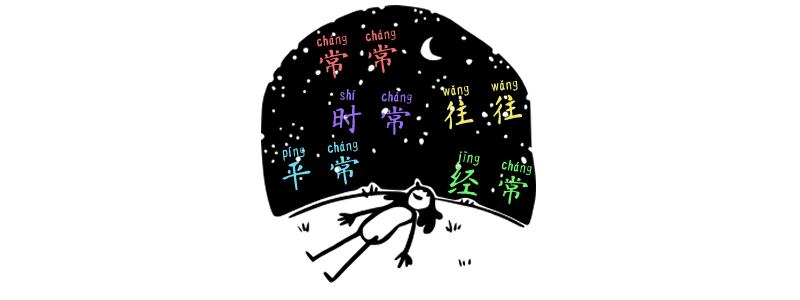
Introduction:常常 chángcháng, 經常经常 jīngcháng, 往往 wǎngwǎng, 平常 píngcháng, and 時常时常 shícháng share a similar meaning of “often” or “frequently,” but there are some differences in their usages and connotations. 常(常) cháng(cháng) Adverb 常(常) cháng(cháng) means “often” and is always interchangeably with 經常经常 jīngcháng. However, it can sometimes imply a slightly more casual or less frequent…
Category: HSK 3
Adverbs of Frequency 1
Chinese adverbs of frequency are words that indicate how often an action occurs. Some common Chinese adverbs of frequency include: Structure Adverbs of Frequency + Verb It’s important to note that Chinese adverbs of frequency can appear before or after the verb they modify, but they generally appear before the adverbs of manner in a…
Chinese Measure Words 3
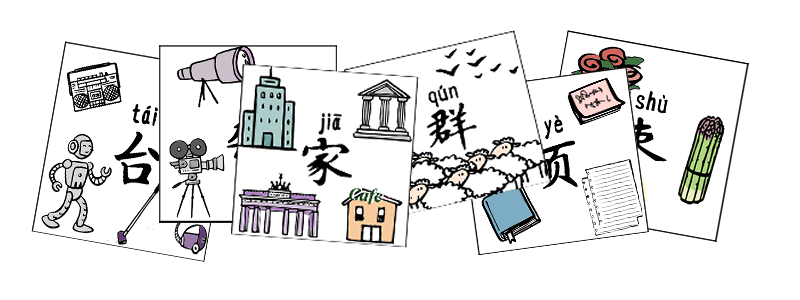
Grammar Point:In this article, we are going to introduce the following Chinese measure words: 把 bǎ, 行 háng, 架 jià, 群 qún, 束 shù, 台 tái, 家 jiā, 頁页 yè 把 (bǎ) This is a measure word in Chinese that is used to indicate a group of objects or one certain object that can be held with one hand, such…
Except and Besides in Chinese
Grammar Point除了 chúle is a commonly used conjunction in Chinese that means “besides” or “except for.” It is often used to introduce additional information or to exclude something or someone from a group or list. And it can take a noun phrase or a verb phrase as its object. Structure – Besides S + 除了⋯…
HSK3 Reading Practice – The Adventure of the Little Dog
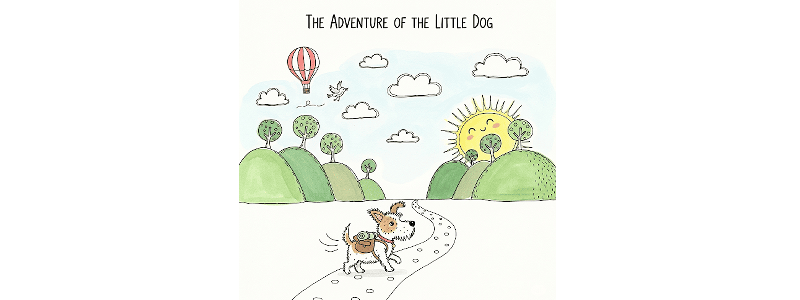
HSK3 Reading Practice Remember to use the menu at the top right of the article to switch between Traditional and Simplified Chinese. Vocabulary 探險tànxiǎn探险tànxiǎnadventure, explore 小朋友xiǎopéngyǒu喜歡xǐhuān在zài森林sēnlín裡lǐ探險tànxiǎn小朋友xiǎopéngyou喜欢xǐhuan在zài森林sēnlín里lǐ探险tànxiǎnChildren like to go on adventures in the forest. 迷路mílù迷路mílùget lost 他tā迷路mílù了le, 不bù知道zhīdào怎麼zěnme回家huíjiā他tā迷路mílù了le, 不bù知道zhīdào怎么zěnme回家huíjiāHe got lost and didn’t know how to get home. 緊張jǐnzhāng紧张jǐnzhāngnervous 她tā第一次dìyīcì表演biǎoyǎn很hěn緊張jǐnzhāng她tā第一次dìyīcì表演biǎoyǎn很hěn紧张jǐnzhāngShe was very nervous for her…
If…then… in Chinese Grammar
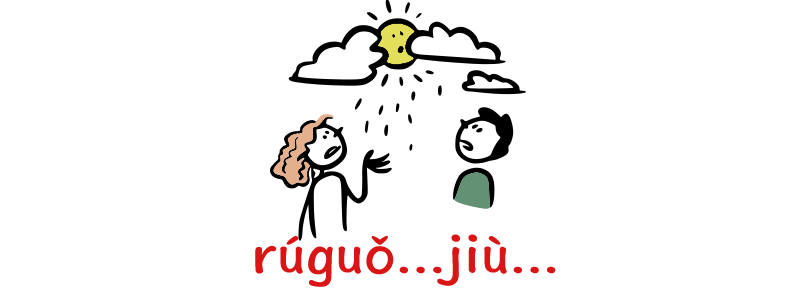
Grammar Point:In Chinese grammar, “if…then…” can be expressed using conditional conjunctions 如果 rúguǒ and 要是 yàoshìyàoshi to introduce a condition, followed by a main clause that expresses a result or consequence. Structure 如果 or 要是 + Condition + (就) + Result It’s possible to drop “就 jiù” in sentences, but unlike in English, the “then”…
白 bái Chinese Grammar
Grammar Point: The adverb 白 bái doesn’t mean white, but rather it signifies an action “with no effect” or “in vain,” similar to the concept of white having no color. It is typically used to modify an action verb and indicates the meaning of doing an action that ultimately yields no result. Structure 白 +…
Cafe Related Words
Coffee Selections Espresso shots義式濃縮义式浓缩咖啡Yì shì nóngsuō kāfēi Americano美式咖啡Měishì kāfēi Cold brew coffee冷萃咖啡Lěng cuì kāfēi Café Latte拿鐵铁 NátiěExcept Taiwan Starbucks…. We call it 拿堤(Nátí) Mocha摩卡 Mókǎ Flat White澳白 àobái Starbucks: 馥芮白 (Fù ruì bái) Caramel Macchiato焦糖瑪玛奇朵Jiāo táng mǎ qí duǒ Frappuccino星冰樂乐Xīng bīng lè Affogato阿芙佳朵Ā fú jiā duǒ Size Normal coffee shop Small 12 oz. 360ml 小杯…
Beef and Steak in Chinese
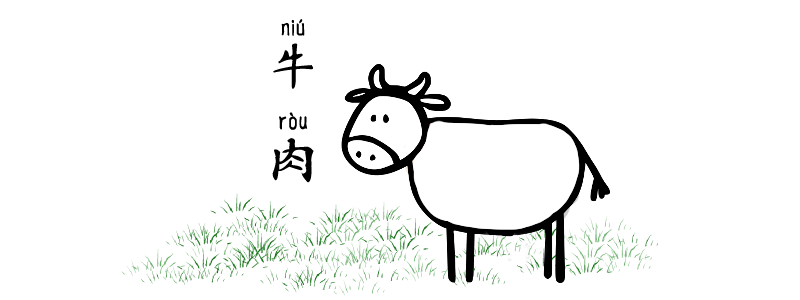
Let’s talk about the delicious food beef and steak in Chinese. Steak is not Chinese food, but hotpot is! If you have a chance to eat hotpot here, you will see all the different choices you get in selecting beef. Here I am going to introduce you 10 different cuts of beef in Chinese. Cuts…
More and More 2
Grammar Point:In Chinese, the phrase 越 yuè…越 yuè… is commonly used to express that the degree of something increases with another situation. Structure – 越 + Adj. + 越 S + 越 yuè + Adj + 越 yuè + Adj or V It is important to note that 越 yuè…越 yuè… should not be followed…