Skip to content

OneDotDot Chinese

Learn a little Chinese every day

Menu
  • Vocabulary
  • Grammar
  • Resources
  • Practice
  • Shop
Menu

Category: HSK 2

you sentences: estimate in Chinese

Using Yǒu to Express Estimation

Posted on December 29, 2022April 14, 2024 by tiffany

Grammar Point:The “you sentence” is known as 有字句 yǒuzìjù in Chinese. The word 有 yǒu serves multiple functions, including expressing estimates and constructing comparative sentences, which will be the focus of this article. you sentence Structure S + 有 yǒu + Number When you are trying to express an approximation or rough estimate of a…

Read more
數量補語/数量补语 shùliàng bǔyǔ (Quantitative Complement)

Quantity Complements 1

Posted on December 27, 2022June 14, 2023 by tiffany

Grammar Point:A “數量補語数量补语 shùliàng bǔyǔ” (Quantitative Complement) indicates the quantity, frequency, or duration of an action or state. In this article, we will focus on discussing the frequency or quantity of an action or state.hinese Quantitative Complement Chinese Quantitative Complement Structure Adj. + Quantity Complement 我wǒ比bǐ弟弟dìdi大dà三sān歲suì我wǒ比bǐ弟弟dìdi大dà三sān岁suìI am three years older than my brother. 他的tāde錢qián比bǐ我wǒ多duō一些yìxiē他的tāde钱qián比bǐ我wǒ多duō一些yìxiēHe has…

Read more
又 yòu Chinese grammar

Connecting Adjective with 又 you

Posted on November 17, 2022May 6, 2023 by tiffany

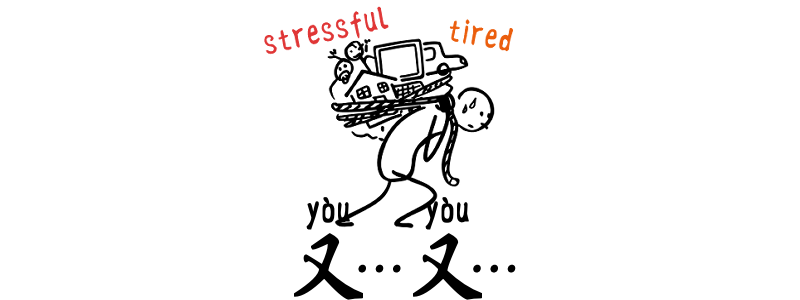
Grammar Point:When you want to use more than two adjectives to describe one thing, you can use the 又 yòu structure. This structure is used to convey that something is “both… and…” in English. The two adjectives used in this construction should not contrast in feeling. In other words, they should either both be positive…

Read more
Chinese Result complement 結果補語

Result Complement 1

Posted on November 10, 2022September 15, 2025 by tiffany

Grammar Point:The result complement is called 結果補語结果补语 jiéguǒ bǔyǔ in Chinese. It is just like its name, used to describe the result of a verb. What is the result complement? In Chinese grammar, a result complement 結果補語结果补语 jiéguǒ bǔyǔ is a grammatical structure that expresses the result or outcome of an action or event. It…

Read more

Had Better with zuihao

Posted on October 30, 2022May 19, 2023 by tiffany

Grammar Point:One way to express ‘had better’ in Chinese is 最好 zuìhǎo. While 最好 zuìhǎo can function as an adjective meaning ‘best’, it can also be used as an adverb to express ‘had better’ or ‘it would be best’. It’s often utilized when giving advice to someone or politely making demands. Structure S + 最好…

Read more
had better in Chinese háishì

Had Better with 还是 háishì

Posted on October 27, 2022January 20, 2025 by tiffany

Grammar Point:One of the ways to express ‘had better’ in Chinese is 還是还是 háishì…吧 ba. 還是还是 háishì as an adverb can express ‘still’, ‘yet’, and ‘or’, it can also express a preference for an alternative. 吧 ba is often placed in the end, as it’s a suggestion. Structure S + 還还是 háishì + Suggestion + 吧 ba 你nǐ還是háishì換huàn個ge男朋友nánpéngyǒu吧ba!…

Read more
comparisons in Chinese

Basic Comparisons 2

Posted on October 22, 2022August 12, 2026 by tiffany

Grammar Point:The way to express comparisons in Chinese is by using 比 bǐ. However, when expressing “as same as,” there’s no need to use 比 bǐ anymore. Instead, we use 跟 gēn or 和 hé. Structure 1 A + 跟 or 和 + B + 一樣/一样 or 相同 When you want to state that two…

Read more
Comparisons in Chinese 比 bǐ

Comparisons 比 bǐ

Posted on October 21, 2022November 26, 2025 by tiffany

Grammar Point:In Chinese, comparisons are expressed using the character 比 bǐ. In this article, we will discuss other words that can be used in conjunction with 比 bǐ, such as 那麼那么 nàme, 更 gèng, and 不如 bùrú. Structure A + 比 + B + Adj. + Quantitative Complement A Quantitative Complement in Chinese refers to…

Read more
More and More in chinese 越 yuè

More and More

Posted on October 14, 2022June 1, 2026 by tiffany

Grammar Point:越來来越 yuèláiyuè is a common Chinese grammatical structure used to express the idea of “increasingly” or “more and more”. It is often used to describe how something is changing or developing over time. The first character 越 yuè means “to exceed” or “to surpass”, while the second character 來来 lái means “to come” or…

Read more
著 着 zhe grammar Ongoing action Aspect Particle

Ongoing Particle – 著/着 zhe

Posted on October 13, 2022December 1, 2024 by tiffany

Grammar Point:The particle 著着 zhe is used to indicate ongoing actions or a continuous state in Mandarin Chinese. While it’s common in narratives or storytelling, it’s not something you’ll hear often in everyday conversations. In daily life, people usually use 在 zài to talk about actions in progress. When do we use it? How would you describe these 2…

Read more

Posts pagination

  • Previous
  • 1
  • …
  • 6
  • 7
  • 8
  • 9
  • 10
  • 11
  • 12
  • …
  • 14
  • Next
當代中文当代中文 · Series

Contemporary Chinese

Volume Book 1 Volume Book 2 Coming Soon Book 3 Coming Soon Book 4
中文聽說讀寫中文听说读写 · Series

INTEGRATED CHINESE

Coming Soon Book 1 Coming Soon Book 2 Coming Soon Book 3 Coming Soon Book 4

OneDotDot Chinese

When a foreign friend says their Chinese is "yì diǎn diǎn" (just a little), this site exists to make that little bit grow, one day at a time.

  ABOUT

  About Me
  Special Thanks
  News
  My Students Only

  CONTACT

  LinkedIn
  Instagram
  Privacy Policy

© 2026 OneDotDot Chinese | Powered by Superbs Personal Blog theme