OneDotDot Chinese Grammar · HSK 6 Grammar Point · HSK 6 程度補語程度补语 chéngdù bǔyǔ — Degree Complement 4 The last stop on the degree ladder: 透了透了 tòule, plus a handful of colloquial cousins — 不行不行 bùxíng, 要命要命 yàomìng/要死要死 yàosǐ, and 個不停个不停 ge bùtíng — that native speakers reach for at the most extreme end of…
Author: tiffany
Quantity Complements 3
OneDotDot Chinese Grammar · HSK 3 Grammar Point · HSK 3 數量補語数量补语 shùliàng bǔyǔ — Quantity Complement 3 Some verbs — 結婚结婚 jiéhūn (get married), 認識认识 rènshi (get to know), 離開离开 líkāi (leave) — happen in a single instant, not over a stretch of time. For these, the same “V+time” pattern says something different: how…
Chinese Complement
A field guide for learners Chinese Complements A complement is a word or phrase that follows a verb or adjective to add more information — degree, result, direction, possibility. It can be a single character, a short phrase, or a full clause, and it’s one of the most common structures in spoken and written Chinese…
Advanced Comparisons 1
OneDotDot Chinese Grammar · HSK 5 Grammar Point · HSK 5 Chinese Comparisons 4Adding Details In 他高我五公分 tā gāo wǒ wǔ gōngfēn他高我五厘米 tā gāo wǒ wǔ límǐ, the word 比 bǐ比 bǐ has disappeared. When you want to state exactly how much one thing exceeds another, Chinese lets the adjective take B directly, followed by…
Degree complements 1
OneDotDot Chinese Grammar · HSK 3 Grammar Point · HSK 3 程度補語程度补语 chéngdù bǔyǔ — Degree Complement 1 A degree complement goes right after a verb or adjective to say how much — how fast, how happy, how tired. It’s more precise than sticking a plain adverb like 很很 in front of everything. This is…

V 來 lái V 去 qù
Grammar Point:The combination V 來来 lái V 去 qù is often used to describe repeated actions or activities that involve moving back and forth, indicating cycles, continuous movement, or doing something without a clear direction. Structure V + 來来 lái + V + 去 qù The pattern V 來来 V 去 is often paired with words like 還还是 háishì, 依然 yīrán, 仍然…
Chinese Comparisons 2 – 一样 yíyàng
OneDotDot Chinese Grammar · HSK 3 Grammar Point · HSK 3 Chinese Comparisons 2更 gèng更 gèng · 跟 gēn跟 gēn…一樣 yíyàng一样 yíyàng · 不比 bùbǐ不比 bùbǐ Once you know the basic 比 bǐ比 bǐ pattern, you can strengthen it with 更 gèng更 gèng / 還 hái还 hái, say two things are the same with 跟…
Synonym of Afraid in Chinese
害怕 · 可怕 · 恐怕 · 怕 — 近義詞辨析 Similar words 害怕 hàipà · 可怕 kěpà · 恐怕 kǒngpà · 怕 pà Four ways to say “afraid” in Mandarin — and how to pick the right one every time. In English, afraid, fear, and scary are simple. In Mandarin, expressing fear means choosing between an…
Potential Complements 2
OneDotDot Chinese Grammar · HSK 4 Grammar Point · HSK 4 可能補語可能补语 kěnéng bǔyǔ — Potential Complement 2 A special potential complement pattern — V + 得得 de / 不不 bù + 了了 liǎo — for saying whether something can actually happen at all. This 了了 liǎo is not the 了了 le you already know…
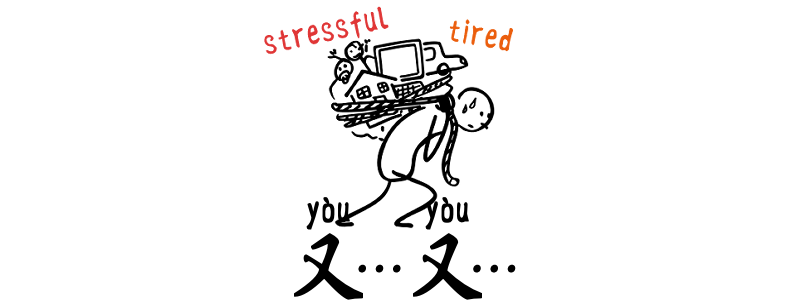
Connecting Adjective with 又 you
Grammar Point:When you want to use more than two adjectives to describe one thing, you can use the 又 yòu structure. This structure is used to convey that something is “both… and…” in English. The two adjectives used in this construction should not contrast in feeling. In other words, they should either both be positive…