Grammar Point:
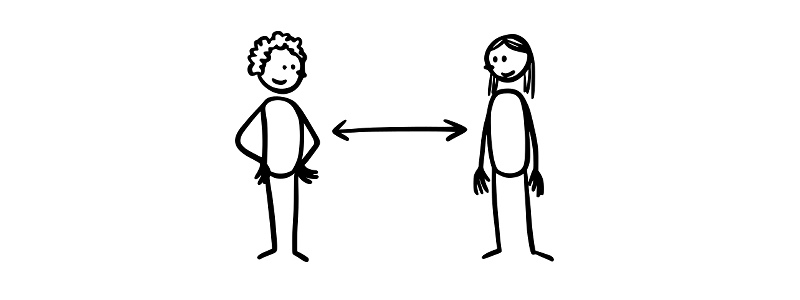
比起来 bǐqǐlái is used to introduce a comparison between two or more things. It usually appears at the beginning of a clause, often followed by a subject and a comment.
Structure
(A) 跟 gēn B 比起来 bǐqǐlái…
The preposition 跟 gēn in this pattern can be replaced with 和 hé. In the second part of the sentence, you need to use an adverb or a complement of degree, such as 比较 bǐjiào, 更 gèng, 多了 duōle, or 很 hěn.
跟昨天比起來,今天涼快多了跟昨天比起来,今天凉快多了
Compared with yesterday, today is much cooler.
拿鐵跟黑咖啡比起來,你更喜歡哪個?拿铁跟黑咖啡比起来,你更喜欢哪个?
Which do you prefer, lattes or black coffee?
搭捷運跟走路比起來,搭捷運快很多搭捷运跟走路比起来,搭捷运快很多
Compared with walking, taking the MRT is much faster.
跟別人比起來,我吃飯吃得很慢跟别人比起来,我吃饭吃得很慢
Compared with others, I eat very slowly.
和外面餐廳比起來,我自己做的義大利麵真的便宜很多和外面餐厅比起来,我自己做的义大利面真的便宜很多
Compared with restaurants, the pasta I cook myself is way cheaper.
計劃旅遊跟旅遊比起來,我覺得計畫更累计划旅游跟旅游比起来,我觉得计画更累
Planning a trip, compared with actually traveling, feels more tiring to me.
跟電影比起來,我更喜歡看書跟电影比起来,我更喜欢看书
Compared to watching movies, I prefer reading.
跟鬧鐘比起來,我的狗叫我起床的速度比較快跟闹钟比起来,我的狗叫我起床的速度比较快
Compared with an alarm clock, my dog wakes me up much faster.
Practice
TouchHover over the space to see the answers.
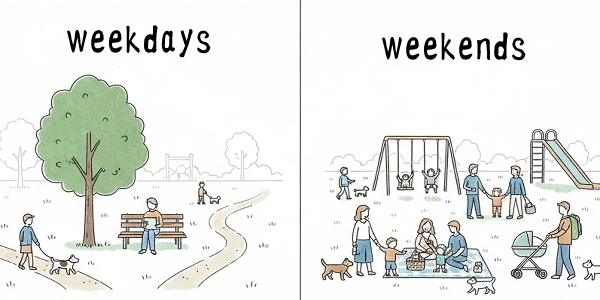
跟週末比起來,平日的公園人比較少跟周末比起来,平日的公园人比较少
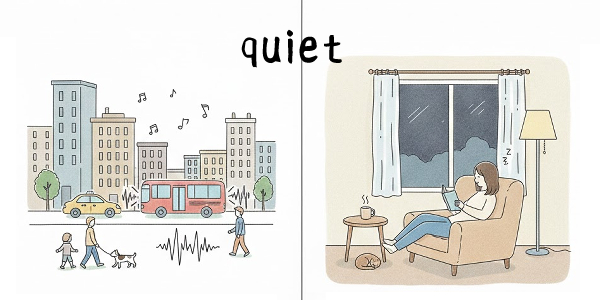
跟外面比起來,家裡安靜多了跟外面比起来,家里安静多了

