Similar words
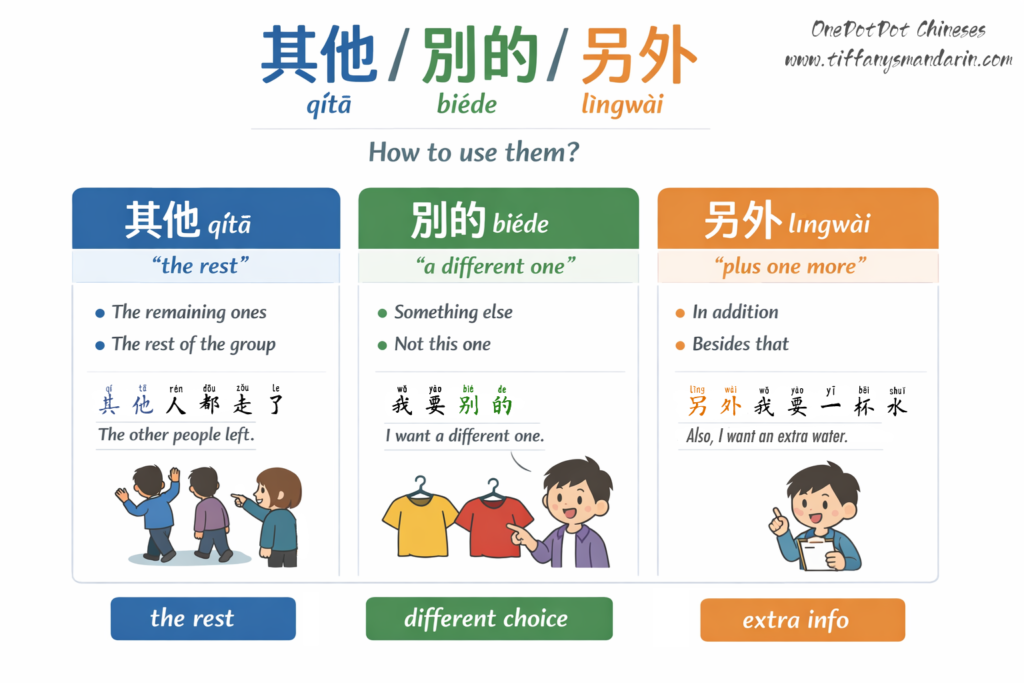
其他 qítā · 別的别的 biéde · 另外 lìngwài
Three ways to say “other” in Mandarin — and how each one handles the idea differently.
These three words all mean “other,” but they’re used in different ways. Let’s look at 其他 qítā, 別的别的 biéde, and 另外 lìngwài side by side.
一
其他 qítā
Other / The RestThings or people besides the ones already mentioned. Often means “the remaining ones.”
其他 + Noun其他人都走了。
The other people have all left.
我還有还有其他問題问题。
I still have other questions.
這家这家店賣卖書书,也賣卖其他東西东西。
This shop sells books and other things.
除了中文,他還还會会說说其他語言语言。
Besides Chinese, he can also speak other languages.
二
別的别的 biéde
Another / DifferentSomething different from this one. Often used when choosing or changing.
別的别的 + Noun / (Verb +) 別的别的我要別的别的顏色颜色。
I want a different color.
還有还有別的别的嗎吗?
Is there another one?
這個这个不好,換换別的别的吧。
This one isn’t good, let’s change to another.
你有沒有有没有別的别的建議建议?
Do you have any other suggestions?
三
另外 lìngwài
In Addition / Another / SeparatelySomething extra, added, or separate. Often means “besides that” or “on top of that.”
另外 + Noun / 另外,+ Clause我還有还有另外一個一个問題问题。
I have another question as well.
這件这件事我不管,另外的你自己決定决定。
I won’t handle this; the other parts are up to you.
另外,我明天不來来。
By the way / Also, I’m not coming tomorrow.
這個这个計畫计划需要另外找時間时间討論讨论。
This plan needs to be discussed at another time separately.
04 · At a Glance
Quick Comparison
| Word | Part of Speech | Core Meaning |
|---|---|---|
| 其他qítā | Pronoun / Determiner | the rest of a group already implied |
| 別的biéde | Pronoun / Determiner | a different one, used when choosing or swapping |
| 另外lìngwài | Adverb / Determiner | something extra, added, or separate |
05 · Practice
Practice Quiz
PRACTICE QUIZ
Question 1 of 10
All the other students have gone home.
學生学生都回家了。
This shirt doesn’t fit, can I try a different one?
這件这件衣服不合身,我可以試试 的嗎吗?
Besides work, I also have other plans this weekend.
除了工作,我這個这个週末周末還有还有 安排。
I don’t like this design, let’s use a different one.
我不喜歡喜欢這個这个設計设计,我們我们用 的吧。
On top of the salary, the company also offers an extra bonus.
除了薪水,公司 還还提供獎金奖金。
I need to find another time to meet you, separately.
我需要 找時間时间跟你見面见面。
The other members of the team are still discussing.
團隊团队裡里 的成員成员還在还在討論讨论。
By the way, I won’t be able to make it to the meeting tomorrow.
,我明天沒辦法没办法來来開會开会。
This company also has other branches.
這家这家公司還有还有 分店分店。
If you don’t like this flavor, we have others.
如果你不喜歡喜欢這個这个口味,我們我们還有还有 的。
Complete
0 / 10
questions answered correctly