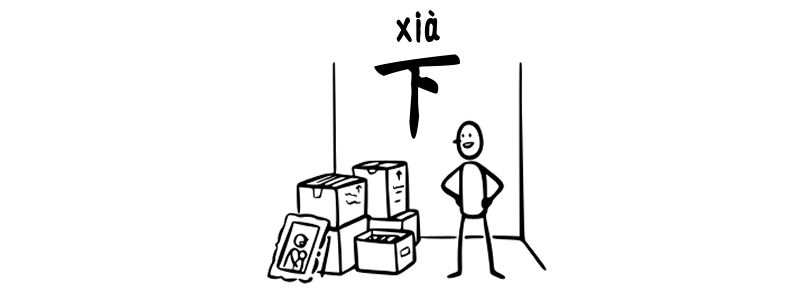
Grammar Point:
In Chinese, 下 xià can be used as a result/directional complement to show that there is enough space, capacity, or ability to accommodate something. This use is very common in daily spoken Chinese.
Structure
V + 得 de or 不 bu + 下 xià
我家很小,只住得下兩個人我家很小,只住得下两个人
My house is small. It’s only two people can live there.
他的包包裝不下5本書他的包包装不下5本书
There isn’t enough room in his bag for five books.
爸爸吃得下3碗飯爸爸吃得下3碗饭
Dad can eat 3 bowls of rice.
這沙發坐不下5個人,你坐地上吧!这沙发坐不下5个人,你坐地上吧!
This sofa can’t fit five people, so you can sit on the floor!
你喝不喝得下10罐啤酒?你喝不喝得下10罐啤酒?
Do you think you can handle ten cans of beer?
我的床躺不下兩個人,你得睡地上我的床躺不下两个人,你得睡地上
My bed isn’t big enough for two people. You’ll have to sleep on the floor.
你是不是吃不下了?你是不是吃不下了?
Can you not eat anymore?
Differences
他的包包裝不下5本書他的包包装不下5本书
There isn’t enough room in his bag for five books.
Focus: space / capacity
他的包包裝不了5本書他的包包装不了5本书
It’s not possible for his bag to fit five books.
Focus: ability / possibility (can or cannot)
我喝不了酒我喝不了酒
I can’t drink alcohol. (ability)
我喝不下了我喝不下了
I’m too full to drink more. (capacity)

