變 · 變成 · 變化 · 改變 — 近義詞辨析 Similar words 變变 biàn · 變成变成 biànchéng · 變化变化 biànhuà · 改變改变 gǎibiàn Four ways to talk about “change” in Mandarin — and the grammar that keeps each one in its own lane. There are four different ways to talk about change in Chinese, each with…
Author: tiffany
“And then” in Chinese – 于是 yúshì
Grammar Point:The Chinese conjunction 於于是 yúshì is used to indicate a sequence of events, where the second event is a direct result or natural consequence of the first one. It is similar to “and then,” “therefore,” or “as a result” in English. Structure Event A + 於是/于是 yúshì + Event B It shows a cause-and-effect relationship without…
“Not… but rather…” in Chinese
Grammar Point:This Chinese structure is used to make a contrast, similar to saying “It’s not… but rather…” in English. The pattern is used when you want to correct or clarify something by presenting an alternative or more accurate statement. Structure 不是 + situation A + 而是 + situation B 我wǒ不是búshì不bù同意tóngyì而是érshì聽tīng不bú太tài懂dǒng我wǒ不是búshì不bù同意tóngyì而是érshì听tīng不bú太tài懂dǒngIt’s not that I disagree; I…

Yī Measure Word + bǐ + yī Measure Word
Grammar Point:This structure is often used to express that each item in a series or set is increasingly more or less of something. It highlights a trend or progression in comparison. Structure 一 MW + 比 + 一 MW + adj 我wǒ希望xīwàng我wǒ賺zhuàn的de錢qián一年yìnián比bǐ一年yìnián多duō我wǒ希望xīwàng我wǒ赚zhuàn的de钱qián一年yìnián比bǐ一年yìnián多duōI hope that the money I earn increases year by year. 最近zuìjìn的de天氣tiānqì真zhēn是shì一天yìtiān比bǐ一天yìtiān熱rè最近zuìjìn的de天气tiānqì真zhēn是shì一天yìtiān比bǐ一天yìtiān热rèThe weather lately is…
Giving an unclear answer in Chinese
Grammar Point Negative + Question Word: Giving a Vague Answer Put a question word like 什麼 shénme什么 shénme, 誰 shéi谁 shéi, 哪裡 nǎlǐ哪里 nǎli or 多少 duōshǎo after a negative verb and you get a vague, “nothing special” answer: “I’m not watching anything,” “I didn’t go out with anyone.” It’s a handy way to avoid…
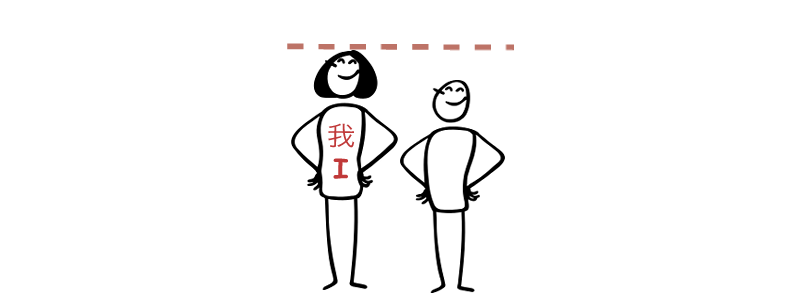
Chinese Inferior Comparison
Grammar Point A 沒有没有 méiyǒu B (那麼那么) + Adjective To say “A is not as [adjective] as B,” use A 沒有 B (這麼 / 那麼) + Adj. A méiyǒu B (zhème / nàme) + Adj.A 没有 B (这么 / 那么) + Adj. A méiyǒu B (zhème / nàme) + Adj.. It’s the simplest way to…
Even More – 更 gèng
Grammar Point 更 gèng: Even More 更 gèng means “even more” or just “more.” Put it right before an adjective or verb to push the degree up a level. 一 The Basic Pattern Subject + 更 + Adjective / Verb 更 gèng goes right before the adjective or verb. It compares with something already mentioned…
About to – 快 kuài…了 le
Grammar Point 快 kuài … 了 le: About To To say something is about to happen, put 快 kuài, 快要 kuàiyào, 就要 jiùyào or 要 yào before the verb and 了 le at the end of the sentence. That final 了 shows the situation is about to change. 一 The Basic Pattern Before you startThis…
From The Past Until Now – Double 了 le
Grammar Point Double 了 le: Up Until Now Put one 了 le after the verb and another at the end of the sentence, and you get a special meaning: “so far, up to now.” The action has reached a certain amount or length of time by the moment you’re speaking, and it might keep going….
Time Duration 了 le
Grammar Point Verb + 了 le: Completed Actions & Time Duration When 了 le comes right after a verb, it tells you the action is complete. You can add details after it, like how many or how long. Grammar books sometimes call this one “了1.” 一 Verb + 了: Completed Subject + Verb + 了…