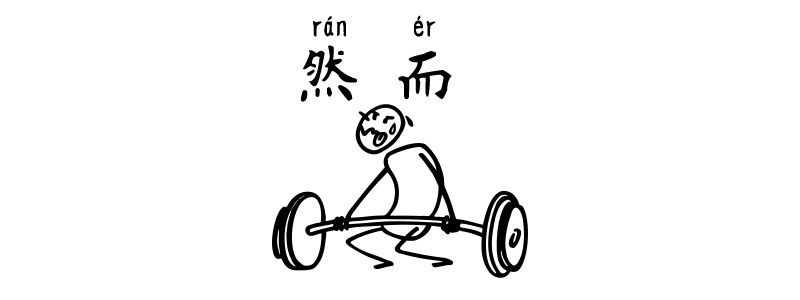
然而 rán’ér links two statements where the second contrasts with or is unexpected in relation to the first. It leans formal, so it shows up more in writing and careful speech than in casual chat.
1 Structure
Statement 1 + 然而 rán’ér + Statement 2
Statement 2 presents information that contrasts with or is unexpected in relation to Statement 1.
外面看起來天氣很好,然而實際上很冷外面看起来天气很好,然而实际上很冷
It looks nice outside; however, it’s actually very cold.
下定決心要吃健康的,然而路過蛋糕店時還是忍不住下定决心要吃健康的,然而路过蛋糕店时还是忍不住
I was determined to eat healthy, but I still couldn’t resist when passing by a cake shop.
我很累,然而還是睡不著我很累,然而还是睡不着
I’m really tired, yet I can’t fall asleep.
我本來打算早點睡覺,然而刷了半小時手機後,我還是繼續追劇了我本来打算早点睡觉,然而刷了半小时手机后,我还是继续追剧了
I planned to go to bed early; however, after scrolling on my phone for half an hour, I ended up binge-watching shows instead.
我以為買了健身房會員我就會變瘦,然而半年過去了,我的體重一點都沒變我以为买了健身房会员我就会变瘦,然而半年过去了,我的体重一点都没变
I thought buying a gym membership would make me lose weight; however, six months have passed and my weight hasn’t changed at all.
他說今天不會遲到,然而我在咖啡廳等了他半小時了還沒到他说今天不会迟到,然而我在咖啡厅等了他半小时了还没到
He said he wouldn’t be late today; however, I’ve been waiting for him at the café for half an hour and he’s still not here.
我發誓今天絕對不點珍珠奶茶,然而現在手上就是一杯我发誓今天绝对不点珍珠奶茶,然而现在手上就是一杯
I swore I absolutely wouldn’t order bubble tea today; however, here I am holding one right now.
我的貓看起來很乖,然而牠昨天把我的沙發抓爛了我的猫看起来很乖,然而它昨天把我的沙发抓烂了
My cat looks very well-behaved; however, yesterday it shredded my couch.
他答應要健身三個月,然而只去了一次就辦了退費他答应要健身三个月,然而只去了一次就办了退费
He promised to work out for three months; however, he only went once and then got a refund.
Good to Know
然而 rán’ér leans formal — you’ll see it a lot in essays, news articles, and written Chinese, but in everyday chat, people more often reach for 但是 dànshì or 可是 kěshì instead.
2 Common Mistakes
Pairing 雖然 suīrán with 然而 rán’ér in the same sentence is a very common learner mistake.
❌
雖然他很努力,然而他沒有通過考試虽然他很努力,然而他没有通过考试
✅
雖然他很努力,但是沒有通過考試虽然他很努力,但是没有通过考试
✅
他很努力,然而沒有通過考試他很努力,然而没有通过考试
Even though it’s not strictly ungrammatical, pairing 雖然 suīrán with 然而 rán’ér isn’t how native speakers naturally phrase it. The more natural options are 雖然…但是… suīrán…dànshì…, or just dropping 雖然 suīrán altogether and letting 然而 rán’ér do the contrasting on its own.
3 Practice
Translate each sentence into Chinese, then tap the card to check your answer.
01The plan sounded perfect; however, nothing went as expected.
計畫聽起來很完美,然而事情完全沒有按照預期發展计划听起来很完美,然而事情完全没有按照预期发展
👆 Tap to reveal
02He is very talented; however, he lacks confidence.
他很有才華,然而他缺乏自信他很有才华,然而他缺乏自信
👆 Tap to reveal
03The weather forecast said it would be sunny; however, it started raining in the afternoon.
天氣預報說會是晴天,然而下午卻下起雨來天气预报说会是晴天,然而下午却下起雨来
👆 Tap to reveal
04I studied all night for the exam; however, I still failed.
我熬夜準備考試,然而還是沒有考過我熬夜准备考试,然而还是没有考过
👆 Tap to reveal
05The restaurant looks small from outside; however, the inside is surprisingly spacious.
這家餐廳外面看起來很小,然而裡面卻意外地寬敞这家餐厅外面看起来很小,然而里面却意外地宽敞
👆 Tap to reveal
06She promised to call me back; however, I never heard from her again.
她答應會回電給我,然而我再也沒有她的消息她答应会回电给我,然而我再也没有她的消息
👆 Tap to reveal
07The company promised a raise; however, nothing has changed.
公司答應要加薪,然而一切都沒有改變公司答应要加薪,然而一切都没有改变
👆 Tap to reveal
08I wanted to save money this month; however, I ended up spending even more.
我這個月本來想省錢,然而卻花得更多我这个月本来想省钱,然而却花得更多
👆 Tap to reveal
09The movie got great reviews; however, I found it quite boring.
這部電影評價很好,然而我覺得很無聊这部电影评价很好,然而我觉得很无聊
👆 Tap to reveal
10He looks calm on the outside; however, he’s actually very nervous.
他表面上看起來很冷靜,然而其實非常緊張他表面上看起来很冷静,然而其实非常紧张
👆 Tap to reveal

