A field guide for learners Chinese Complements A complement is a word or phrase that follows a verb or adjective to add more information — degree, result, direction, possibility. It can be a single character, a short phrase, or a full clause, and it’s one of the most common structures in spoken and written Chinese…
Author: tiffany
Advanced Comparisons 1
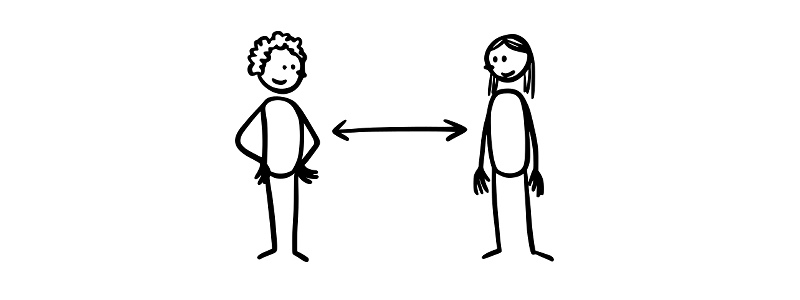
Grammar Point:In this article, we’ll explore how to form comparison sentences without using 比 bǐ, as well as a more formal way to express comparisons in Chinese. Structure A + Adj. + B + Quantitative Complement This structure indicates how much A differs from B in terms of a specific quality, often providing the exact numerical difference. 他tā高gāo我wǒ五wǔ公分gōngfēn他tā高gāo我wǒ五wǔ公分gōngfēnHe is five…
Degree complements 1
OneDotDot Chinese Grammar · HSK 3 Grammar Point · HSK 3 程度補語程度补语 chéngdù bǔyǔ — Degree Complement 1 A degree complement goes right after a verb or adjective to say how much — how fast, how happy, how tired. It’s more precise than sticking a plain adverb like 很很 in front of everything. This is…

V 來 lái V 去 qù
Grammar Point:The combination V 來来 lái V 去 qù is often used to describe repeated actions or activities that involve moving back and forth, indicating cycles, continuous movement, or doing something without a clear direction. Structure V + 來来 lái + V + 去 qù The pattern V 來来 V 去 is often paired with words like 還还是 háishì, 依然 yīrán, 仍然…

Comparisons 2
Grammar Point:The way to express comparisons in Chinese is by using 比 bǐ. In this article, we will discuss how to use a verb with 比 bǐ to make comparisons. Structure A + 比 bǐ + B + V 得 + Adj. Remember, when there is a verb and an adjective together, you always need…
Synonym of Afraid in Chinese
害怕 · 可怕 · 恐怕 · 怕 — 近義詞辨析 Similar words 害怕 hàipà · 可怕 kěpà · 恐怕 kǒngpà · 怕 pà Four ways to say “afraid” in Mandarin — and how to pick the right one every time. In English, afraid, fear, and scary are simple. In Mandarin, expressing fear means choosing between an…
Potential Complements 2
OneDotDot Chinese Grammar · HSK 4 Grammar Point · HSK 4 可能補語可能补语 kěnéng bǔyǔ — Potential Complement 2 A special potential complement pattern — V + 得得 de / 不不 bù + 了了 liǎo — for saying whether something can actually happen at all. This 了了 liǎo is not the 了了 le you already know…

Connecting Adjective with 又 you
Grammar Point:When you want to use more than two adjectives to describe one thing, you can use the 又 yòu structure. This structure is used to convey that something is “both… and…” in English. The two adjectives used in this construction should not contrast in feeling. In other words, they should either both be positive…

Direction Complements – Extension 3
This article focuses on the use of direction complements in figurative language, such as in English phrases like ‘clean up’, ‘calm down’, ‘figure out’, etc. If you’re unfamiliar with directional complements, I recommend reading the following links first. 📖 Basic Direction Complement📖 Compound direction complements V + 起來/起来 qǐlái 1. Bring things together 加jiā起來qǐlái加jiā起来qǐláiAdd up…
Potential Complements 1
OneDotDot Chinese Grammar · HSK 3 Grammar Point · HSK 3 可能補語可能补语 kěnéng bǔyǔ — Potential Complement 1 A potential complement tells you whether an action can happen — not whether it did. Put 得得 de or 不不 bù between a verb and its complement, and you’re no longer describing an outcome — you’re describing…