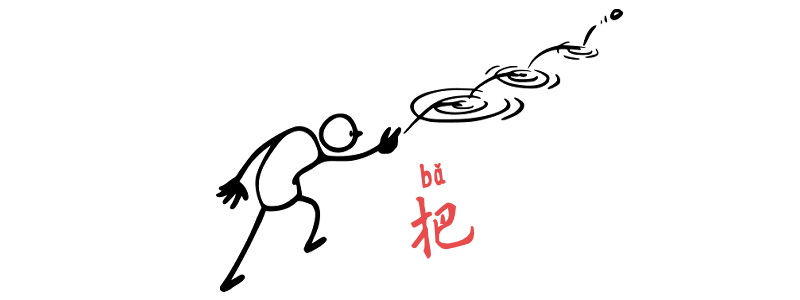
Grammar Point:
把 is used when the speaker wants to:
- highlight what happens to an object
- show that the object is changed, finished, moved, or affected
So with 把, the sentence focuses on the result, not just the action.
If you’re not familiar with the basic foundation of 把 structure, I suggest reading the following articles first.
- 把 bǎ Part 1 (HSK 3)
- 把 bǎ Part 2 (HSK 4)
- 把 bǎ Part 3 (HSK 5)
Structure
Things + 把 bǎ + O + Verb + Something
她把杯子打破了她把杯子打破了
She broke the cup.
你別把他的東西弄壞了你别把他的东西弄坏了
Don’t damage his things.
誰把房子打掃乾淨了?谁把房子打扫干净了?
Don’t damage his things.
這雙鞋把我的腳磨破了这双鞋把我的脚磨破了
These shoes have pinched my feet.
外面的聲音把我吵醒了外面的声音把我吵醒了
The sound outside woke me up.
他的行為把我氣炸了他的行为把我气炸了
His behavior made me so angry.
S + 把 bǎ + O + Verb + 得 de + Degree
This 得 de is called a “degree complement” (程度补语 chéngdù bǔyǔ). It describes the degree or intensity of the verb or adjective.
你怎麼把牛肉麵做得這麼難吃?你怎么把牛肉面做得这么难吃?
How did you make the beef noodle soup taste so bad?
你不應該把狗養得太胖你不应该把狗养得太胖
You shouldn’t let the dog get so fat.
我要把中文教得更簡單我要把中文教得更简单
I want to make Chinese easier to learn.
他把大伙兒笑得肚子疼他把大伙儿笑得肚子疼
He made the group laugh so hard that their stomachs hurt.
他把爸爸氣得一夜沒睡他把爸爸气得一夜没睡
His father was so angry with him that he did not sleep all night.
孩子把媽媽感動得流下眼淚孩子把妈妈感动得流下眼泪
The child moved the mother to tears.

