OneDotDot Chinese Grammar · HSK 1 Grammar Point · HSK 1 和和 hé & 跟跟 gēn — “And” 和和 hé and 跟跟 gēn are two conjunctions used to connect two nouns or noun phrases, showing that both are included in a list or group — much like English “and.” It’s often used to connect two…
Category: HSK 1
嗎/吗 ma 吧 ba 呢 ne Practice
Grammar Practice · Final Particles 嗎吗, 吧, 呢 Practice Three little words that change the shape of a sentence. 嗎吗 ma turns a statement into a yes/no question. 呢 ne asks a quick follow-up (“and you?”) or wonders where someone/something went. 吧 ba softens a suggestion, a guess, or a command — less like an…
Chinese Tone Pair Charts
OneDotDot Chinese · Tone Pairs When two tones meet Every Mandarin word is a small collision of pitches. Listen to how each tone bends and adjusts once it’s sitting next to another — then try saying the pair yourself. tap ▶ next to any word to hear it Full Chart Columns = the first syllable’s…
Japanese Food
Food Vocabulary 日本美食日本美食 Japanese Food in Chinese There is so much delicious Japanese food in 台灣台湾 (Taiwan) and 中國中国 (China). Do you know how to read their names in Chinese? Let’s learn the vocabulary for Japanese staples — from ramen and sushi to izakaya classics! 🏮 Taiwan’s “Little Japan” Did you know? Zhongshan District (中山區中山区),…
Chinese Noun
A field guide for learners Chinese Noun In this article, we’re going to look at how Chinese nouns actually behave — and how differently that is from English. What is the difference between Chinese nouns and English nouns? How do you express plural in Chinese nouns? Are Chinese nouns countable? Word formation Syllables of a…
Pinyin Spelling Rules
拼寫規則 拼写规则 · Spelling Rules — OneDotDot Chinese 拼 OneDotDot Chinese · Pronunciation 拼寫規則拼写规则Spelling Rules Hanyu Pinyin is the official romanization system for Mandarin in mainland China. Once you know the sounds, these are the rules that govern how they’re actually written down — spacing, capitals, tone-mark placement, and the quiet substitutions like i→y and…
HSK1 Reading Practice – Wǒ jiào Xiǎomíng
HSK 1 · Reading Practice Wǒ jiào Xiǎomíng Vocabulary HSK 1 來自láizì来自láizì Tap to flip to come from 我wǒ來自láizì台灣Táiwān我wǒ来自láizì台湾Táiwān I come from Taiwan. HSK 1 每天měitiān每天měitiān Tap to flip every day 他tā每天měitiān喝hē茶chá他tā每天měitiān喝hē茶chá He drinks tea every day. HSK 1 起床qǐcháig起床qǐcháig Tap to flip to get up 我wǒ不bù想xiǎng起床qǐcháig我wǒ不bù想xiǎng起床qǐcháig I don’t want to get up. HSK 1…

Chinese Equative Verbs
Grammar Point: Equative verbs connect two equal nouns or nominal expressions, such as “I am a teacher” or “He is John.” The three most common equative verbs in Chinese are 是 shì, 叫 jiào, and 姓 xìng. If you want to negate an equative verb, you should always use 不 bú. 是 shì Is, am,…
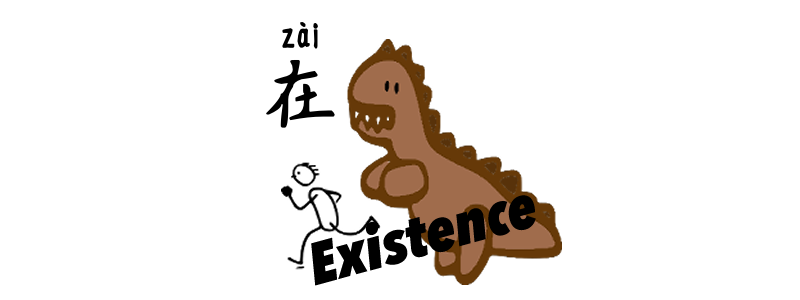
Existence in a place in Chinese
Grammar Point:Chinese indicates the existence of something in a particular place by adding the verb 在 zài. In this function, 在 zài can be translated as ‘be in’ or ‘be at’ in English. Structure S + 在 zài + location 我wǒ在zài家jiā我wǒ在zài家jiāI am at home. 老師lǎoshī在zài美國měiguó老师lǎoshī在zài美国měiguóThe teacher is in the U.S. 圖書館túshūguǎn在zài學校xuéxiào的de3 樓lóu图书馆túshūguǎn在zài学校xuéxiào的de3 楼lóuThe library is…
Chinese Verbs
A field guide for learners Chinese Verbs Chinese verbs, like English ones, fall into three broad categories: the verb 是是 shì (“to be”), the verb 有有 yǒu (“to have”), and the broad remaining set of action verbs. Some teachers argue for a fourth category, treating Chinese adjectives as stative verbs. The baseline The Verb Does…