中医概念 · Chinese Vocabulary
Traditional Chinese Medicine
中医
If you’ve read the Symptoms or Fruits vocabulary here, you’ve already run into Traditional Chinese Medicine without necessarily knowing its logic. This is the framework underneath all of it — the handful of core ideas that Chinese-speaking households still reach for when deciding what to eat, where to press, or when to see a doctor.
The starting point
阴阳 — Yin & Yang
Every other concept on this page is really just a more specific version of one idea: two opposite forces that need to stay in balance.
Not good vs. bad
Neither is “good” or “bad” — they’re just two sides of the same thing. 阴 yīn stands for stillness (静 jìng), night (夜 yè), cold (寒 hán), and softness (柔 róu). 阳 yáng stands for movement (动 dòng), day (日 rì), heat (热 rè), and firmness (刚 gāng). Everything is thought to hold a bit of both at once. The two are also mutually dependent (相互依存 xiānghù yīcún) — without yang there’s no such thing as yin, and without yin there’s no such thing as yang. Neither stays fixed, either: one grows as the other fades (此消彼长 cǐxiāo bǐzhǎng), always drifting toward a moving balance rather than a fixed one (动态平衡 dòngtài pínghéng). This is the lens applied to more or less everything, food included — for how it plays out with fruit specifically, see it applied to 26 fruits →
What’s actually flowing
气与经络 — Qi & Meridians
Two phrases explain most pain
不通则痛 bùtōng zé tòng — “no flow, then pain” — a blocked meridian disrupting circulation. 不荣则痛 bùróng zé tòng — “no nourishment, then pain” — an organ not getting what it needs. Acupuncture and acupressure both work by targeting 穴位 xuéwèi, points along the meridians believed to influence qi flow to a specific organ or area.
The body’s internal map
五行 — The Five Elements
Every major organ is mapped to one of five elements — and the elements act on each other, which is how TCM explains why, say, stress (Liver / Wood) upsets digestion (Stomach / Earth).
Organ correspondences · 五行
Why mood shows up on a digestion page
Wood is said to act directly on Earth — so unsettled emotion (Liver Qi) throws off digestion (Spleen/Stomach). It’s the traditional reasoning behind advice that sounds almost too simple: stay calm at meals, and your stomach will thank you.
Figuring out what’s wrong
诊断方法 — Diagnosis
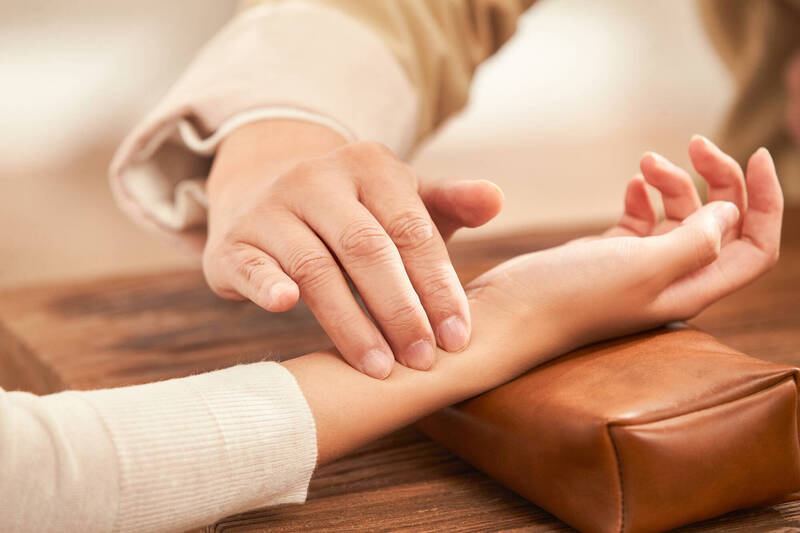
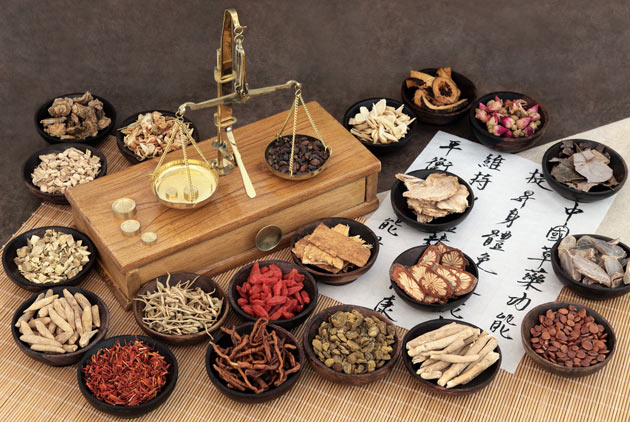
No blood test required
A first visit to a TCM practitioner often skips lab work entirely — the tongue’s color and coating, the strength and rhythm of the pulse at the wrist, and a round of questions about sleep, appetite, and mood are usually enough to form a diagnosis.
Words you’ll actually hear
常见中医用语 — Everyday TCM Terms
These come up constantly outside a clinic too — in casual conversation about how someone’s feeling, or why they’re avoiding a certain food.
血虚 xuèxū — blood deficiency
Mix and match
寒 hán, 热 rè, 湿 shī, 虚 xū, and 实 shí are part of what’s called the Eight Principles — the basic vocabulary TCM uses to describe almost any imbalance, and they combine freely: someone can be told they’re “damp-heat,” “qi-deficient,” or “cold-deficient,” and that combination is what determines the food, herbs, or treatment recommended.
What actually happens in a clinic
治疗方式 — Treatments
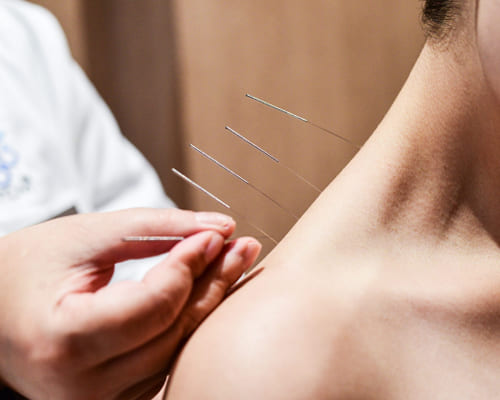


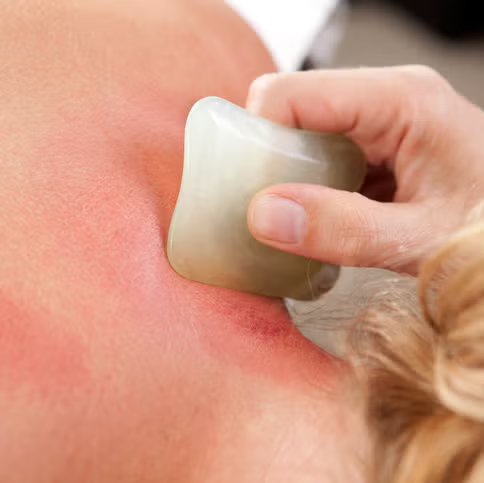
You’ve probably already seen 拔罐 báguàn
Cupping leaves round, dark bruise-like marks by using suction to draw blood to the surface — it went viral at the 2016 Rio Olympics when swimmer Michael Phelps showed up to a race covered in circular marks from a cupping session. The bruising looks dramatic but typically fades within a week or two.
Medicine, three times a day
食疗 — Food Therapy
Why the water is never iced
Ask for water in most of China or Taiwan and you’ll get it warm, not cold — restaurants often serve 温水 wēnshuǐ or hot tea by default, and thermoses of hot water are a fixture in homes and offices. Cold drinks are traditionally believed to shock the stomach and slow digestion, while warm water is thought to support it — the same cold/hot logic behind the fruit-eating advice, just applied to what you drink. It’s also behind one of the most-mocked phrases in Chinese: 多喝热水 duō hē rèshuǐ — “drink more hot water” — the go-to, faintly unhelpful response to almost any complaint, from a headache to a breakup.
One last thing
不只是生病才看 — More Than Medicine
TCM isn’t just for when something’s wrong. People see a 中医 zhōngyī for allergies, infertility, weight loss, skincare, helping a child grow taller, or hair loss — not only once they’re sick. In Taiwan and China, it’s woven into daily life rather than kept for emergencies: it’s completely normal to “tune up” your 体质 tǐzhì the way you’d get a regular check-up. The habit runs deep enough that pets get in on it too — TCM veterinary clinics, acupuncture and all, are a real and growing thing.

