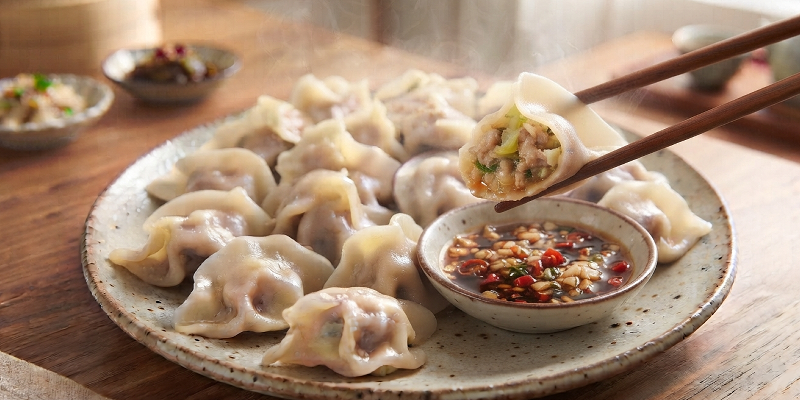
水餃水饺 (shuǐjiǎo) — boiled dumplings — are less a single recipe than a whole ritual. In a lot of Chinese and Taiwanese households, making them is a group project: someone rolls the wrappers, someone mixes the filling, everyone else sits around a table pinching them shut, usually while catching up on gossip.
This version uses a classic pork-and-cabbage filling, seasoned simply enough that the vegetable still tastes like itself. The recipe below is scaled for 30 medium dumplings — about 10 g of wrapper and 18–20 g of filling each.
Reading the name
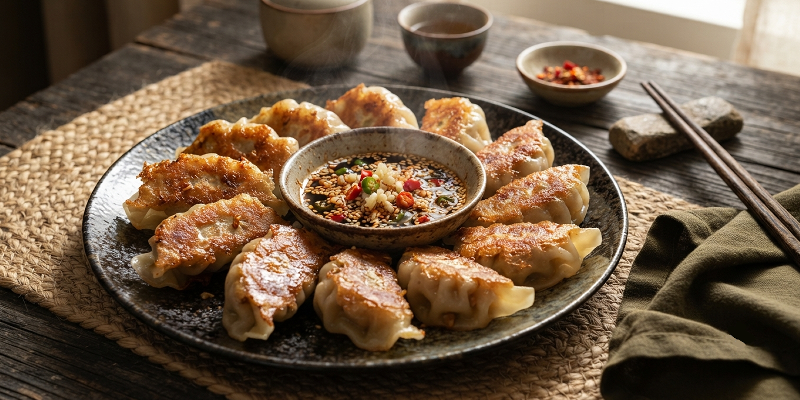
水水 shuǐ — water. 餃饺 jiǎo — dumpling. Put together, they simply mean “water-cooked dumpling,” i.e. boiled — as opposed to 蒸餃蒸饺 (zhēngjiǎo, steamed) or 煎餃煎饺 (jiānjiǎo, pan-fried, closer to what English calls “potstickers”). Same wrapper, same filling — the character in front just tells you how it’s cooked.
材料材料Ingredients (30 dumplings)
餃子皮饺子皮Dumpling Wrapper
中筋中筋麵粉面粉
All-purpose flour
300 g
冷水冷水
Cold water
150–160 ml
鹽盐
Salt (optional)
2 g
📏 Roughly ⅓ tsp salt. In cups: about 2⅓ cups flour to ⅔ cup water.
豬肉高麗菜餡猪肉卷心菜馅Pork & Cabbage Filling
Meat
豬猪絞肉绞肉
Ground pork (shoulder or leg; ~3:7 fat-to-lean ratio recommended)
300 g
Vegetables
高麗菜卷心菜
Cabbage
250–300 g
青蔥青葱
Scallions (chopped)
2 stalks
Seasonings
醬油生抽
Soy sauce
1½ tbsp
蠔油蚝油
Oyster sauce
1 tbsp
米酒米酒
Rice wine
1 tbsp
香油香油
Sesame oil
1 tbsp
鹽盐
Salt
¾ tsp
糖糖
Sugar
1 tsp
白胡椒白胡椒
White pepper
¼ tsp
薑姜末末
Minced ginger
10 g
雞鸡高湯高汤
Chicken stock
60–70 ml
🌍 Shopping outside Asia: any all-purpose flour works for the wrapper. Ground pork shoulder is sold at most butchers — ask for a fattier cut if what’s available seems too lean, since the fat is what keeps the filling juicy.
Add all the seasonings (except the chicken stock) to the ground pork, and stir in one direction until it turns sticky/tacky.
2
分分4~5次次加入加入雞鸡高湯高汤,每次每次都都攪拌搅拌至至完全完全吸收吸收。
Add the chicken stock in 4–5 additions, stirring until fully absorbed each time.
3
加入加入高麗菜卷心菜、蔥葱末末和和香油香油拌勻拌匀。
Mix in the cabbage, chopped scallions, and sesame oil.
包法包法Wrapping
1
每每張张餃子皮饺子皮放放約约18–20g餡料馅料。
Place about 18–20 g of filling in the center of each wrapper.
2
邊緣边缘沾沾少量少量水水,對折对折後后捏緊捏紧即可即可。
Dab a little water on the edge, fold in half, and pinch to seal.
煮法煮法Cooking
1
水水煮煮滾滚後后放入放入水餃水饺。
Bring water to a boil, then add the dumplings.
2
用用湯匙汤匙輕輕轻轻推開推开避免避免沾沾鍋锅。
Gently push them apart with a spoon so they don’t stick to the pot.
3
水水再次再次沸騰沸腾後后加入加入約约120ml冷水冷水。
Once the water returns to a boil, add about 120 ml of cold water.
4
第二第二次次滾滚起起後后,再再煮煮1~2分鐘分钟即可即可。
Once it boils a second time, cook for another 1–2 minutes and they’re done.
🍲 boil, 1–2 min more
小秘訣小秘诀Tips
Chewier wrappers
Rest the dough for at least 30 minutes after kneading — ideally in two rests (30 min + 20 min).
Wrappers that won’t tear
Roll them thicker in the center and thinner at the edges — this also helps them cook more evenly once filled.
Freezing
Lay the wrapped dumplings flat in the freezer for about 2 hours first, then transfer to a freezer bag — they’ll keep for about a month.
Cooking from frozen
Frozen dumplings tend to stick together, so start them in cold water (not already boiling), and stir gently and continuously as the water heats up to keep them from sticking to the pot.
🎥 Still not sure how to do it? Watch the video below.
Usually one of three things: the dough wasn’t rested long enough (gluten is still too tight), the edges were rolled too thick to seal properly, or the water was boiling too violently — a gentler rolling boil is safer once the dumplings are in.
Absolutely — round dumpling wrappers from an Asian grocery store work fine and save a good chunk of time. Just look for ones labeled for boiling/steaming rather than the thinner gyoza-style wrappers, which tear more easily in water.
Swap the pork for crumbled firm tofu and finely chopped mushrooms, and use vegetable stock instead of chicken stock. Add a little extra sesame oil, since tofu won’t bring the same richness as the pork fat.
Yes — that turns them into 煎餃煎饺 (jiānjiǎo). Sear the bottoms in oil until golden, then add a splash of water and cover to steam until cooked through, letting the water evaporate at the end so the bottoms re-crisp.