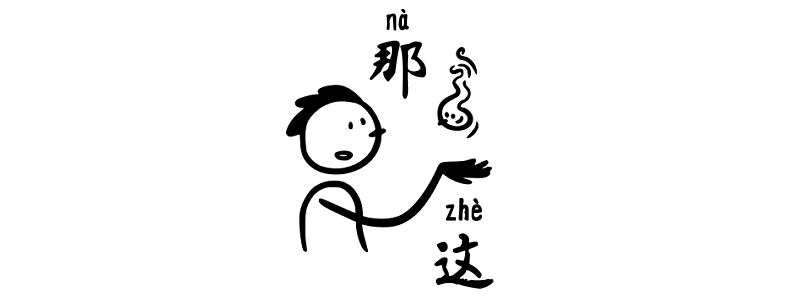
The easy way to remember it: take 這这 zhè (“this”) or 那那 nà (“that”), and add 些些 xiē (“some / a few”).
📌 “This” / “that” + 些些 xiē
這这 zhè + 些些 xiē = 這些这些 zhèxiē (“these”); 那那 nà + 些些 xiē = 那些那些 nàxiē (“those”). Since 些些 xiē already marks “more than one,” no other measure word is needed before the noun.
1Structure
這些这些 zhèxiē / 那些那些 nàxiē + N
這些人是誰?
这些人是谁?
Who are these people?
我不要買那些書
我不要买那些书
I don’t want to buy those books.
這些東西要怎麼辦?
这些东西要怎么办?
What should we do with these things?
她想跟那些中國人練習中文
她想跟那些中国人练习中文
She wants to practice Chinese with those Chinese people.
這些畫很美
这些画儿很美
These paintings are beautiful.
這些菜打包起來,謝謝
这些菜打包起来,谢谢
Please pack up these dishes, thank you.
💡 FYI
Have you heard of 打包打包 dǎbāo culture? 打包打包 dǎbāo means taking home leftovers from a restaurant or event. In Chinese culture it’s seen as a thoughtful way to avoid wasting food, so it’s considered perfectly polite — many restaurants even provide special containers for it. Next time you dine out, feel free to join in and take home some goodies!
2Common Mistakes
那些那些 nàxiē and 哪些哪些 nǎxiē look alike, but they mean different things: 那些那些 nàxiē means “those,” while 哪些哪些 nǎxiē asks “which (ones).”
❌
哪些人是你朋友
哪些人是你朋友
✅
那些人是你朋友
那些人是你朋友
“Those people are your friends.” needs 那些那些 nàxiē. 哪些哪些 nǎxiē turns the sentence into a question:
哪些人是你朋友?
哪些人是你朋友?
Which people are your friends?
3Practice
Translate each sentence into Chinese, then tap the card to check your answer.
01These things are difficult.
這些事很難
这些事很难。
👆 Tap to reveal
02I don’t want to hear these words.
我不想聽這些話
我不想听这些话。
👆 Tap to reveal
03Those problems are yours, not mine.
那些問題是你的,不是我的
那些问题是你的,不是我的。
👆 Tap to reveal
04Those apples are very cheap.
那些蘋果很便宜
那些苹果很便宜。
👆 Tap to reveal
05Are these your books?
這些是你的書嗎
这些是你的书吗?
👆 Tap to reveal
06I like these clothes.
我喜歡這些衣服
我喜欢这些衣服。
👆 Tap to reveal
07Those students are all Taiwanese.
那些學生都是台灣人
那些学生都是台湾人。
👆 Tap to reveal
08Which dishes do you want to eat?
你想吃哪些菜
你想吃哪些菜?
👆 Tap to reveal
