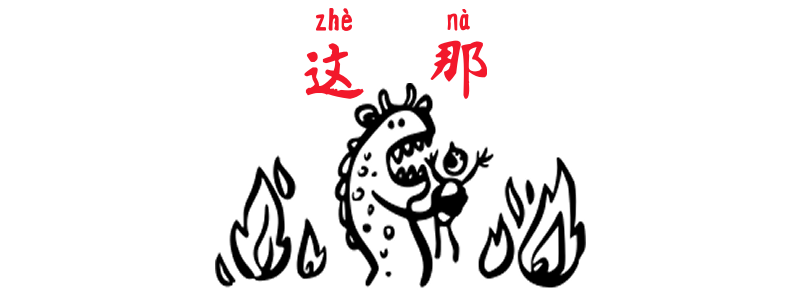
Think of it as “this place” and “that place”: 這这 zhè (this) or 那那 nà (that) + 裡里 lǐ / 兒儿 r (place).
1Structure
These words mark a location, either a place itself or a position relative to the speaker. 這兒这儿 zhèr and 那兒那儿 nàr are the more colloquial versions.
這裡有一隻可愛的小狗
这里有一只可爱的小狗
Here is a cute little dog.
那裡是國家公園
那里是国家公园
There is a national park.
我在這兒!
我在这儿!
I am here!
廁所在那兒
厕所在那儿
The restroom is over there.
這裡有太多人了
这里有太多人了
There are too many people here.
那裡的飯很好吃
那里的饭很好吃
The food there is delicious.
💡 FYI
In Taiwan, the 兒儿 er sound is usually dropped, so you’ll mostly hear 這裡这里 zhèlǐ and 那裡那里 nàlǐ rather than 這兒这儿 zhèr and 那兒那儿 nàr.
2Special Usage
When a pronoun or a person comes before 這裡这里 zhèlǐ / 那裡那里 nàlǐ, it means “with (that person)” or “at (that person’s) place.”
你的東西在我這裡
你的东西在我这里
Your belongings are with me.
我的手機在你那兒嗎?
我的手机在你那儿吗?
Is my phone with you?
3Common Mistakes
那那 nà and 哪哪 nǎ look alike, but they mean different things: 那那 nà points to “there,” while 哪哪 nǎ asks “where.”
❌
哪裡有很多人嗎?
哪里有很多人吗?
✅
那裡有很多人嗎?
那里有很多人吗?
“Are there many people there?” needs 那裡那里 nàlǐ. 哪裡哪里 nǎlǐ is already a question word, so it doesn’t take 嗎吗 ma.
哪裡有很多人?
哪里有很多人?
Where are there many people?
4Practice
Translate each sentence into Chinese, then tap the card to check your answer.
01My home is here.
我家在這裡
我家在这里。
👆 Tap to reveal
02Is the school over there?
學校在那裡嗎
学校在那里吗?
👆 Tap to reveal
03There are many cats there.
那裡有很多貓
那里有很多猫。
👆 Tap to reveal
04The weather here is very hot.
這裡的天氣很熱
这里的天气很热。
👆 Tap to reveal
05Come here!
你來這裡
你来这里!
👆 Tap to reveal
06My book is with you.
我的書在你那裡
我的书在你那里。
👆 Tap to reveal
07Your cat is at my place.
你的貓在我這裡
你的猫在我这里。
👆 Tap to reveal
08Where is the restroom?
廁所在哪裡
厕所在哪里?
👆 Tap to reveal
