一 yī & 不 bù — tone changes
The tones of 一 yī and 不 bù change depending on the syllable that comes after them. It’s confusing at first, but the rules are simple, so let’s go through them together!
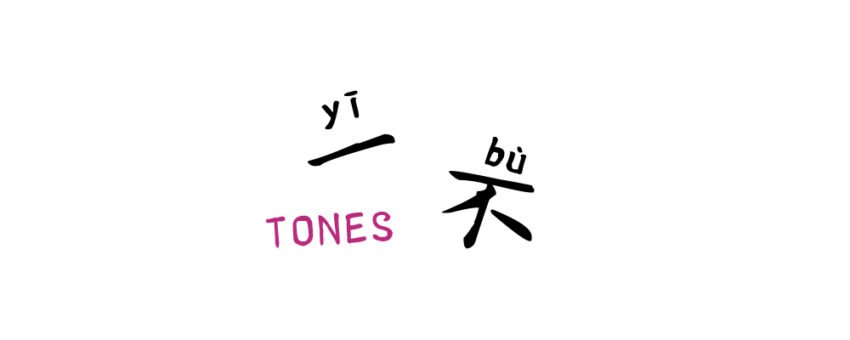
The key is always the next syllable. Before a 4th tone, both 一 yī and 不 bù rise to the 2nd tone (yí, bú). In the tone marks below, the changing 一 yī and 不 bù are highlighted in red.
1Quick Overview
| When | 一 | 不 |
|---|---|---|
| On its own, counting, ordinal numbers, or at the end of a word | yī | bù |
| Before a 1st, 2nd, or 3rd tone | yì | bù |
| Before a 4th tone (or a light syllable that was originally 4th tone, like 个 ge) | yí | bú |
2一 yī
Stays yī: counting, ordinals, and at the end of a word
When you count numbers, read out digits, use 一 yī as an ordinal (“first”), or when 一 yī is the last character of a word, it keeps its original 1st tone.
Even though 月 yuè is a 4th tone, 一月 yīyuè (“January”) keeps yī, because here 一 yī works like an ordinal number (“month one”), not a quantity.
Becomes yì: before a 1st, 2nd, or 3rd tone
When 一 yī comes before a measure word or another syllable in the 1st, 2nd, or 3rd tone, it changes to the 4th tone.
Becomes yí: before a 4th tone
When the next syllable is a 4th tone (or a light syllable that was originally 4th tone), 一 yī changes to the 2nd tone.
Special case in China: yāo
一 yī and 七 qī can sound alike, so in mainland China 一 yī is often read as yāo when giving phone numbers, hotel room numbers, and 3-digit bus numbers.
3不 bù
不 bù follows the same idea as 一 yī, but it only has two forms.
Stays bù: before a 1st, 2nd, or 3rd tone
Becomes bú: before a 4th tone
Many dictionaries and textbooks always write the original tones, yī and bù, and leave the change to you. On this site we mark the tone you actually say, so you’ll see yì, yí, and bú in our examples.
4Common Mistakes
5Practice
Try to read the following words:
一 tiān 一 wèi 一 zhī 一 tiáo 一 wàn 一 diǎn 一 tái 一 fēn 一 běn 一 ge 一 bēi 一 dài 一 zhí 一 zhǒng 一 fèn 一 yàng
不 yào 不 xiǎng 不 kěyǐ 不 zhīdào 不 dǒng 不 qù 不 lái 不 shuìjiào 不 xǐhuan 不 fāngbiàn 不 dà 不 xiǎo 不 cháng 不 duǎn 不 pàng 不 shòu 不 néng 不 huì
Now pick the correct tone for 一 yī or 不 bù in each word.
一天天 (day)
一位位 (person (polite))
一隻只 ((animals))
一條条 ((long things))
一萬万 (ten thousand)
一點点 (a little)
一台台 ((machines))
一分分 (minute / point)
一本本 ((books))
一個个 ((general))
一杯杯 (cup)
一袋袋 (bag)
一直直 (always)
一種种 (kind)
一份份 (portion)
一樣样 (same)
不要要 (want)
不想想 (want to)
不可以可以 (may)
不知道知道 (know)
不懂懂 (understand)
不去去 (go)
不來来 (come)
不睡覺睡觉 (sleep)
不喜歡喜欢 (like)
不方便方便 (convenient)
不大大 (big)
不小小 (small)
不長长 (long)
不短短 (short)
不胖胖 (fat)
不瘦瘦 (thin)
不能能 (able to)
不會会 (can / will)
Enjoyed this post? Buy me a coffee so I can keep writing more of these ☕
Support OneDotDot Chinese