
The good news: once you know the ten locative words below, you can describe almost any position by combining them with 在 zài. One exception to remember — when the location is a country or city name, the locative word is dropped entirely.
1 方位詞 fāngwèicí — locative words
| Hanzi | Pinyin | Meaning |
|---|
| 上上 | shàng | up, top, above |
| 下 | xià | down, bottom, under |
| 裡里 | lǐ | in |
| 外 | wài | out |
| 前 | qián | front |
| 後后 | hòu | back, behind |
| 左 | zuǒ | left |
| 右 | yòu | right |
| 旁 | páng | beside |
| 中間中间 | zhōngjiān | in between |
Every word above can combine with 邊边 biān (side) or 面 miàn (side) to point in a direction — “upside,” “left side,” “inside,” and so on. 左 zuǒ, 右 yòu, and 旁 páng only combine with 邊边 biān, never 面 miàn.
| + 面 miànmian | + 邊 biān边 bian | Meaning |
|---|
| 上 shàng | 上面 shàngmiàn上面 shàngmian | 上邊 shàngbiān上边 shàngbian | Up side |
| 下 xià | 下面 xiàmiàn下面 xiàmian | 下邊 xiàbiān下边 xiàbian | Down side |
| 裡里 lǐ | 裡面 lǐmiàn里面 lǐmian | 裡邊 lǐbiān里边 lǐbian | Inside |
| 外 wài | 外面 wàimiàn外面 wàimian | 外邊 wàibiān外边 wàibian | Outside |
| 前 qián | 前面 qiánmiàn前面 qiánmian | 前邊 qiánbiān前边 qiánbian | Front side |
| 後后 hòu | 後面 hòumiàn后面 hòumian | 後邊 hòubiān后边 hòubian | Back side |
| 左 zuǒ | ✕ | 左邊 zuǒbiān左边 zuǒbian | Left side |
| 右 yòu | ✕ | 右邊 yòubiān右边 yòubian | Right side |
| 旁 páng | ✕ | 旁邊 pángbiān旁边 pángbian | Beside |
| 中間中间 zhōngjiān | ✕ | ✕ | In between |
2 Structure
There are two ways to express location — one more conversational, the other more formal. Note that when the location is a country or city name, like Taiwan or New York, the locative word is dropped entirely.
S + 在 zài + location + locative word
書在桌子上
书在桌子上
The books are on the table.
我的手機不在包裡
我的手机不在包里
My phone is not in the bag.
媽媽的傘在不在門外?
妈妈的伞在不在门外?
Is mom’s umbrella outside the door?
小貓在我頭上睡覺,小狗在我腳旁睡覺,我先生在地上睡覺
小猫在我头上睡觉,小狗在我脚旁睡觉,我先生在地上睡觉
The kitten sleeps above my head, the dog sleeps beside my feet, and my husband sleeps on the floor.
❌
我在台灣裡
我在台湾里
✅
我在台灣
我在台湾
Both mean “I am in Taiwan” — but when the location noun is a country or city name, the locative word is dropped entirely.
S + 在 zài + location + 的 de + locative word + 面 miàn / 邊边 biān
書在桌子的上面
书在桌子的上面
The book is on the table.
弟弟在你前面嗎?
弟弟在你前面吗?
Is your younger brother in front of you?
我家在老師家的左邊
我家在老师家的左边
My house is on the left side of the teacher’s house.
📌 A subtle difference in emphasis
我家在老師家的左邊我家在老师家的左边 wǒ jiā zài lǎoshī jiā de zuǒbiān and 老師家的左邊是我家老师家的左边是我家 lǎoshī jiā de zuǒbiān shì wǒ jiā mean the same thing, but stress different things. The first puts the focus on my house — answering “where is your house?” The second puts the focus on the teacher’s house — answering “what’s near the teacher’s house?”
💬 Often omitted
裡面里面 lǐmiàn and 裡邊里边 lǐbiān are special cases that are frequently dropped from the sentence.
你的衣服不在櫃子(的裡邊)
你的衣服不在柜子(的里边)
Your clothes are not in the closet.
爸爸在家(裡邊)看電視
爸爸在家(里边)看电视
Dad is watching TV at home.
3 Word order changes the meaning
Do you know the difference between 杯子的前面杯子的前面 bēizi de qiánmiàn and 前面的杯子前面的杯子 qiánmiàn de bēizi?
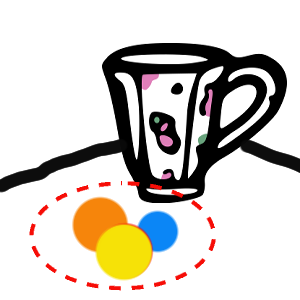
杯子的前面
杯子的前面
The front side of the cup.
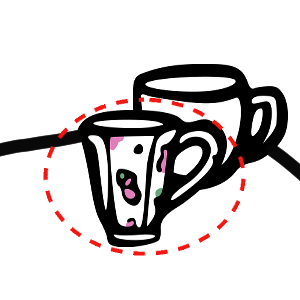
前面的杯子
前面的杯子
The cup that’s in front.
4 Putting it into context
Six families live in a three-by-three grid of apartments. Read the sentences below and see if you can place each family correctly.
我家在一樓的右邊,林家在三樓
我家在一楼的右边,林家在三楼
My family is on the right side of the first floor; the Lins are on the third floor.
李家在王家的上面,馬家在王家的下面
李家在王家的上面,马家在王家的下面
The Lis are above the Wangs; the Mas are below the Wangs.
王家在謝家旁邊,陳家在馬家左邊
王家在谢家旁边,陈家在马家左边
The Wangs are beside the Xies; the Chens are to the left of the Mas.
李家在林家和白家中間,謝家在林家的下面,在陳家的上面
李家在林家和白家中间,谢家在林家的下面,在陈家的上面
The Lis are between the Lins and the Bais; the Xies are below the Lins and above the Chens.
馬家在陳家和我家中間,趙家在白家和我家中間
马家在陈家和我家中间,赵家在白家和我家中间
The Mas are between the Chens and my family; the Zhaos are between the Bais and my family.
Drag each family into the right apartment based on the clues above.
林林家Lín jiā
李李家Lǐ jiā
白家Bái jiā
謝谢家Xiè jiā
王家Wáng jiā
趙赵家Zhào jiā
陳陈家Chén jiā
馬马家Mǎ jiā
我家wǒ jiā
5 Practice
Translate each sentence into Chinese, then tap the card to check your answer.
01The cat is under the chair.
貓在椅子下面
猫在椅子下面。
👆 Tap to reveal
02My keys are not on the table.
我的鑰匙不在桌子上
我的钥匙不在桌子上。
👆 Tap to reveal
03Is the bathroom inside or outside?
廁所在裡面還是外面?
厕所在里面还是外面?
👆 Tap to reveal
04I am in Japan right now.
我現在在日本
我现在在日本。
👆 Tap to reveal
05The bank is on the right side of the bookstore.
銀行在書店的右邊
银行在书店的右边。
👆 Tap to reveal
06Who’s standing in front of you?
誰站在你前面?
谁站在你前面?
👆 Tap to reveal
07The dog is sleeping between the sofa and the table.
狗在沙發和桌子中間睡覺
狗在沙发和桌子中间睡觉。
👆 Tap to reveal
08Where’s the nearest coffee shop?
最近的咖啡店在哪裡?
最近的咖啡店在哪儿?
👆 Tap to reveal
09My bedroom is above the kitchen.
我的房間在廚房上面
我的房间在厨房上面。
👆 Tap to reveal
10What’s that cup on the left?
左邊的那個杯子是什麼?
左边的那个杯子是什么?
👆 Tap to reveal
