A direction complement goes after a verb to show which way the action moves. 走 zǒu means “walk,” but 走進 zǒujìn走进 zǒujìn is “walk in” and 走出 zǒuchū is “walk out.” This lesson covers the simple direction words first, then the compound ones like 進來 jìnlái进来 jìnlai and 出去 chūqù出去 chūqu.
一 Simple Direction Complements
Each direction word adds a direction to the verb. Here are the most common ones:
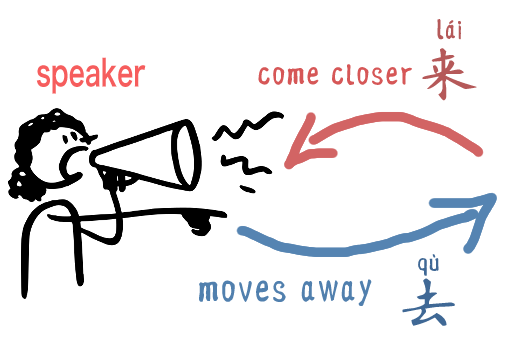
V + 來来 / 去
來 lái来 lái = toward the speaker; 去 qù = away from the speaker.
我帶带去給给你
I’ll bring it over to you.
The speaker is about to leave and go to you.
你來来台灣台湾
Come to Taiwan!
The speaker is in Taiwan.
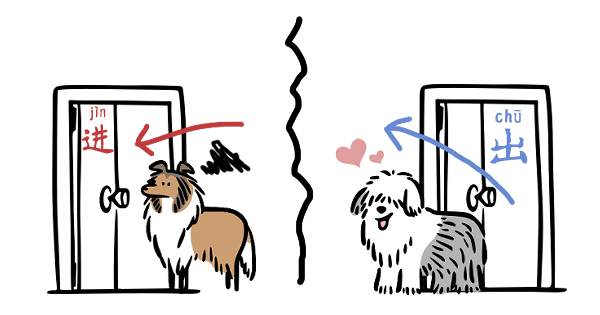
V + 進进 / 出
進 jìn进 jìn = moving in, 出 chū = moving out. Usually followed by a place.
他跑進进電影院电影院
He ran into the movie theater.
我走出教室
I walked out of the classroom.
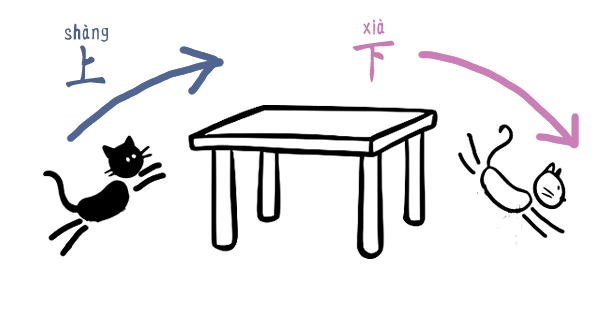
V + 上 / 下
上 shàng = moving up, 下 xià = moving down. Usually followed by a destination.
媽媽妈妈走上二樓二楼
Mom walked up to the second floor.
爸爸爬下樹树
Dad climbed down from the tree.
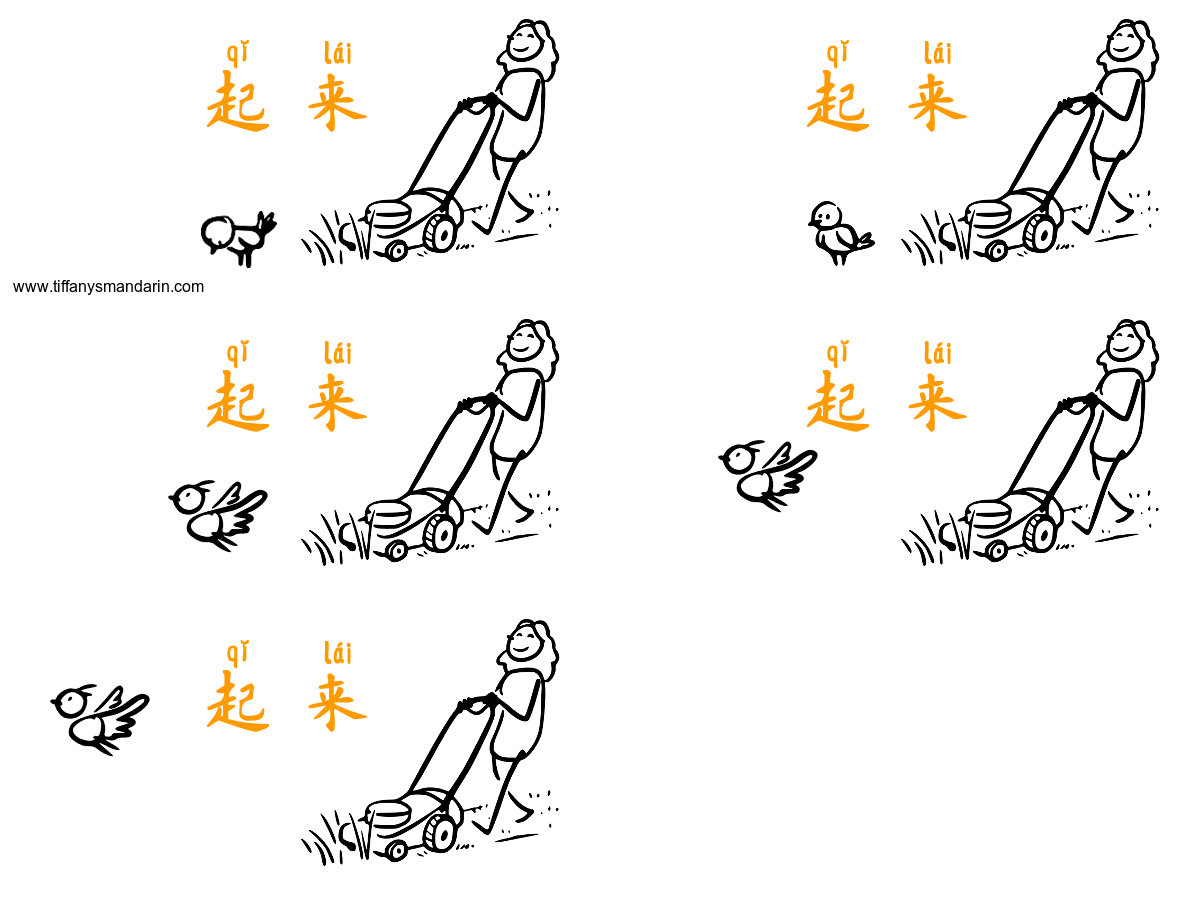
V + 起來起来
起 qǐ means “up,” an upward movement. As a direction complement it always comes with 來 lái来 lái. Unlike 上 shàng, it doesn’t need a destination.
站起來起来
Stand up.
拿起來起来
Pick it up.
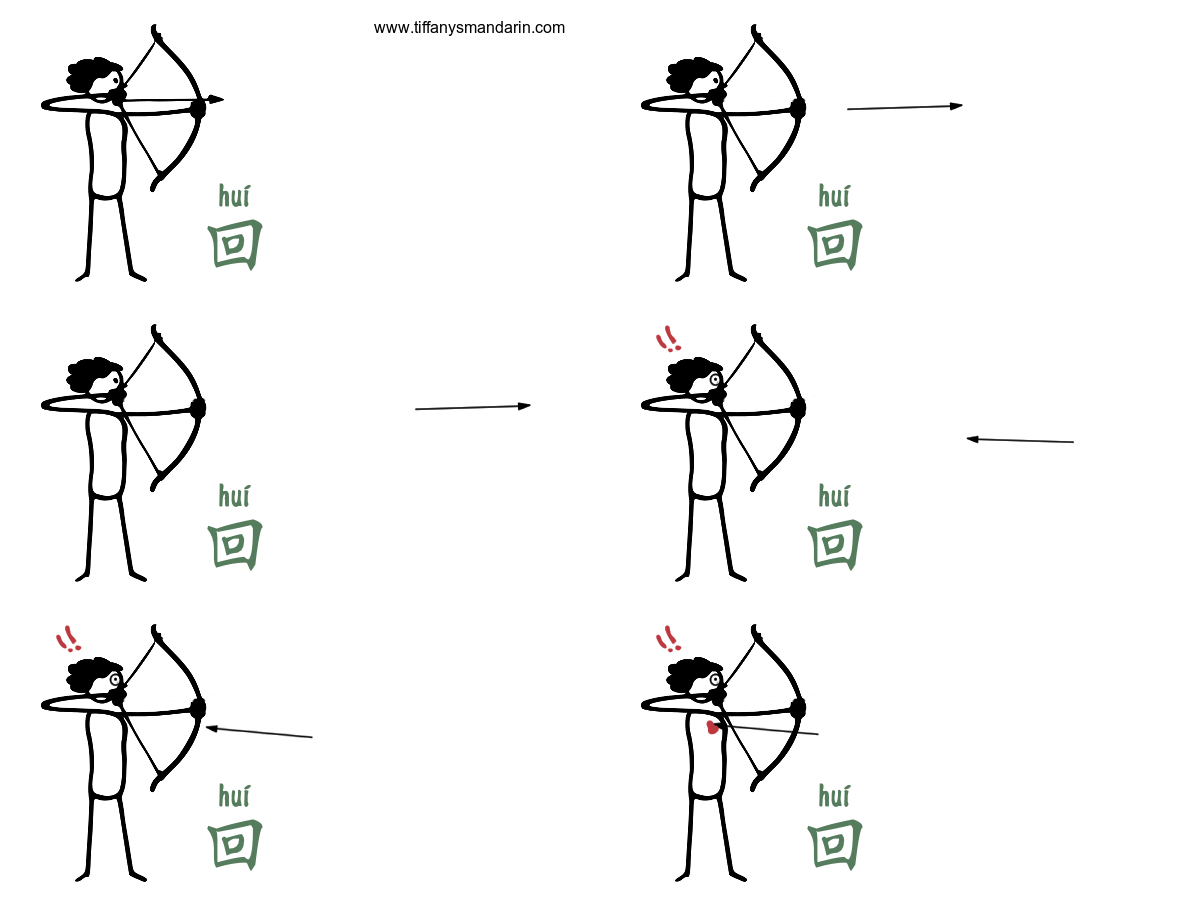
V + 回
回 huí = going back or returning.
他跑回家
He ran back home.
我走回公司
I walked back to the office.
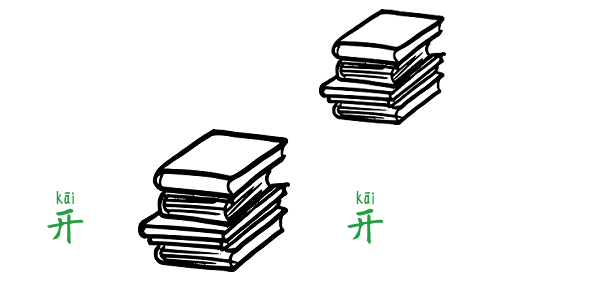
V + 開开
開 kāi开 kāi = moving away from where it was. It doesn’t always need an object.
他拿開开書书
He moved the book away.
孩子從从媽媽妈妈身邊身边跑開开
The child ran away from his mom.
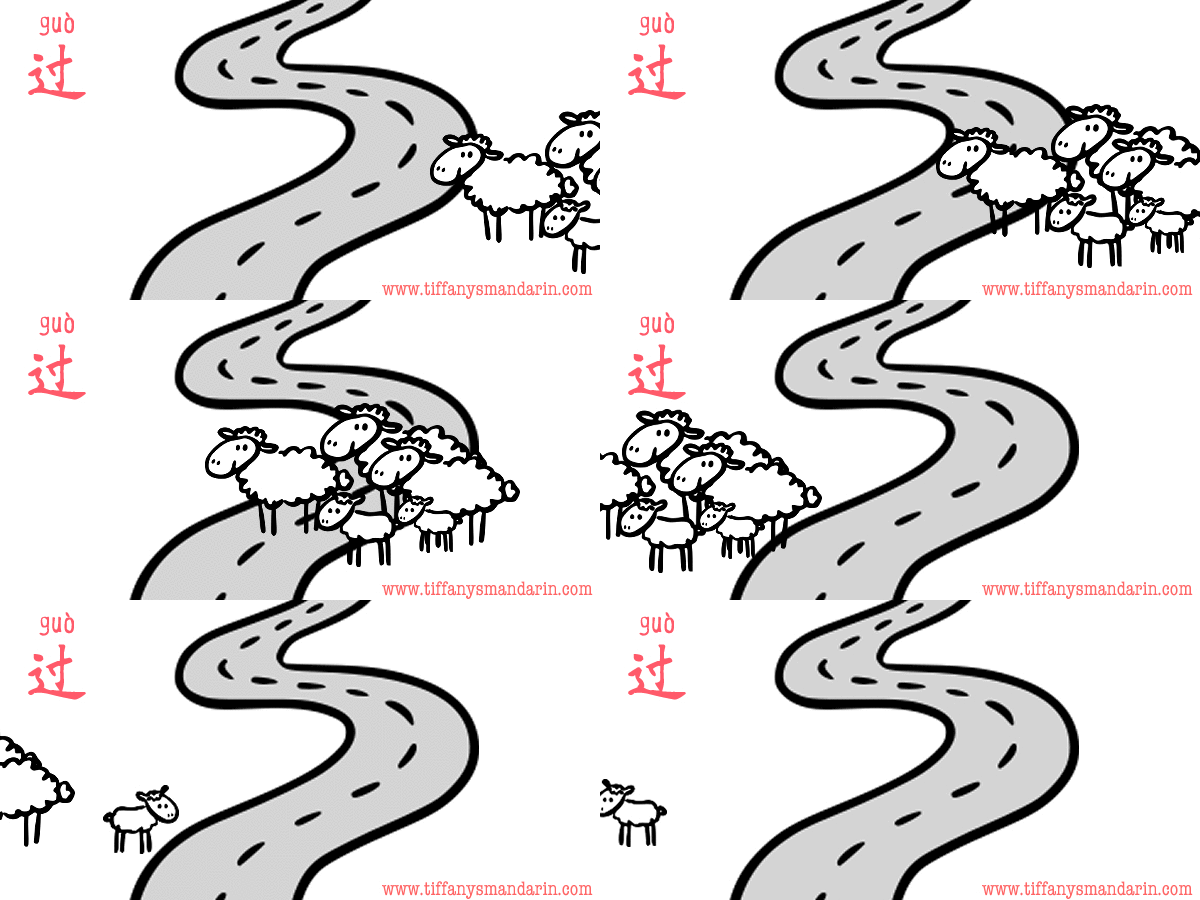
V + 過过
過 guò过 guò = passing by, crossing, or going through.
我走過过書店书店
I walked past a bookstore.
我跑過过馬路马路
I ran across the road.
二 Compound Direction Complements
A compound direction complement adds 來 lái来 lái or 去 qù after a direction word. 來来 means toward the speaker, 去 means away from the speaker.
上 shàng
下 xià
進进 jìn
出 chū
回 huí
過过 guò
起 qǐ
來来 lái
上來上来come up
下來下来come down
進來进来come in
出來出来come out
回來回来come back
過來过来come over
起來起来get up / rise
去 qù
上去go up
下去go down
進去进去go in
出去go out
回去go back
過去过去go over
—
Compound complements often follow verbs of moving things, like 搬 bān (move), 放 fàng (put), 拿 ná (take), 開 kāi开 kāi (drive), and body movements like 走 zǒu (walk) and 跑 pǎo (run).
走回去回去
walk back (there)
開开過來过来
drive over (here)
搬出
move out
Just the direction: out.
搬出來出来
move out (toward me)
來 lái来 lái: the speaker is outside, where it’s moving to.
搬出去出去
move out (away from me)
去 qù: the speaker is inside, and it’s moving away.
三 Where Does the Place Go?
In compound complements, a place goes between the direction word and 來来 / 去.
Verb + Direction + Place + 來来 / 去
這这些東西东西,請请搬進进廚房厨房去
Please move these things into the kitchen.
你明年要回美國美国去嗎吗?
Are you going back to the US next year?
那些書书,都幫帮我拿上二樓二楼來来
Please bring all those books up to the second floor for me.
四 Story Time: A Pet Cat and a Stray Cat
Let’s read a short story with lots of direction complements! First, one useful word: 別 bié别 bié means “don’t.”
別别看我!
Don’t look at me!
If the video is too fast, you can slow it down in the player settings. Sentences from the video:
Both are at the top, moving away from where they are.
我們我们回來回来了
We’re back!
歡迎欢迎你搬回來回来!
Welcome back! (moving back home)
你幾几點点回去回去?
What time are you going back?
五 Common Mistakes
❌ 你下別别來来
✅ 你別别下來下来
Negatives like 別 bié别 bié go before the whole verb + complement.
❌ 他回去回去家
✅ 他回家去
The place goes between 回 and 去.
❌ 站上來上来
✅ 站起來起来
For “stand up,” use 起來 qǐlái起来 qǐlai. 上 shàng needs a destination, like 走上二樓 zǒushàng èr lóu走上二楼 zǒushàng èr lóu.
六 Practice
Tap the words below in the right order to build the sentence, then check your answer. If it’s wrong, you can try again as many times as you like, or hit “Show answer” if you get stuck. Careful: some tiles are traps and are not needed!
Question 1 of 10
“He ran into the classroom.”
Tap words below to build the sentence
❌ Try Again
他跑進进教室
Into → 進 jìn进 jìn.
“Please come in.”
Tap words below to build the sentence
❌ Try Again
請请進进來来
Toward the speaker → 來 lái来 lái.
“Dad climbed up the tree.”
Tap words below to build the sentence
❌ Try Again
爸爸爬上樹树
With a destination → 上 shàng.
“Everyone, please stand up.”
Tap words below to build the sentence
❌ Try Again
請请大家站起來起来
No destination → 起來 qǐlái起来 qǐlai.
“I walked back home.”
Tap words below to build the sentence
❌ Try Again
我走回家
Adding 去 at the end is also correct.
Back → 回 huí.
“He walked past the bookstore.”
Tap words below to build the sentence
❌ Try Again
他走過过書店书店
Past → 過 guò过 guò, not 進 jìn进 jìn (into).
“When are you going back to the US?”
Tap words below to build the sentence
❌ Try Again
你什麼時候什么时候回美國美国去?
Leaving out 去 is also correct.
The place goes between 回 and 去.
“These chairs, please move them into the classroom.”






1 thought on “Direction Complement VV and VVV”
Comments are closed.