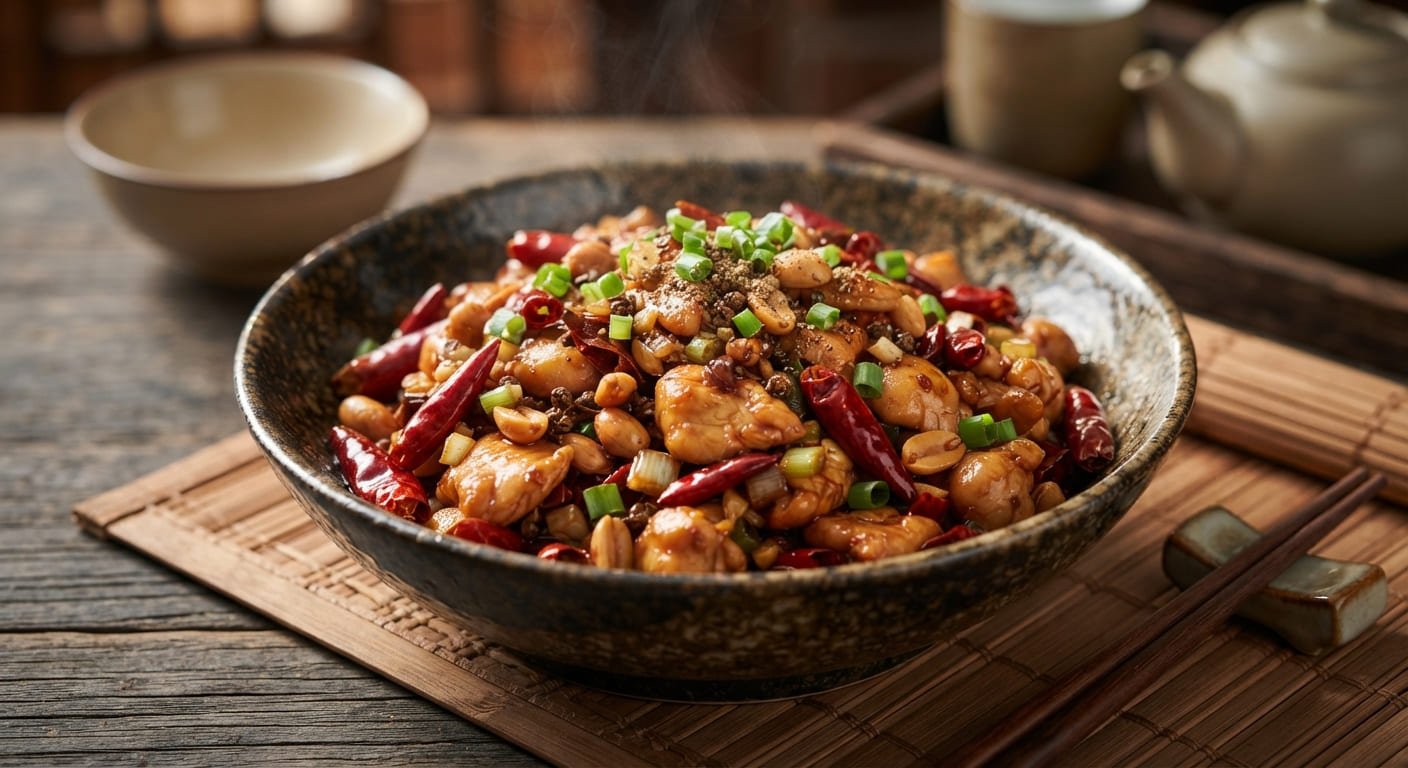
宮保雞丁宫保鸡丁 (gōngbǎo jīdīng) is a classic of Sichuan cooking: small cubes of chicken stir-fried with dried chilies, Sichuan peppercorns, and roasted peanuts in a glossy sauce that’s a little sweet, a little sour, and gently numbing-hot. The world knows it as “Kung Pao chicken” — but the original is leaner and punchier than most takeout versions, with no bell peppers and no thick, sugary sauce.
The name comes from a person. 丁寶楨丁宝桢 (Dīng Bǎozhēn), a Qing-dynasty official who served as governor of Sichuan, is said to have loved this dish. One of his honorary titles was 太子少保太子少保 (“Junior Guardian of the Crown Prince”), shortened to 宮保宫保 — so the dish became “the Palace Guardian’s diced chicken.”
Sichuan cooks sum up its flavor in two terms: 糊辣糊辣 (hú là), the toasty aroma of chilies and peppercorns fried slowly in oil, and 荔枝味荔枝味 (lìzhī wèi, “lychee flavor”), the balanced sweet-and-sour of the sauce. Despite the name, there are no lychees in it.
Reading the name
宮保宫保 gōngbǎo — the official’s title: 宮宫 = palace, 保保 = guardian. 雞鸡 jī — chicken. 丁丁 dīng — small cubes; you’ll see it in 肉丁肉丁 (diced meat) and 黃瓜丁黄瓜丁 (diced cucumber). Chinese dish names often tell you how the food is cut: 丁丁 for cubes, 絲丝 for strips, 片片 for slices. And fittingly, 丁丁 is also the official’s family name.
材料材料Ingredients
Units:
雞腿鸡腿肉肉
Boneless chicken thigh (diced)
300 g
乾干辣椒辣椒
Dried red chilies
8–10
花椒花椒
Sichuan peppercorns
1 tsp
花生花生
Roasted peanuts (unsalted)
50 g
蔥白葱白
Scallions, white part
3 stalks
薑姜
Ginger
3 slices
蒜頭蒜头
Garlic
3 cloves
醬油酱油
Soy sauce (1 tsp marinade + 1 tbsp sauce)
1 tbsp + 1 tsp
黑醋黑醋
Black vinegar (sauce)
1 tbsp
糖糖
Sugar (sauce)
1 tbsp
米酒米酒
Rice wine (1 tsp marinade + 1 tsp sauce)
2 tsp
太白粉太白粉
Potato starch (1 tsp marinade + 1 tsp sauce)
2 tsp
水水
Water (sauce)
2 tbsp
油油
Cooking oil
2 tbsp
🌶️ Controlling the heat: the dried chilies are there mostly for aroma. Shaking out the seeds keeps the dish mild; leave them in, or add more chilies, if you like it hotter. The peppercorns bring the tingle, not the burn.
🥜 Use unsalted roasted peanuts and add them at the very end, so they stay crunchy.
🌍 Shopping outside Asia: Sichuan peppercorns are sold at Asian grocery stores and online. Black vinegar is often labeled “Chinkiang vinegar”. 太白粉太白粉 (potato starch) can be swapped 1:1 for cornstarch, and Shaoxing wine or dry sherry works in place of rice wine.
Not quite. Takeout versions usually add bell peppers, celery, or zucchini and use a thicker, sweeter sauce. The Sichuan original keeps it simple — chicken, chilies, peppercorns, scallions, and peanuts — and the sauce just coats the chicken rather than pooling on the plate.
Dried chilies and Sichuan peppercorns burn in seconds in hot oil, and burnt chilies taste bitter. Heating them slowly from cold lets their aroma seep into the oil — that’s the 糊辣糊辣 flavor the dish is known for.
Yes. Breast meat dries out more easily, so don’t skip the starch in the marinade, and take it off the heat as soon as it changes color. Thigh meat is more forgiving and stays juicier.
It’s best eaten fresh — the peanuts lose their crunch as the dish sits. If you want to prep ahead, dice and marinate the chicken and mix the sauce, then cook just before serving.