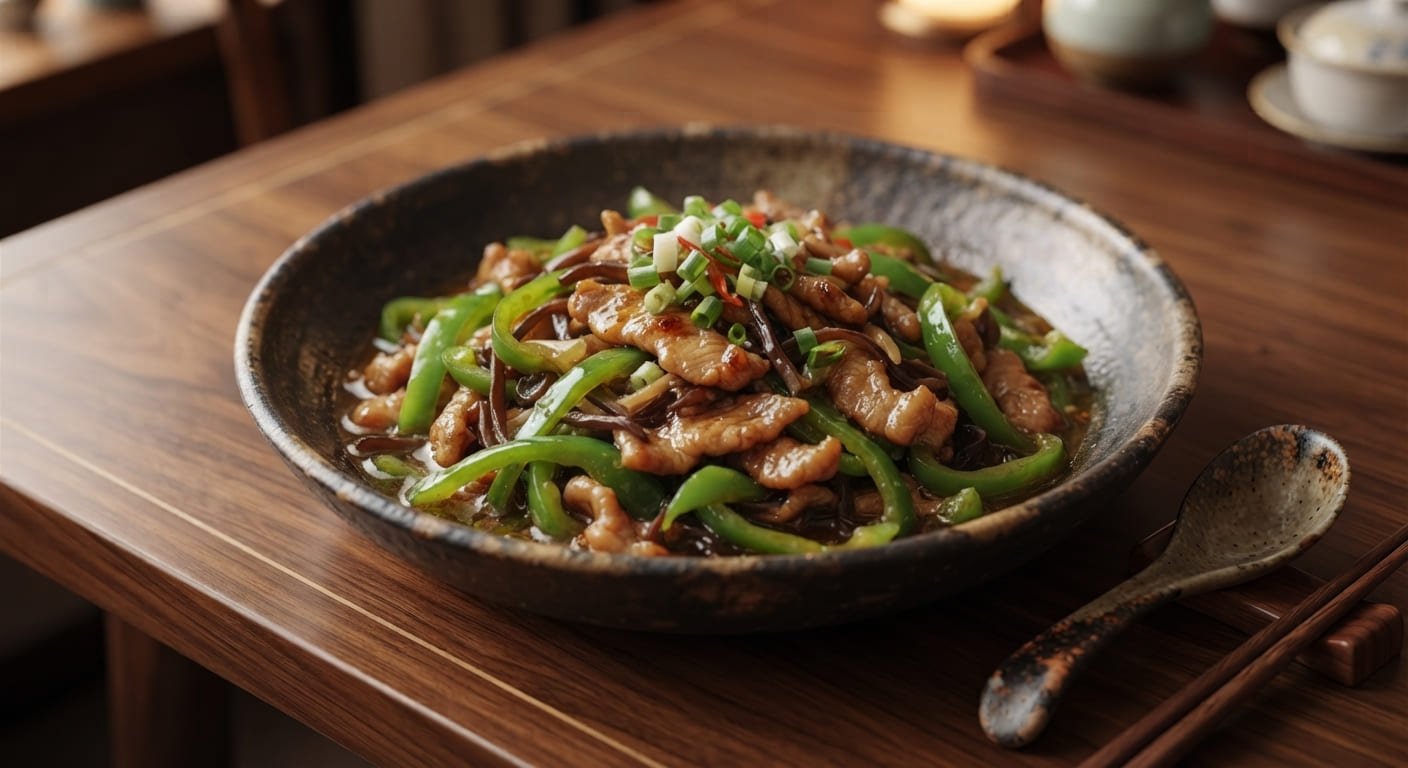
青椒炒肉絲青椒炒肉丝 (qīngjiāo chǎo ròusī) is one of the most everyday dishes on a Chinese or Taiwanese family table — thin strips of pork and green bell pepper tossed together in a hot wok for just a few minutes. It’s the kind of dish that’s cooked on a weeknight and eaten with a bowl of rice, and it rarely shows up on fancy menus — which is exactly why it’s worth learning.
The secret is in the prep, not the cooking: the pork gets a quick marinade of soy sauce, rice wine, and starch so it stays tender, and everything is cut into matching thin strips so it all cooks evenly and fast.
Reading the name
青椒青椒 qīngjiāo — green pepper (青青 = green, 椒椒 = pepper). 炒炒 chǎo — to stir-fry. 肉絲肉丝 ròusī — shredded meat; 絲丝 sī literally means “silk / thread” and is used for anything cut into thin strips, like 薑絲姜丝 (ginger strips) or 豆干絲豆干丝 (tofu strips). Put together: “green pepper stir-fried meat strips.” Many Chinese dish names follow this same pattern: ingredient + cooking method + ingredient + cut shape.
材料材料Ingredients
Units:
豬肉猪肉
Pork loin or tenderloin (cut into thin strips)
200 g
青椒青椒
Green bell peppers
2
蒜頭蒜头
Garlic (sliced)
2 cloves
辣椒辣椒
Red chili pepper (sliced)
1 (optional)
醬油酱油
Soy sauce (marinade)
1 tbsp
米酒米酒
Rice wine (marinade)
1 tbsp
太白粉太白粉
Potato starch (marinade)
1 tsp
白白胡椒粉胡椒粉
White pepper (marinade)
a pinch
鹽盐
Salt
¼ tsp
糖糖
Sugar
½ tsp
油油
Cooking oil
2 tbsp
水水
Water
2 tbsp
🔪 Tip: put the pork in the freezer for 20–30 minutes before slicing — it firms up and is much easier to cut into thin, even strips. Cut against the grain so the strips stay tender.
🌶️ Like it spicy? Add the sliced chili together with the garlic in step 4.
🌍 Shopping outside Asia: any green bell pepper works. 太白粉太白粉 (potato starch) can be swapped 1:1 for cornstarch. If plain “rice wine” isn’t available, Shaoxing wine or dry sherry works fine.
Usually one of three things: the pork was cut with the grain instead of against it, the strips were too thick, or the starch was skipped in the marinade. Cook the pork over high heat only until it changes color — it finishes cooking when it goes back in at the end.
Pork strips cook much faster than peppers. Taking them out first keeps them from overcooking while the peppers soften; returning them at the end just warms them through so they stay juicy.
It’s best eaten fresh. Leftovers keep in the fridge for 1–2 days in an airtight container — reheat quickly in a hot pan rather than the microwave to keep the peppers from getting soggy.
Swap the pork for strips of dried tofu (豆干豆干) or king oyster mushrooms. Skip the marinade and just season with a little extra soy sauce at the end.