Skip to content

OneDotDot Chinese

Learn a little Chinese every day

Menu
  • Pronunciation
  • Vocabulary
    • HSK 3.0 Voc
    • Topic Center
    • Professional Field
    • Food Words
    • Synonyms
    • Chinese Slang
  • Grammar
    • Foundation
    • A1 Grammar (HSK 1)
    • A2 Grammar (HSK 2)
    • B1 Grammar (HSK 3)
    • B1 Grammar (HSK 4)
    • B2 Grammar (HSK 5)
    • B2 Grammar (HSK 6)
    • C1-C2 Grammar (HSK 7-9)
  • Resources
    • Characters
    • Chinese Name
    • Conversation
    • Cooking Chinese Food
    • Story with Audio
    • Songs
    • Download
    • Chinese Festivals
  • Practice
    • Grammar
    • Reading
    • Listening
  • Shop
Menu
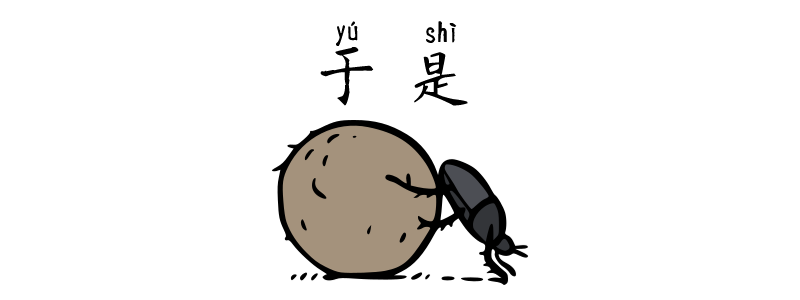
yúshì chinese and then

“And then” in Chinese – 于是 yúshì

Posted on September 19, 2024February 20, 2025 by tiffany

Table of Contents

Toggle
  • Structure
    • Event A + 於是/于是 yúshì + Event B
  • Differences
    • 所以 suǒyǐ & 於于是 yúshì

  • Text Display
  • ►Traditional
  • ►Simplified
  • Pinyin Display
  • ►Visible
  • ►Mouseover
  • ►Hidden

Grammar Point:
The Chinese conjunction 於于是 yúshì is used to indicate a sequence of events, where the second event is a direct result or natural consequence of the first one. It is similar to “and then,” “therefore,” or “as a result” in English.

Structure

Event A + 於是/于是 yúshì + Event B

It shows a cause-and-effect relationship without strictly following a timeline, focusing more on the logical flow between events. Since it’s only used to talk about the past, it’s often found in storytelling.

他tā交jiāo了le個ge中國Zhōngguó女朋友nǚpéngyǒu,於是yúshì開始kāishǐ學xué起qǐ中文zhōngwén了le他tā交jiāo了le个ge中国Zhōngguó女朋友nǚpéngyou,于是yúshì开始kāishǐ学xué起qǐ中文zhōngwén了le
He got a Chinese girlfriend, so he started learning Chinese.

他tā無法wúfǎ靠kào自己zìjǐ學xué好hǎo中文zhōngwén,於是yúshì找zhǎo了le一yí位wèi老師lǎoshī教jiào他tā他tā无法wúfǎ靠kào自己zìjǐ学xué好hǎo中文zhōngwén,于是yúshì找zhǎo了le一yí位wèi老师lǎoshī教jiào他tā
He couldn’t master Chinese on his own, so he hired a teacher.

可是kěshì後來hòulái這zhè中國Zhōngguó女孩nǚhái要yào他tā結婚jiéhūn後hòu得děi住zhù在zài中國Zhōngguó,於是yúshì他們tāmen就jiù分手fēnshǒu了le可是kěshì后来hòulái这zhè中国Zhōngguó女孩nǚhái要yào他tā结婚jiéhūn后hòu得děi住zhù在zài中国Zhōngguó,于是yúshì他们tāmen就jiù分手fēnshǒu了le
But then, the Chinese girl said they’d have to live in China if they got married, so they broke up.

老闆lǎobǎn對duì我們wǒmen的de提案tíàn都dōu不bù滿意mǎnyì,於是yúshì我們wǒmen加jiā了le班bān重做chóngzuò一yí份fèn提案tíàn老板lǎobǎn对duì我们wǒmen的de提案tíàn都dōu不bù满意mǎnyì,于是yúshì我们wǒmen加jiā了le班bān重做chóngzuò一yí份fèn提案tíàn
The boss wasn’t happy with any of our proposals, so we worked overtime to create a new one.

你nǐ還hái不bù知道zhīdào吧ba?上個月shànggeyuè他tā和hé老闆lǎobǎn鬧翻nàofān了le,於是yúshì離開líkāi了le公司gōngsī你nǐ还hái不bù知道zhīdào吧ba?上个月shànggeyuè他tā和hé老板lǎobǎn闹翻nàofān了le,于是yúshì离开líkāi了le公司gōngsī
You probably haven’t heard, but he had a big argument with the boss last month and quit.

FYI
鬧闹翻 nàofān is a Chinese term that describes having a huge falling out or a major argument with someone, often leading to a serious rift or the end of the relationship. It’s the kind of conflict that totally disrupts or breaks a bond—sort of like the ever-so-friendly relationship between China and Taiwan…🫥

客戶kèhù都dōu很hěn喜歡xǐhuān他tā,於是yúshì一yì聽tīng到dào他tā離職lízhí都dōu和hé我們wǒmen公司gōngsī解約jiěyuē了le客户kèhù都dōu很hěn喜欢xǐhuan他tā,于是yúshì一yì听tīng到dào他tā离职lízhí都dōu和hé我们wǒmen公司gōngsī解约jiěyuē了le
His clients loved him, so when they found out he left, they all canceled their contracts with us.

Differences

所以 suǒyǐ & 於于是 yúshì

  1. 所以 suǒyǐ can only be placed before the subject and verb. 於于是 yúshì can be used before the subject and verb or in the middle.

為了wèile找zhǎo工作gōngzuò,他tā於是yúshì開始kāishǐ學xué起qǐ中文zhōngwén为了wèile找zhǎo工作gōngzuò,他tā于是yúshì开始kāishǐ学xué起qǐ中文zhōngwén ✅
To find a job, he started learning Chinese.

為了wèile找zhǎo工作gōngzuò,所以suǒyǐ他tā開始kāishǐ學xué起qǐ中文zhōngwén为了wèile找zhǎo工作gōngzuò,所以suǒyǐ他tā开始kāishǐ学xué起qǐ中文zhōngwén ✅
To find a job, he started learning Chinese.

為了wèile找zhǎo工作gōngzuò,他tā所以suǒyǐ開始kāishǐ學xué起qǐ中文zhōngwén为了wèile找zhǎo工作gōngzuò,他tā所以suǒyǐ开始kāishǐ学xué起qǐ中文zhōngwén ❌
To find a job, he started learning Chinese.

  1. 所以 suǒyǐ is used for cause-and-effect sentences. 於于是 yúshì connects actions or situations. It can show (1) events happening one after the other or (2) extend a situation, similar to words like “next” or “then.”

我wǒ今天jīntiān去qù公園gōngyuán,所以suǒyǐ帶dài了le球qiú我wǒ今天jīntiān去qù公园gōngyuán,所以suǒyǐ带dài了le球qiú ✅
I went to the park today, so I brought a ball.

我wǒ今天jīntiān去qù公園gōngyuán,於是yúshì帶dài了le球qiú我wǒ今天jīntiān去qù公园gōngyuán,于是yúshì带dài了le球qiú ❌
I went to the park today, so I brought a ball.

  1. 所以 suǒyǐ can be used to express commands, questions, or rhetorical statements. 於于是 yúshì is only used for objective statements based on facts.

因為yīnwèi我wǒ沒méi去qù你nǐ家jiā,所以suǒyǐ你nǐ生氣shēngqì了le嗎ma?因为yīnwèi我wǒ没méi去qù你nǐ家jiā,所以suǒyǐ你nǐ生气shēngqì了le吗ma? ✅
Is it because I didn’t go to your house that you’re upset?

因為yīnwèi我wǒ沒méi去qù你nǐ家jiā,於是yúshì你nǐ生氣shēngqì了le嗎ma?因为yīnwèi我wǒ没méi去qù你nǐ家jiā,于是yúshì你nǐ生气shēngqì了le吗ma? ❌
Is it because I didn’t go to your house that you’re upset?

Do you like it? 🙂

📗 Contemporary Chinese
➤ Book 1
➤ Book 2
➤ Book 3
➤ Book 4

  • LinkedIn
  • Instagram
線上課程
One-on-one online teaching platform
線上課程

OneDotDot Chinese

When a foreign friend says their Chinese is "yì diǎn diǎn" (just a little), this site exists to make that little bit grow, one day at a time.

  ABOUT

  About Me
  Special Thanks
  News
  My Students Only

  CONTACT

  LinkedIn
  Instagram
  Privacy Policy

© 2026 OneDotDot Chinese | Powered by Superbs Personal Blog theme