的 links a describing word to a noun — it can show who owns something, or attach an adjective or a whole verb phrase to a noun. The trickiest part isn’t 的 itself, but getting the word order right.
一 Structure
Whatever is doing the describing goes before 的, and the noun it describes comes right after.
Verb / Adjective / Noun + 的 + Noun
Tiffany的狗N + 的 + N
Tiffany’s dog
可愛的狗可爱的狗Adj + 的 + N
Cute dog
我畫的狗我画的狗V + 的 + N
The dog I draw
我畫的狗很可愛我画的狗很可爱
The dog I draw is cute.
你做的飯很好吃你做的饭很好吃
The food you made is delicious.
有趣的中文老師多不多有意思的汉语老师多不多?
Are there many interesting Chinese teachers?
媽媽的手機很貴妈妈的手机很贵
Mom’s phone is very expensive.
我喜歡很大的房子我喜欢很大的房子
I like large houses.
(In the sixth example, notice Taiwan says 有趣的中文 while the mainland says 有意思的汉语 — same idea, different everyday word choice.)
二 Word Order Matters
Swap what’s before and after 的, and the meaning flips completely — the describing word always comes first.
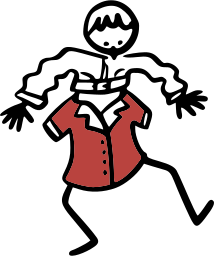
紅色的衣服红色的衣服
Red clothes
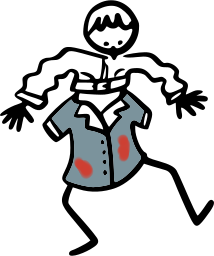
衣服的紅色衣服的红色
The red part of the clothes
爸爸的孩子
Dad’s child
孩子的爸爸
The child’s dad
三 Common Mistakes
❌ 狗可愛可爱(meaning: “cute dog”)
✅ 可愛的狗可爱的狗
Dropping 的 leaves just two words sitting next to each other with no link between them — 的 is what turns “cute” and “dog” into “cute dog.”
❌ 孩子的爸爸(meaning to say: “Dad’s child”)
✅ 爸爸的孩子
The describing word always comes first. Swapping the order gives you “the child’s dad” instead — a completely different person.
❌ 我畫画狗(meaning: “the dog I draw”)
✅ 我畫的狗画的狗
Without 的, 我畫狗 reads as a full sentence — “I draw a dog” — not a description of which dog you mean.
四 Practice
Pick the phrase that matches the English meaning.
Question 1 of 10
Mom’s phone
媽媽 (mom) describes 手機 (phone), so 媽媽 goes first.
Cute dog
可愛 (cute) is the description, so it comes before 的.
The dog I draw
The whole verb phrase 我畫 (I draw) describes the dog, so it comes before 的.
Dad’s child
爸爸 (dad) is the owner, so 爸爸 goes first.
The red part of the clothes
Here 衣服 (clothes) owns the color, so 衣服 goes first — the opposite of “red clothes.”
Red clothes
紅色 (red) describes the clothes, so 紅色 comes first this time.
The child’s dad
孩子 (child) is the owner this time, so 孩子 goes first — a different person from “Dad’s child.”
The food you made
你做 (you made) is the verb phrase describing the food, so it comes first.
Large houses
大 (large) is the description, so it goes before 的.
Tiffany’s dog
Tiffany is the owner, so her name comes first, just like 媽媽的手機.