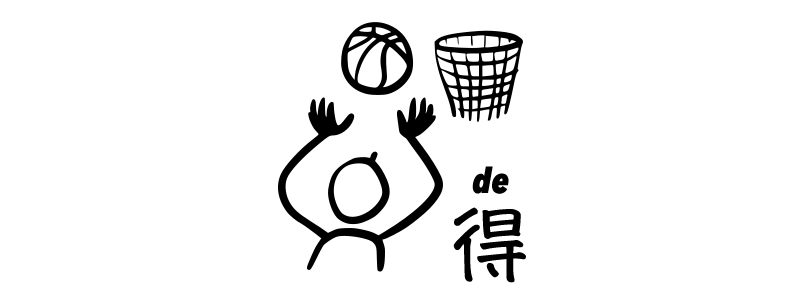
In Mandarin Chinese, the results always come after the actions.
1 Structure
V + 得得 de + Adj.
你走得很快你走得很快
You’re walking fast.
他睡得非常好他睡得非常好
He slept very well.
媽媽說得不清楚妈妈说得不清楚
Mom didn’t speak clearly.
你做得很好你做得很好
You did very well.
賣得不太好卖得不太好
Not selling well.
2 Adding Details
There are three ways you can add an object to your sentence. Regardless of which one you choose, always make sure that 得得 de is placed after the verb it modifies, not the object of the verb.
1. < O,S + V + 得得 + Adj. >
This form is for spoken language, not written language.
中文,他說得很好中文,他说得很好
He speaks Chinese very well.
字,你寫得很難看字,你写得很难看
Your writing is very difficult to read.
飯,媽媽做得很好吃饭,妈妈做得很好吃
Mom’s cooking is very good.
書,我看得非常慢书,我看得非常慢
I read books very slowly.
2. < S,O + V + 得得 + Adj. >
This form is also for spoken language, not written language.
他,中文說得很好他,中文说得很好
He speaks Chinese very well.
你,字寫得很難看你,字写得很难看
Your writing is very difficult to read.
FYI
In China, there’s a wonderful tradition of teaching children to write characters beautifully — like unlocking a window into their personality. Handwriting is believed to reveal a lot about a person; it’s not just words on paper, but a reflection of the inner self. This belief is rooted in Chinese culture, where calligraphy is treasured as both an art form and a form of self-expression. Practicing and mastering handwriting also helps kids build discipline, patience, and a keen eye for detail.
媽媽,飯做得很好吃妈妈,饭做得很好吃
Mom’s cooking is very good.
我,書看得非常慢我,书看得非常慢
I read books very slowly.
3. < S + 的的 + O + V + 得得 + Adj. >
This is one of the common ways to use it, but the meaning can sometimes change, especially when the object is not a skill or ability.
他的中文說得很好他的中文说得很好
He speaks Chinese very well.
你的字寫得很難看你的字写得很难看
Your writing is very difficult to read.
媽媽的飯做得很好吃妈妈的饭做得很好吃
Mom’s cooking is very good.
我的書看得非常慢我的书看得非常慢
I read books very slowly. ✅ / I read my book very slowly. ✅
4. < S + V + O + V + 得得 + Adj. >
We repeat the verb much less frequently in daily conversation compared to the above three. On the other hand, this expression is the most formal and clear, with almost no ambiguity.
他說中文說得很好他说中文说得很好
He speaks Chinese very well.
你寫字寫得很難看你写字写得很难看
Your writing is very difficult to read.
媽媽做飯做得很好吃妈妈做饭做得很好吃
Mom’s cooking is very good.
我看書看得非常慢我看书看得非常慢
I read books very slowly.
3 Common Mistakes
❌
他說中文得很好他说中文得很好
✅
他說中文說得很好他说中文说得很好
得得 de has to attach to the verb, not the object right in front of it — that’s why the verb gets repeated here.
❌
他說中文很好他说中文很好
✅
他中文說得很好他中文说得很好
Without 得得 de, there’s nothing linking the verb to the adjective describing it.
❌
我做飯做得很難我做饭做得很难
(meaning to say “Doing the cooking is hard for me”)
✅
我覺得做飯很難我觉得做饭很难
After 做得做得 zuò de, we describe how an action is performed, the degree to which it is performed, or the result of the action. However, 難难 nán describes the difficulty of the activity itself, rather than how the action is performed.
4 Don’t Confuse This With Topic-Comment
Chinese has a separate Topic-Comment structure, where an adjective can describe a topic directly with no 得得 de at all. This is where learners often get tripped up, expecting a 得得 de that isn’t actually needed.
| Topic |
Comment |
| 學中文学中文 |
超級難超级难 |
| 寫字写字 |
真煩真烦 |
| 看書看书 |
很累很累 |
Here, the adjective is simply commenting on the topic as a whole — not describing the result of a specific instance of the verb. That’s the difference: 得得 de links a verb to how that action’s result played out; Topic-Comment just states an adjective as a general observation about the topic.
5 Practice
Translate each sentence into Chinese, then tap the card to check your answer.
01She drinks a lot of wine.
她酒喝得很多她酒喝得很多
👆 Tap to reveal
02You learn Chinese too fast!
你的中文學得太快了你的中文学得太快了
👆 Tap to reveal
03You change boyfriends faster.
你換男友換得更快你换男友换得更快
👆 Tap to reveal
04He sings very well.
他唱歌唱得很好他唱歌唱得很好
👆 Tap to reveal
05I get up very early every day.
我每天起得很早我每天起得很早
👆 Tap to reveal
06The kids play very happily.
孩子們玩得很開心孩子们玩得很开心
👆 Tap to reveal
07This dish is cooked very deliciously.
這道菜做得很好吃这道菜做得很好吃
👆 Tap to reveal
08He walks very slowly.
他走路走得很慢他走路走得很慢
👆 Tap to reveal
09She dances wonderfully.
她跳舞跳得很棒她跳舞跳得很棒
👆 Tap to reveal
10I slept very late today.
我今天睡得很晚我今天睡得很晚
👆 Tap to reveal
