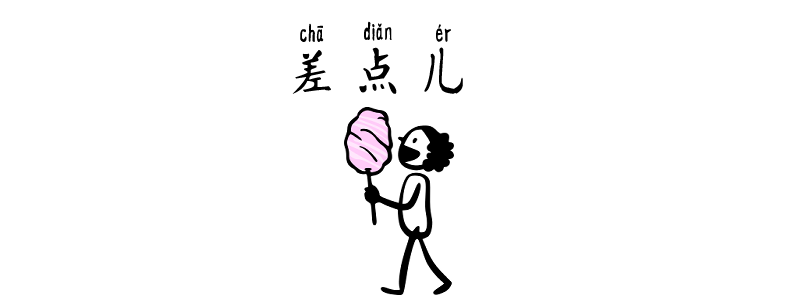
Almost missed the bus, almost forgot your keys, almost fell down the stairs — 差點兒 chàdiǎnr差点儿 chàdiǎnr goes right before the verb to say it nearly happened, but didn’t.
1 Structure
差點兒 chàdiǎnr差点儿 chàdiǎnr + V
When the verb describes something undesirable, 差點兒 chàdiǎnr差点儿 chàdiǎnr means the bad outcome almost happened — but in the end, it didn’t. Placed directly in front of the verb, never after it.
我差點兒忘了帶錢包我差点儿忘了带钱包
I almost forgot to bring my wallet. (but I remembered)
他騎車差點兒撞到人他骑车差点儿撞到人
He almost hit someone while riding his bike. (but he didn’t)
我差點兒遲到我差点儿迟到
I almost was late. (but I made it on time)
妹妹差點兒摔倒妹妹差点儿摔倒
My younger sister almost fell. (but she didn’t fall)
我差點兒把手機弄丟了我差点儿把手机弄丢了
I almost lost my phone. (but I didn’t actually lose it)
我差點兒忘了關門我差点儿忘了关门
I almost forgot to close the door. (but I remembered in time)
Optional 沒 méi没 méi
With an undesirable verb like this, you may also see 差點兒沒 chàdiǎnr méi差点儿没 chàdiǎnr méi — adding 沒 méi没 méi here doesn’t flip the meaning. 我差點兒沒忘了關門我差点儿没忘了关门 still means the same thing as the example above.
2 Common Mistakes
差點兒 chàdiǎnr差点儿 chàdiǎnr goes before the verb it’s modifying — never after.
❌
我忘了差點兒關門我忘了差点儿关门
✅
我差點兒忘了關門我差点儿忘了关门
差點兒 chàdiǎnr差点儿 chàdiǎnr functions like an adverb describing how close the whole event came to happening — so it must sit right before the verb phrase it modifies, not be tacked on afterward.
3 Practice
Translate each sentence into Chinese, then tap the card to check your answer.
01I almost missed the bus.
我差點兒錯過公車我差点儿错过公车
👆 Tap to reveal
02She almost cried.
她差點兒哭了她差点儿哭了
👆 Tap to reveal
03He almost dropped the cup.
他差點兒把杯子摔了他差点儿把杯子摔了
👆 Tap to reveal
04I almost said the wrong thing.
我差點兒說錯話我差点儿说错话
👆 Tap to reveal
05We almost got lost.
我們差點兒迷路我们差点儿迷路
👆 Tap to reveal
06The car almost hit that dog.
車子差點兒撞到那隻狗车子差点儿撞到那只狗
👆 Tap to reveal
07I almost forgot your birthday.
我差點兒忘了你的生日我差点儿忘了你的生日
👆 Tap to reveal
08He almost missed his stop (rode past it).
他差點兒坐過站他差点儿坐过站
👆 Tap to reveal
