Chinese Festivals · 中国节日
Lantern Festival
元宵节 yuánxiāojié
元宵节 yuánxiāojié falls on the 15th day of the first lunar month — the first full moon of the new year, and the night that officially brings 过年 to a close.
What is 元宵节?
If 除夕 chúxì is the loudest night of the season, 元宵节 is the softest one — a night of lantern light, round dumplings, and one last reason to gather before everyone goes back to normal life. It falls exactly two weeks after New Year’s Day, on the first full moon, and marks the formal end of 春节 chūnjié, the Spring Festival period.
In English it’s usually called the Lantern Festival, though you’ll also see it written as the Yuanxiao Festival.
汤圆 & 元宵
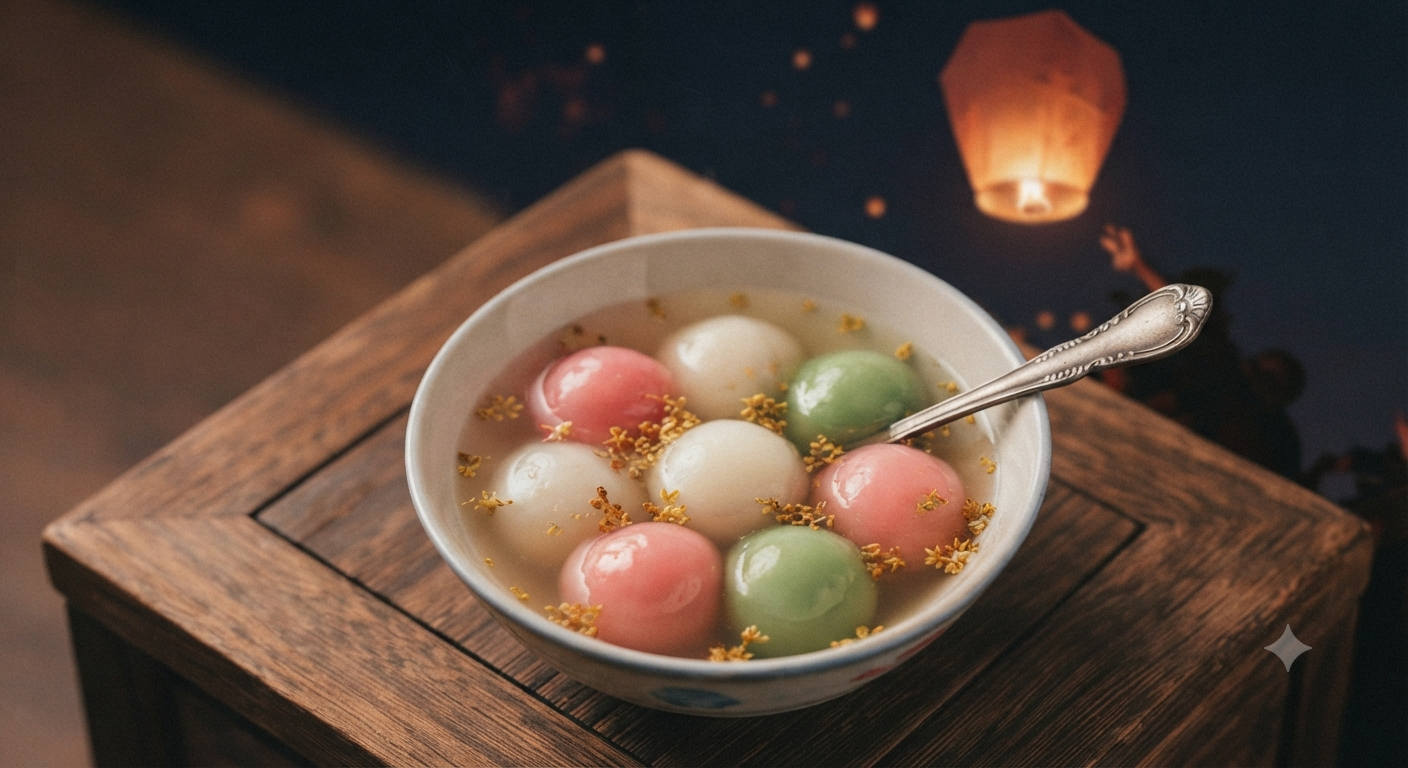
Round glutinous rice balls are the food of the night — their shape stands for 团圆 tuányuán, family togetherness and completeness. Confusingly, the same idea goes by two different names and two different methods depending where you are:
The southern style — soft dough is wrapped by hand around a filling, similar to making a dumpling. Common in Taiwan and southern China.
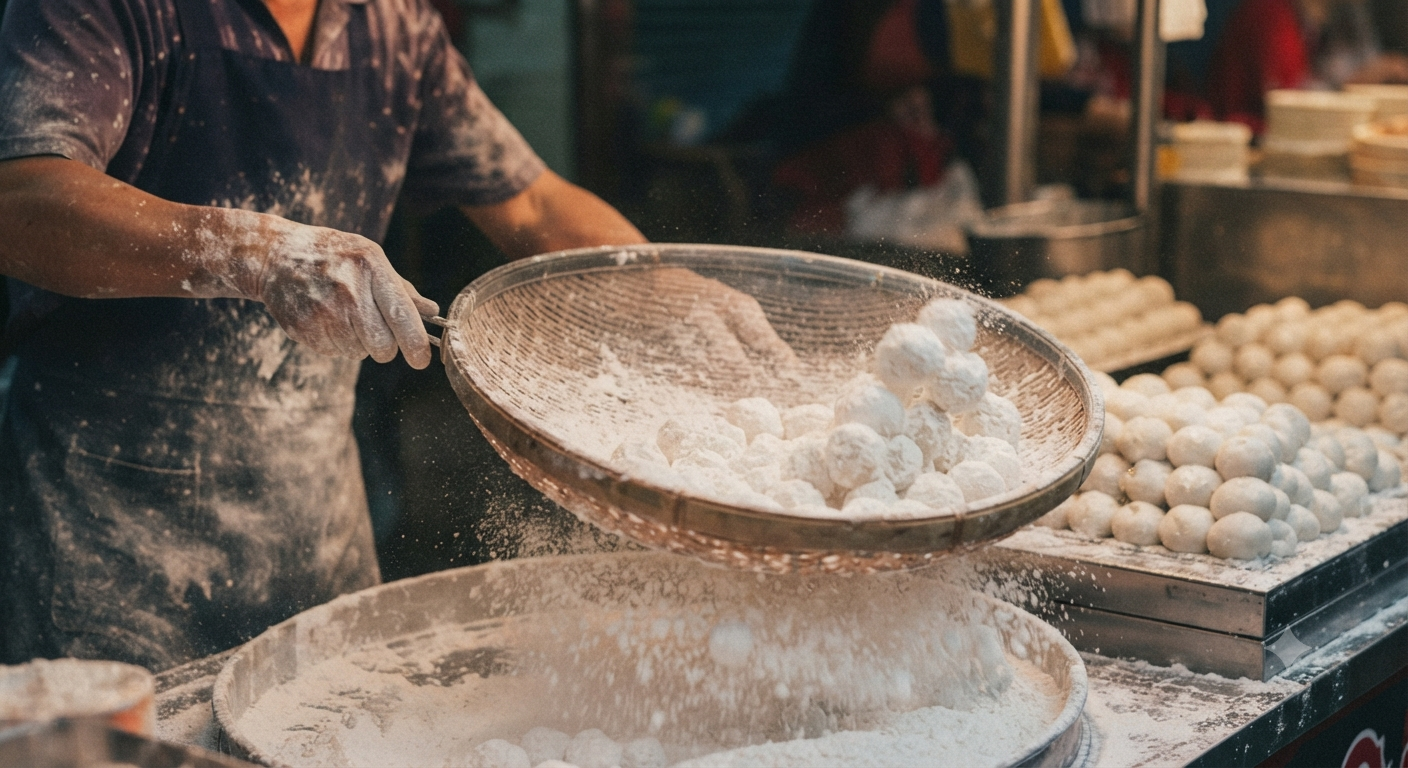
The northern style — a solid cube of filling is rolled and shaken in dry rice flour, layer by layer, until it forms a ball. Same idea, opposite method.
Either way, they’re served in a warm, lightly sweet broth — plain, or filled with black sesame, peanut, or red bean paste.
Lanterns & riddles 灯谜 dēngmí
Streets, parks, and temples fill with lantern displays — some simple paper lanterns carried by children, others enormous illuminated sculptures built around the year’s zodiac animal or a folk tale. Families walk out together after dark just to look.
A tradition that goes hand in hand with the lanterns: 猜灯谜 cāi dēngmí, “guessing lantern riddles.” Riddles are written on slips of paper and hung from the lanterns themselves — solve one correctly and you often win a small prize. It’s one of the few festival traditions built entirely around wordplay, which makes it a favorite for Chinese learners too.
Try five yourself
Read each riddle, take a guess, then tap to check the answer.
麻屋子,红帐子,里面住着白胖子。
Show answer
花生 huāshēng — peanut. The shell is the straw-colored “house,” the papery skin is the “red curtains,” and the peanut itself is the “plump white fellow” inside.
上边毛,下边毛,中间一颗黑葡萄。
Show answer
眼睛 yǎnjīng — eye. The “hair” is your eyebrows and eyelashes; the “black grape” is your dark iris and pupil.
一物生来穿三百多件衣,每天脱一件,年底剩张皮。
Show answer
日历 rìlì — a calendar. Each “robe” is a page torn off day by day, until only the cover remains at year’s end.
白天不见,晚上出现,像个银盘挂天边。
Show answer
月亮 yuèliàng — the moon. Fitting, since the whole festival is timed to the first full moon of the year.
(猜一個字)一人一张口,口下长只手。
Show answer
拿 ná — “to hold, to take.” A classic character riddle: picture 人 and 口 stacked above 手 — a person, a mouth, and a hand — and you get 拿.
Two very Taiwanese celebrations
Beyond lanterns and riddles, Taiwan has two 元宵节 traditions famous enough to draw crowds from around the world.
平溪天灯节 Píngxī tiāndēng jié
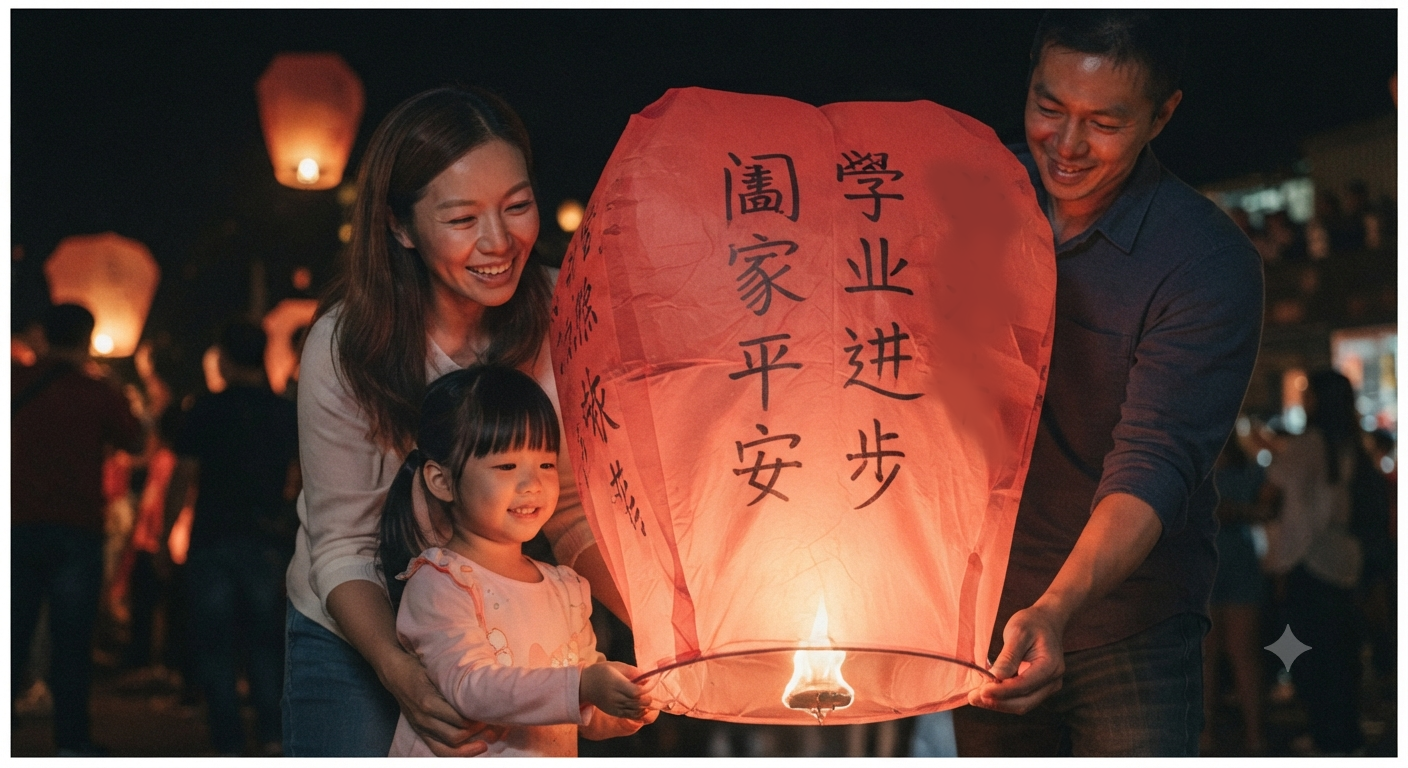
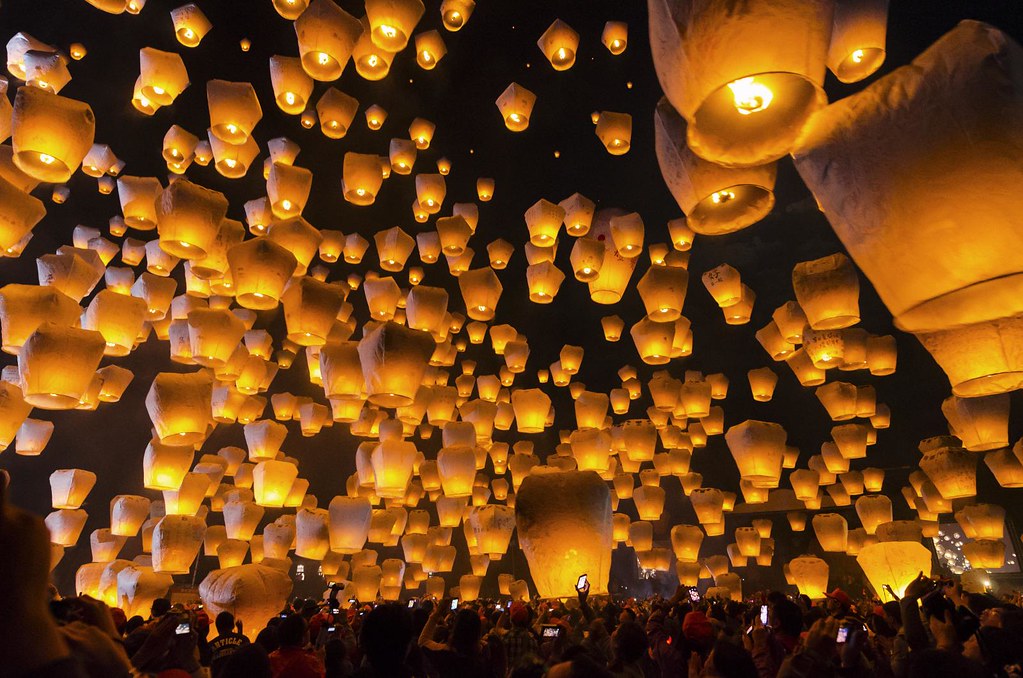
In the mountain town of Pingxi, New Taipei City, thousands of paper sky lanterns are hand-written with wishes and released into the night sky at once — one of the most photographed sights in Taiwan.
盐水蜂炮 Yánshuǐ fēngpào
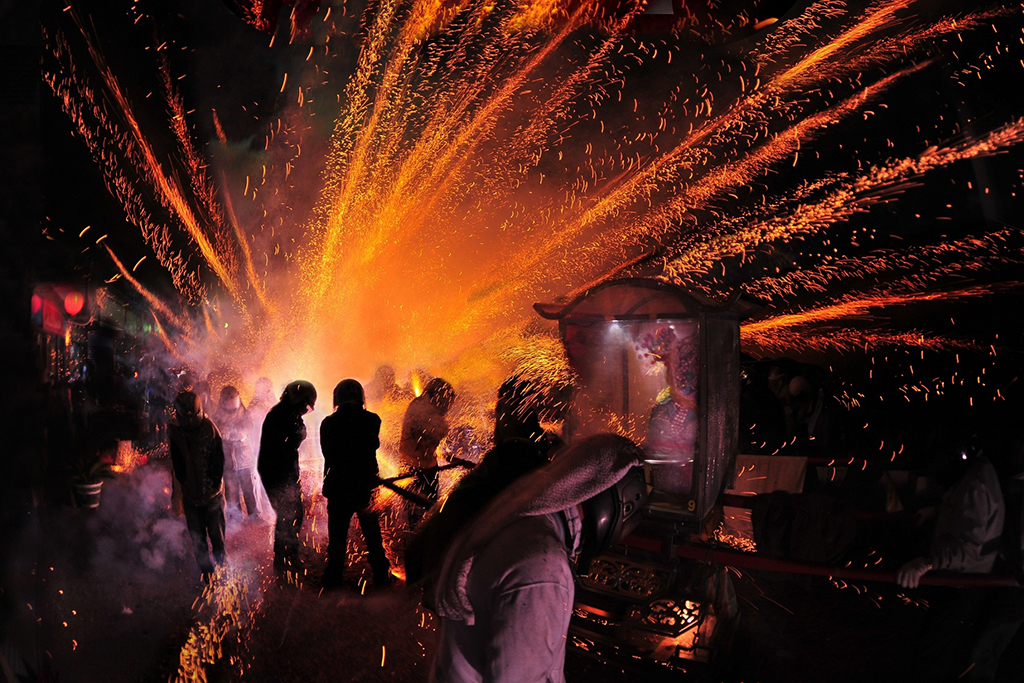
In Yanshui, Tainan, crowds in full protective gear walk straight into a storm of bottle rockets fired from “beehive” racks — a blessing ritual said to trace back to a 19th-century plague, and now one of the wildest folk festivals anywhere.
A night for romance 情人节
In imperial China, unmarried women were rarely allowed outside unsupervised — except on this one night, when families went out together to view the lanterns. That narrow window made 元宵节 one of the only chances for young men and women to meet, steal a glance, or pass a quiet word in the crowd. Several classical poems describe exactly this — lovers arranging to meet again “after the lanterns are lit” — which is why some still call it 中國情人節, an ancient Chinese answer to Valentine’s Day.
Stories related to 元宵节
This story explains the legend behind the Lantern Festival — why people light lanterns, and why the sweet rice dumplings called “yuanxiao” share their name with the festival itself.

