Skip to content

OneDotDot Chinese

Learn a little Chinese every day

Menu
  • Pronunciation
  • Vocabulary
    • HSK 3.0 Voc
    • Topic Center
    • Professional Field
    • Food Words
    • Synonyms
    • Chinese Slang
  • Grammar
    • Foundation
    • A1 Grammar (HSK 1)
    • A2 Grammar (HSK 2)
    • B1 Grammar (HSK 3)
    • B1 Grammar (HSK 4)
    • B2 Grammar (HSK 5)
    • B2 Grammar (HSK 6)
    • C1-C2 Grammar (HSK 7-9)
  • Resources
    • Characters
    • Chinese Name
    • Conversation
    • Cooking Chinese Food
    • Story
    • Songs
    • Download
    • Chinese Festivals
  • Practice
    • Grammar
    • Reading
    • Listening
  • Shop
Menu
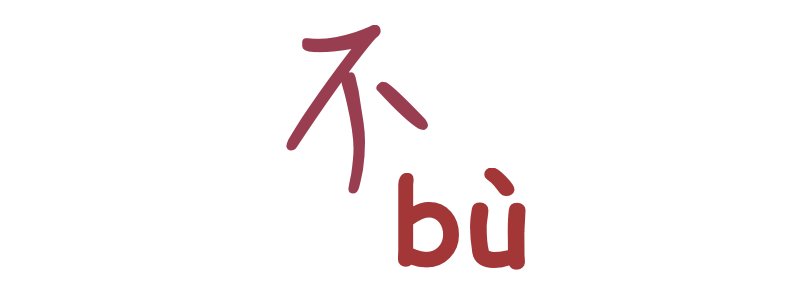
不 bù in Chinese

Confrontation with 嗎 ma

Posted on August 8, 2025August 8, 2025 by tiffany

Table of Contents

Toggle
  • Structure
    • Negative + 嗎吗 ma
  • How to answer
  • Cultural Note

  • Text Display
  • ►Traditional
  • ►Simplified
  • Pinyin Display
  • ►Visible
  • ►Mouseover
  • ►Hidden

Grammar Point:
In Chinese, using 嗎吗 ma at the end of a negative sentence creates a confirmation question or tag question, similar to English “isn’t it?” or “don’t you?” It implies seeking confirmation, expressing surprise or polite contradiction.

Structure

Negative + 嗎吗 ma

你nǐ不bú餓è嗎ma? 你nǐ不bú饿è吗ma?
Aren’t you hungry?
(Seeking Confirmation: I think you ARE hungry, despite what you might have said.)

你nǐ不bù知道zhīdào嗎ma? 你nǐ不bù知道zhīdào吗ma?
Don’t you know?
(Expressing Surprise: I’m surprised you don’t know this.)

這zhè不bú對duì嗎ma? 这zhè不bú对duì吗ma?
Isn’t this right?
(Polite Contradiction: I think this IS correct.)

今天jīntiān不是búshì星期三xīngqīsān嗎ma? 今天jīntiān不是búshì星期三xīngqīsān吗ma?
Isn’t today Wednesday?

你nǐ沒méi去qù過guò北京běijīng嗎ma? 你nǐ没méi去qù过guò北京běijīng吗ma?
Have you never been to Beijing?

你nǐ不bù喜歡xǐhuān咖啡kāfēi嗎ma? 你nǐ不bù喜欢xǐhuan咖啡kāfēi吗ma?
You don’t like coffee? (I thought you did!)

他tā沒méi告訴gàosù你nǐ嗎ma? 他tā没méi告诉gàosu你nǐ吗ma?
He didn’t tell you? (I assumed he had!)

How to answer

The tricky part is answering these questions correctly:

Q: 你nǐ不bú去qù嗎ma? 你nǐ不bú去qù吗ma?
Aren’t you going?

If you ARE going: ( 去qù,) 我wǒ去qù( 去qù,) 我wǒ去qù

If you’re NOT going: ( 不bú去qù,) 我wǒ不bú去qù(不bú去qù,)我wǒ不bú去qù

Note: Chinese doesn’t use “是 shì” (yes) or “不是 búshǐ” (no) for these answers – you repeat the verb or just drop it.

Cultural Note

In Mandarin, a “negative + 嗎吗 ma” question can feel a little impolite if the context is sensitive, since it often implies the speaker’s surprise or annoyance. To soften it, speakers might instead say:

我wǒ以爲yǐwéi你nǐ我wǒ以爲yǐwéi你nǐ…
I thought you…

你nǐ是不是shìbúshì没méi你nǐ是不是shìbúshì没méi…?
more tentative

📗 Contemporary Chinese
➤ Book 1
➤ Book 2
➤ Book 3
➤ Book 4

  • LinkedIn
  • Instagram
線上課程
One-on-one online teaching platform
線上課程

OneDotDot Chinese

Whenever I ask foreigners, "Do you speak Chinese?" they often reply, "a little bit" (yì diǎn diǎn). That inspired me to create this website and translate "yì diǎn diǎn" into the quirky and fun "One Dot Dot."

It’s also a reminder that learning Chinese is a journey, and progress happens one step at a time. By learning just a little bit every day, you’ll go far!

  About me
  Special Thanks
  News
  My Students Only
  Privacy Policy

© 2026 OneDotDot Chinese | Powered by Superbs Personal Blog theme