Tomb-Sweeping Day — OneDotDot Chinese Chinese Festivals · 中國節日中国节日 Tomb-Sweeping Day 清明節清明节 qīngmíngjié 清明節清明节 qīngmíngjié falls in early April, when families visit their ancestors’ graves to clean, weed, and pay respects — one of the few Chinese festivals set by the sun rather than the moon. One of the 24 solar terms What is 清明節清明节?…
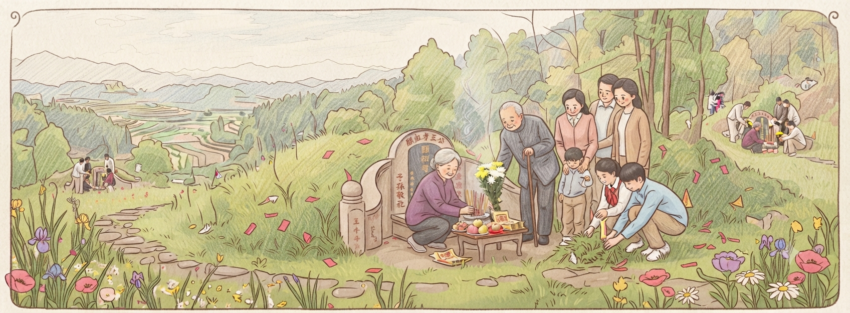
Author: tiffany
Lantern Festival
Lantern Festival — OneDotDot Chinese Chinese Festivals · 中國節日中国节日 Lantern Festival 元宵節元宵节 yuánxiāojié 元宵節元宵节 yuánxiāojié falls on the 15th day of the first lunar month — the first full moon of the new year, and the night that officially brings 過年过年 to a close. The last night of the new year What is 元宵節元宵节? If…
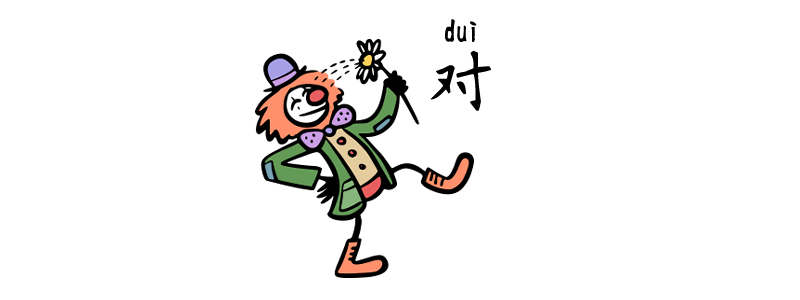
To be B in A – 對 duì A 有 yǒu
Grammar Point:This pattern is used to describe how something affects someone or something. It is very common with nouns like interest, help, benefit, influence, importance, confidence, etc. Structure A 對对 duì B + 有 yǒu + N Think of 對对 duì + A as “toward / regarding A”, and 有 yǒu + noun as “has (a certain quality or effect).” Together, they describe the…
Speak of – 說到 shuōdào
Grammar Point:說说到 shuōdào is used when you want to bring up a topic or connect the current topic to something related. It is similar to speaking of in English. Structure 說说到 shuōdào + N or Topic + Sentence It can be used interchangeably with 談谈到 tándào, but 談谈到 tándào sounds more formal and is more commonly used in discussions,…
HSK3.0 What You Need to Know
In 2021, the Chinese Testing Center announced there would be a new version of the HSK test, HSK 3.0., which includes 9 new levels instead of the 6 existing ones, a full revamp of the content in each level, and a whopping addition of 3,000 words to learn. What is new in HSK3.0? The new…
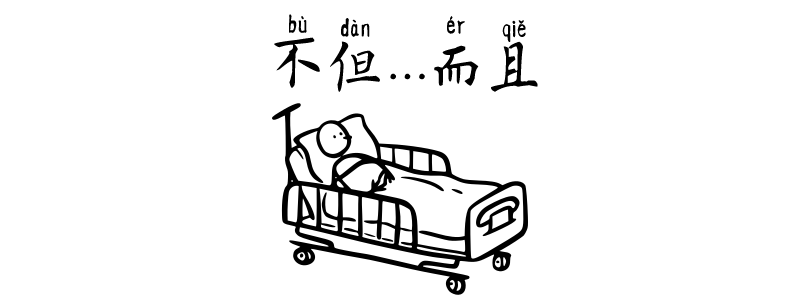
Not only… but also – 不但 búdàn…而且 érqiě
Grammar Point:不但 búdàn……而且 érqiě…… means “not only… but also…”. It is used to connect two related ideas, with the second idea usually adding more information or emphasis. Structure S + 不但 búdàn + V / Adj / Phrase + 而且 érqiě + V / Adj / Phrase The second part 而且 érqiě usually introduces additional or stronger information, making…
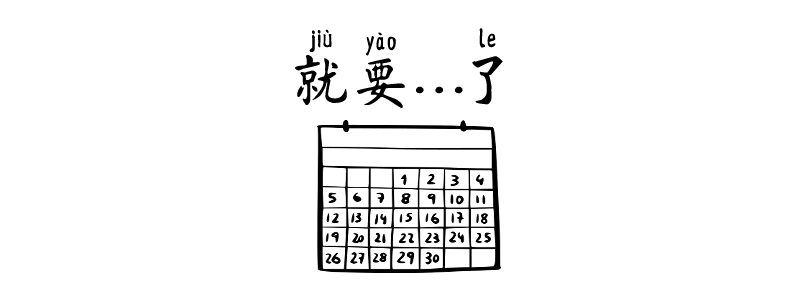
Soon – 就要 jiùyào…了 le
Grammar Piont:就要 jiùyào…了 le is used to say that something is going to happen very soon. It emphasizes that the event is imminent and the speaker expects it to happen in the near future. Structure S + 就要 jiùyào + V or Predicate + 了 le 電影diànyǐng就要jiùyào開始kāishǐ了le电影diànyǐng就要jiùyào开始kāishǐ了leThe movie is about to start. 火車huǒchē就要jiùyào到dào了le火车huǒchē就要jiùyào到dào了leThe train is about to arrive. 我wǒ搬bān到dào台北táiběi後hòu就要jiùyào開始kāishǐ找zhǎo工作gōngzuò了le我wǒ搬bān到dào台北táiběi后hòu就要jiùyào开始kāishǐ找zhǎo工作gōngzuò了leAfter…
B2 L13 Vocabulary and Practice
There’s a small menu in the bottom right corner where you can choose how you want to review. Options include:
B2 L14 Vocabulary and Practice
There’s a small menu in the bottom right corner where you can choose how you want to review. Options include:
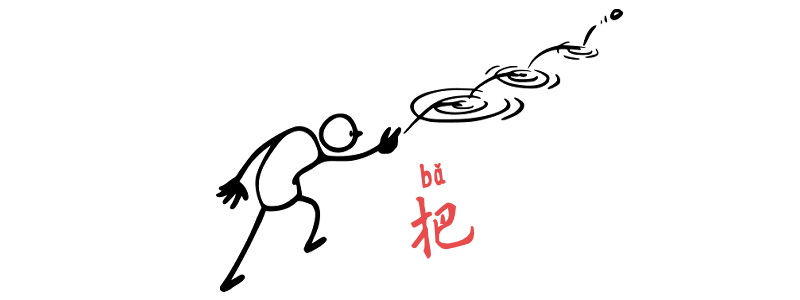
Unintentional – 把 bǎ
Grammar Point:把 bǎ is not always about intention. It can highlight that something was affected and a result happened, even if it was accidental. Structure S + 把 bǎ + O + V + Result (usually 了 le) 我wǒ把bǎ咖啡kāfēi打翻dǎfān了le我wǒ把bǎ咖啡kāfēi打翻dǎfān了leI spilled the coffee. 他tā把bǎ手機shǒujī摔shuāi壞huài了le他tā把bǎ手机shǒujī摔shuāi坏huài了leHe dropped his phone and broke it. 我wǒ喝hē水shuǐ的時候deshíhòu,不小心bùxiǎoxīn把bǎ衣服yīfú弄nòng得de濕shī濕shī的de我wǒ喝hē水shuǐ的时候deshíhou,不小心bùxiǎoxīn把bǎ衣服yīfu弄nòng得de湿shī湿shī的deI got my clothes wet accidentally while…