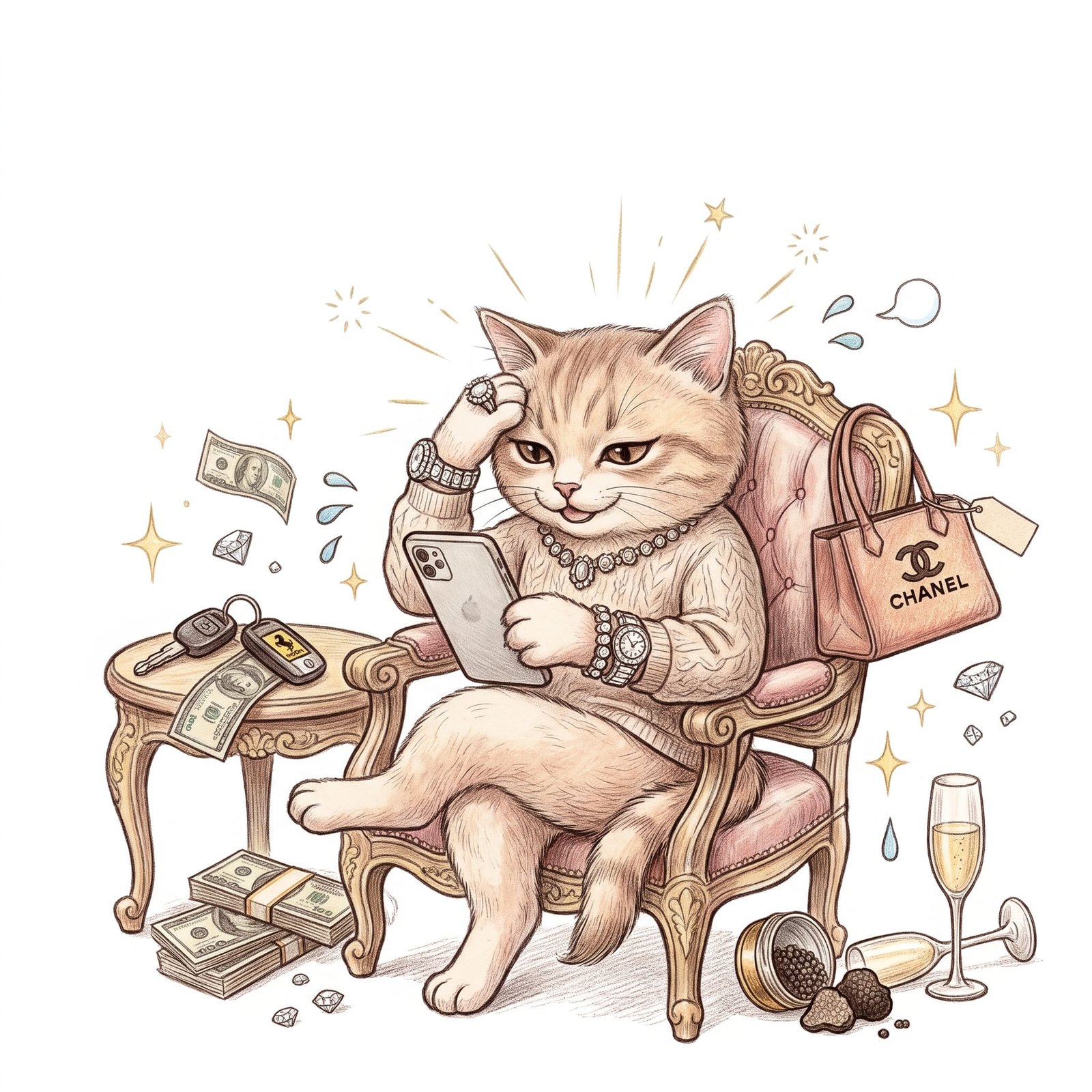
Humblebrag
形容词/动词 ADJ / VERB
Literally “Versailles.” The Palace of Versailles stands for aristocratic luxury, so we borrow its name for someone who shows off while pretending to complain or stay modest — exactly what “humblebrag” means in English.
It’s flexible in grammar. As an adjective: 很凡尔赛 (“so humblebrag-y”). As a verb: 凡尔赛一下 (“to humblebrag a little”) or 在凡尔赛 (“humblebragging”). The style itself is called 凡尔赛文学.
The tone is playful teasing between friends, but it can turn sarcastic if you say it to someone you don’t know well.
例句
对话
辨析
Several words live near “showing off” or “staying humble.” They differ in how openly someone brags.
- 凡尔赛fáněrsàiTeasing Brags indirectly, disguised as a complaint or as modesty. The joke is that everyone can see through it.
- 炫耀xuànyàoCritical Shows off openly and directly, with no disguise at all.
- 假掰jiǎbāiTaiwanese slang Pretentious or fake in general — putting on airs. It isn’t only about bragging, and it’s more of an insult.
- 低调炫耀dīdiào xuànyàoTeasing Shows off quietly, through a casual detail or “accidentally” visible item rather than words. The pose is understated, but the point is still to be noticed.
The quick test: 炫耀 says “look at me,” 凡尔赛 says “oh no, look at my problem” (which is secretly a brag), and 低调炫耀 says nothing at all and lets the item do the talking.
快闪卡
Tap a card to flip it.
跨语言
Every language seems to have noticed this habit. Korean and Japanese both describe it almost literally.
That’s totally bragging disguised as modesty!
Saying “my wallet is too heavy” is just a humblebrag.
- Start with a complaint or a worry (“好煩喔”, “怎麼辦”).
- The reason for the complaint is actually something people envy (too many gifts, too much money, too popular).
- Finish by insisting you’re not bragging (“我真的很困擾”).

